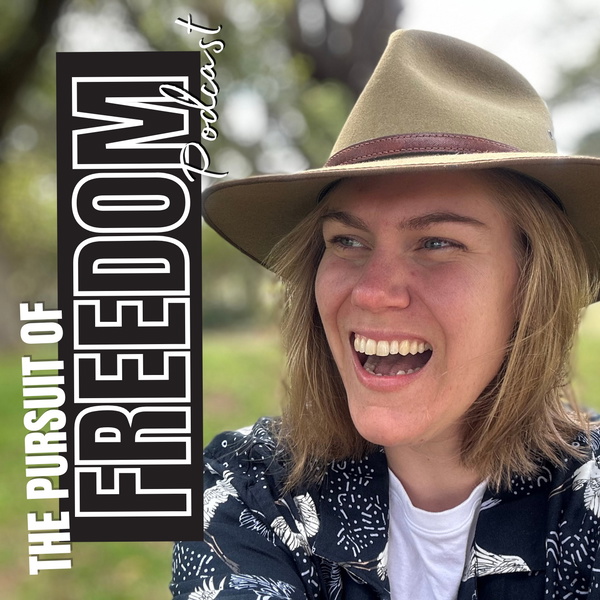
Ever feel like you’re holding yourself back from asking for what you really want? In this episode of The Pursuit of Freedom, I chat with business coach Liz Wolfe, who went from growing up on a sheep farm to building a thriving coaching business.
Liz breaks down the difference between an abundance mindset and a scarcity mindset—and why shifting your perspective can completely transform your business and life. She shares how the simple act of asking can open doors you never thought possible, plus the lessons she’s learned from personal loss and how they’ve shaped her approach to freedom and intentional living.
This conversation is packed with insights to help you move past self-imposed limits and start creating the life you actually want. Tune in and let me know: What’s one thing you’ve been afraid to ask for?
💡 Key Takeaways
- Abundance Over Scarcity: Thriving in business starts with shifting to an abundance mindset and overcoming fears of lack.
- The Power of Asking: Success comes from confidently asking for what you want—opportunities, support, and growth.
- Stepping Outside Your Comfort Zone: Transformation happens when you embrace vulnerability and take bold action.
- Freedom Through Entrepreneurship: True freedom means designing your schedule and priorities around what matters most.
- Receiving is as Important as Giving: Accepting help and opportunities with gratitude fuels personal and professional growth.
- Life Shapes Business Success: Personal experiences, including loss, deeply influence mindset, priorities, and the path to success.
🔗 Links/Resources
- Download Liz's *FREE* guide - "Overcome the 5 Biggest Fears of Selling." - https://lizwolfecoaching.com/sell
- Book a *FREE* business strategy session with Liz: https://lizwolfecoaching.com/contact-me/
- Watch the Krispy Kreme Olympic Donut video: https://www.youtube.com/watch?v=7Ax2CsVbrX0
- Watch the "What I Learned From 100 Days of Rejection" TED Talk: https://www.youtube.com/watch?v=-vZXgApsPCQ
- Read "Rejection Proof: How I Beat Fear and Became Invincible": https://amzn.to/4gxcrh4
📖 Chapters
00:00 From Sheep Farm to Business Coach
06:59 Understanding Abundant Business
10:10 The Scarcity Mindset vs. Abundance Mindset
20:46 The Power of Asking
26:02 Overcoming Limiting Beliefs
28:05 Undoing Limiting Beliefs
32:35 The Power of Asking
37:06 Abundance vs. Scarcity Mindset
43:38 The Essence of Freedom
----------
Support the podcast: https://thepursuitoffreedom.com.au/support
----------
🎤 Send me a voicemail: https://thepursuitoffreedom.com.au/contact
⭐️ Leave a review: https://thepursuitoffreedom.com.au/leaveareview
✉️ Join the email list: https://subscribepage.io/freedom
🎙️ Apply to be a guest on the podcast: https://thepursuitoffreedom.com.au/guest
----------
'Til next time,
TRANSCRIPT
[00:00:00] Hello, hello and welcome back to another episode. I'm really excited to have you here. Just quickly wanted to interrupt before I roll the episode. I am in a bit of a pickle at the moment and I need your help. I feel very uncomfortable asking this but my electrical system has carked it. This is what allows me to live in the van off-grid, leading this lifestyle, running the
[00:00:28] podcast and my business. So at the moment I'm stuck in a caravan park having to pay rent so that I can have electricity. To replace my electrical system it is going to cost at least $5,000. If I want high quality components it could cost up to $10,000. It's a lot of money. I don't have it right now.
[00:00:53] I was meant to be getting $18,500 in this month from a client. Unfortunately they're refusing to pay that invoice. So I'm really stuck and I'm just asking if you've ever got value from this podcast, would you consider helping me raise some money so that I can replace my electrical system? It would
[00:01:17] mean the world to me. The link will be in the show notes or you can go to the pursuitoffreedom.com.au forward slash help. Right that's enough of my sob story. Let's roll the episode. It's going to be a good one. G'day and welcome to the Pursuit of Freedom podcast. I'm your host Rosie Burrows and I'm on a journey to find my freedom so that I can help you do exactly the same. Join me each week as I share
[00:01:45] the stories of everyday people who have found their own path to freedom. I'm not going to focus on job titles and accolades because I don't care about that stuff and neither should you. I want to uncover what truly makes you tick. Who are you when you step away from society's expectations and follow your heart? I still haven't figured it out yet. Have you? Either way, buckle up because it's going to be
[00:02:10] one hell of a ride. Welcome back to the Pursuit of Freedom podcast. Joining us today is the amazing Liz Wolfe. Liz grew up on a sheep farm in Pennsylvania and today she coaches people to get unstuck so they can launch and grow an abundant business. And fun fact about Liz, she is in the singing duo Eucalicious. I love that name. Liz, welcome to the podcast. Thank you so much for being here.
[00:02:40] Yes, thank you for having me. Always a pleasure to do these with people and share my knowledge and experiences with people. I love it. Thank you for doing it. Of course. I can't wait to dive into this because you've got a wealth of knowledge. But let's start. How did you go from sheep farm to coach? Tell us a bit about your story. The funny thing about this is that when I was six years old, my mother
[00:03:07] decided she was a housewife in Pittsburgh and she decided she was no longer interested in just being a housewife. And this was the 70s. And so she wanted, you know, women's lib and all that. So she bought this farm with her then husband, my dad. And so when my dad left and went to back to Pittsburgh, I mean, when I say left, he didn't leave us. But when they decided to get divorced,
[00:03:36] we had to figure out how to make money. And so we started selling products that we made on the farm. Everything from gathering eggs in the barn, which I'm sure the health department these days would not be so happy about selling them for probably like 50 cents a dozen or something to actually making,
[00:03:59] you know, beautiful sheepskin coats. My mother was a very fiber artist. And this is I'm giving you the shortened version, right from early days. And my sisters and I have a joke that when we the growing up on the farm was the topic that we could use on our college essays, like, Oh, I grew up out of all right. And then my sister applied to law school. And you know, once again, we keep using the story of
[00:04:29] the farm as it's still relevant in our lives. Like it's still a good story to tell. It's always good for a good college essay kind of thing. But the interesting connection now that I'm a business coach is that I did not know when I was on the farm, and we were starting this process that it was
[00:04:53] what entrepreneurship was. I didn't know that. I thought it was survivalist work I had to do. And in fact, it was a it was an entrepreneurship venture. The thing was, is that my mother was actually she was a very skilled entrepreneur in terms of hustle, but not a very skilled entrepreneur in terms of managing
[00:05:20] the business. And we didn't, you know, I mean, it's hard to earn money. Of course, farms are very expensive. And yeah, like the whole thing. So when I left the farm, I actually went to college, it was a photography major in college, very art, you know, I had sort of an artsy background. Yeah. And then what do I want to do? I want to move to New York City to be a rock star. Of course, right? Yeah. Singer, right? Then I just
[00:05:50] started doing that. And then I said, Oh, wait, that's what a job feels like. I don't want a job, job, I have to go work for somebody. So basically, I learned how to be a freelancer, I learned how to just live in New York City and be a freelancer. And eventually, I learned software that other people wanted to learn. So I learned how to teach them the software, I ended up learning and implementing
[00:06:20] a software called Maximizer, which is a customer relationship management software, then I married my husband, and I got him to quit his job, and come and sell the software so that I could go on site and implement it because I was really more into the front end, and he was more in the back end. Yeah. So that was my next introduction into entrepreneurship. All the while doing it, you know, a lot of people that come
[00:06:48] to me as new entrepreneurs, they're like, you know, I've always wanted to be an entrepreneur. I don't know, I have any idea, I have no experience in being an entrepreneur at all. And I think, thank you, mom, for at age 10, dressing me up in a colonial outfit, so that I could go to a
[00:07:09] festival and, you know, show people how to spin wool. Yeah, wheel. And I hated that at the time. But as a result of it, I have no fear of selling, I have no fear of standing in front of groups of people, I have no fear of performing. It wasn't a thing where I just said, oh, someday I'd like to own the business once I can quit this really bad job I have that I hate, but that's paying my bills and
[00:07:35] that I have health insurance with. I eventually developed more of my customer base. And but I had now entered into the business world, it was more about coaching small businesses. And so it wasn't so much like me providing a service as it was me coaching businesses businesses and how to manage their databases that we were selling. And then I got, you know, about 10
[00:08:03] years ago or more, I just got a little tired of the tech part. I just, I mean, it was fine. But you have to you have to know that in the 80s, and the early 90s, especially the 90s. You know, they say that when they invent or discovered penicillin, it was very impactful, like, it would immediately shut down the diseases, especially in animals and things they could see, like, 24 hours, they were back on
[00:08:32] their feet. And it is so it was very, very impactful. And so selling and implementing CRM, people were literally going from Rolodexes where they would, you know, to having this be on a computer. It was very transformational. And that was the part that I really enjoyed was the transformation experience. And so the tech became like run of the mill, basically, you know, in 2024 now,
[00:09:01] boring. So this is where the transformational part for me is helping people to move into an entrepreneur mindset, so that they start a business. And that that's my main focus. It sounds like a really natural progression. You notice things along the way, and then here you are now. I'm really curious to better understand what is an abundant business?
[00:09:32] Great, great question. Yes. And I specifically, you know, you do all the work with the marketing people, they say, you have to come up with a one liner. And how do you your elevator speech? And how do you describe yourself? And what's the value you bring and everything? You know, so I very specifically, what I do is I coach entrepreneurs to launch and grow a business. But I wanted that word abundant in there
[00:09:56] because I was at the risk of being a little hokey, like law of attraction. It's abundance, right? Yeah. Entrepreneurs of any kind, whether you've been in business 10 minutes or 10 years, scarcity mindset, fears, doubts, financial scarcity, rejection, work concerns, all those things is very prevalent
[00:10:25] in how you're approaching your business is a lot of times it's out of fear, it's out of desperation, I can have to pay my bills this month. Yes, yes. Right? People don't want to quit their jobs until they can match their salary. Uh huh. Okay. So if you look at how much scarcity mindset is pervasive
[00:10:50] in entrepreneurship in general, getting discouraged, all of those things, you can see that the space of having an abundant mindset is much more conducive to generating something that is of value for yourself and for your customers. So an abundant mindset, my definition of abundance is there's plenty for
[00:11:17] everyone, including me. There are plenty of clients, there's plenty of money, there's plenty of work, there's plenty of good clients that I want to work with, there's plenty of joy in the work that I do, there's plenty of monetary rewards coming through for that. I don't really like the word rewards,
[00:11:42] but monetary flow. Um, there's plenty for everyone, including me. And the including me part is we see it with other people. We see the abundance that other people have, especially monetarily, mostly people. Mm-hmm. And then we think, well, why not me? You know, I'm, I feel outside of it. So the space of including me
[00:12:08] is the part where we are acknowledging that there is really literally plenty for everyone. Why do you think so many of us default to the scarcity mindset versus this abundance mindset? Number one, it's the culture we live in. Yeah. It's a fear-based society. Yeah.
[00:12:32] Just look at today in America, we just elected a president who is whatever your politics, his platform is fear and- Oh, totally. Yeah. That's his platform. So we live in this culture. Mm-hmm. We're actually taught fear-based- Yeah. ...action. Yeah.
[00:12:57] Right? You better get your ass out the door or whatever. You know, some of us actually deliberately, without knowing, unconsciously deliberately, keep things a little bit hard to keep motivated. That sounds familiar. Yeah. Yeah. Because it's motivating to do that. Mm-hmm. You know, some people weigh themselves in the morning because they want to kick themselves
[00:13:26] in the butt to like not eat, to go exercise. Like, look at you. Right, right, right. You gain weight over the week or whatever. So we, it's the culture we live in. We live in a scarcity-based culture and partly that is taught to us. Yeah. Yeah. Yeah. I have a lot of examples. Give us an example. Yeah. Give us another one. So the three keys to an abundant business are ask powerfully,
[00:13:56] give wholeheartedly, and receive graciously. Those are the, those are the three that if you hang around me enough, we're going to talk about that at some point. Yeah. Let's just start with the asking. Well, what do you mean ask powerfully? Well, what I mean is ask, first of all, ask. Right. Yeah. That's a big one. Yeah. Second of all, be specific in your ask. And then from that space, you are now creating
[00:14:26] a possibility for yourself. So let's go back to your childhood when you would occasionally go to your parents would take you someplace or you'd go to your friend's house or something. And your parents, most of our parents go with me here would say, it's rude to go in. Let's say they have a candy dish, you know, like some people have candy dishes on their tables and stuff. Right. It's rude to ask.
[00:14:57] Yes. Right? Yes. You're supposed to wait for it to be offered to you. Oh my gosh. And you've written a whole book about asking, right? I have indeed. And this is something I struggle with. How do we get more comfortable, more confident in making the ask? Well, the first step is to realize that everything that you believe about asking was taught to you
[00:15:26] and is not necessarily true. Number one. So it isn't rude to ask. It's perfectly reasonable and understandable. The, the, the, what's the word, not the conflict, but the conundrum, I'm not sure what the word is, is that when people would come to our house, your mother or your parents would be very gracious. Like, would you like to have some candy? And you're like, wait a minute. How come we're offering
[00:15:53] candy? Hello kids. But when I go to Aunt Joanie's house, I'm not allowed to ask for candy. Yeah. What's the word? It's a, it's like a juxtaposition, isn't it? Yeah. Right. Between those two things. So pretty much almost anything that you have been taught about asking is it's, it's a week to ask for help. Yeah. There's just so many things around asking specifically.
[00:16:21] Yeah. Yeah. And the second answer, second part of it is once you, once you commit to asking, then you just practice. Yeah. Just got to do it. And do you think it's possible to be successful in business without asking? It would be hard. Mm. I think it would be very hard.
[00:16:48] Yeah. Yet so many beginning entrepreneurs or business owners are scared to ask and they want people to come to them. And nobody knows you. They don't even know what you offer at that stage. I do a lot of business strategy sessions, free business strategy sessions to people that are interested in coming to work with me. And sometimes people will actually say,
[00:17:15] yeah, sounds great. And what would I think if you said it sounds great? I would think, oh, you want to work with me. But unless I actually say to them, Yeah. So would you like to? Yes. My coaching program. Are you ready to purchase? Uh-huh. Are you going to take action today? I can get off of calls with people and they'll say, well, sounds great. I'll be in touch. Okay. One favorite question I have to ask is,
[00:17:44] what's your budget for coaching? Hmm. Hmm. You know, nobody ever wants to talk about money, but it's always a very, so, or here's another one. I'll say to them, you know, here's my fee for coaching. Is that in your budget? Is that what you were expecting? Right. Right. Because that's a really great example of a fear-based conversation where you would say, yes, um, it's $398 a month for coaching with me.
[00:18:15] Too much. Of course. Yeah. Like, I have no idea, no information to go on. And then I see them look down and write something and I think, did that, were they avoiding looking at me? Yeah. And so, um, that's where I always will say, I'll always ask directly, is that what you were expecting? Or is that in alignment with your budget? Or is that in alignment with, you know, like there was a lot of
[00:18:40] little moments today. I was on a business strategy session with somebody. I literally asked this person who I've only talked to for 20 minutes, how much money in a year. That's good information to have. It is good information. You know, and I was asking it in the context of who wants to start a business. It happens to be one that he needs to invest money into. And I wanted to know how much money he had to invest in it. It's an
[00:19:09] obvious question. Yeah. But I, and he just told me, he just told me how much money he made. Yeah. No big deal. Right? Yeah. Yeah. I mean, I don't know if he thought it was a big deal. I didn't. He told me. True. Yeah. Probably not used to people asking that, but it's an important question. I have to know if I'm going to, if I'm going to work with me as my client, do you have enough money to invest in the program that you're not purchased? Yeah. And it makes sense to establish that early. Right.
[00:19:39] You don't want to invest all this time in a conversation and offering value if they go, ah, actually, nah, like it's out of my budget. Not really what I'm looking for. People go away from calls and I never hear from them again, even though they swear up and down. Oh, okay, I'll be in touch or I want to do it. No, because money is a very money. Money, asking around money is one of the most challenging things we have to do. Mm. Mm. In life and entrepreneurship.
[00:20:05] Why do you think it's so difficult? Because I think it's like this taboo topic, but why? Again, we were taught that, you know, this is culturally, there's so much, you know, money is dirty. I never say things like stinking rich. I never say that. I never, I never insult money. Yes.
[00:20:29] I never talk about it in an insulting way. Because I don't think you, it's stinking. I don't think money is stinking. I think money is just money. And we apply all this stuff to it. But, you know, based on how we were maybe grew up, I didn't, I didn't learn good financial practices from my mother. Mm. I was on my own because she wasn't a good financial manager. So money, you know, money is the root of
[00:20:56] all evil. Well, if that comes in your culture or in your familial world, money is the root of all evil, then you're never going to have money because who wants to be evil? Right. Right. But it's like two things can be true at once. You can have lots of money and be a really good person and be offering value. Why does it have to be either or? Why is it money's a bad thing? It's evil. If you have lots of it, you're a bad person. It's nonsense.
[00:21:25] Yeah. And then, and part of it is there, there are a lot of, I won't say biblical, I'll say, um, perhaps I'll say religious because all the world's religions do the same thing pretty much have some taboo around money. I was, I had a Orthodox Jewish client and I didn't know this until I spoke to him about it. There's a belief, they have a belief that how much money you make that
[00:21:53] year is determined once a year by God during Rosh Hashanah and try coaching someone who wants to earn more money in their business while at the same time holding a belief that it's already been predetermined. I did it because I don't have that same belief. Right. Gosh.
[00:22:20] Or what I, well, actually how I did it. I mean, and I respected his belief system. Basically I said, all right, well, I guess we're going to find out how much God predetermined you this year, but these are the steps we're going to do to get you there. Right. Yeah. You can still take action. I want you to take right now, go handle your marketing, update your website, whatever it was.
[00:22:44] I don't know. Yeah. Yeah. And so there's so many ways that money just got all tangled up in all kinds of weird stuff. I want to go back to asking powerfully because I think this is a big hang up for a lot of people. We're very uncomfortable with it because that's what we've been taught.
[00:23:07] Could you share maybe some tips on how we can, where do we start to get more comfortable with that? Because asking is hugely important, huge pillar of business. Yes. And if you do go and find my book, Asking Powerfully, what the hell is the name of the thing? Sorry, I just forgot what you said. The Power of Asking is the name of my book. And it's,
[00:23:37] there are exercises in there. But the short answer is, it's about starting small. And I had a client who this was very impactful for him because he was the, he had a nonprofit. And he was constantly needing to ask for money from people. That's basically what get, you know, being a, the head of a nonprofit does is ask for money. And he struggled with it as everyone else. So he started
[00:24:06] taking on little, little asks first. The example I remember he told me was he'd gone to a restaurant and he wanted salt and there was no salt on his table. So he leaned over to the next table and he just asked, can I have your salt? Right. Right. You don't even want to do that. Yeah. Oh, I'm going to disturb them. They don't know me. I'm going to interrupt. Yeah. Right. We don't want to do that. So he would just, and they go, yeah, sure. Here.
[00:24:34] So there's also a really great book and, and Ted talk about getting rejected. One, my 100 days of rejection. Mm. Yes. Yeah. It's a really great Ted talk. Very funny. It's like one of the top rated funny ones. And he has a book that after I watched Ted talk, I got it. What he did is he went out deliberately
[00:24:58] making these ridiculous asks of people so that he could get rejected. And the, the thing that made it famous was he went into a Krispy Kreme donut store and he wanted, he asked the woman, to make the Olympic rings out of donuts. Yeah. And he thought she was just going to say,
[00:25:24] no, forget that's ridiculous. Yeah. And she did it. And it's hilarious. You can find the actual video, the whole thing. Like he videos all this asks that he did and he's stunned because she says yes. Yes. And when she says yes, he doesn't know what to do. Yes. Wait, wait, wait, wait, what? Yes. You're going to, you're going to do it. Okay. And then there's this whole part where he, he's waiting for her to do it. Like now what do I do? Like
[00:25:54] she says, donuts. And then she ends up giving him the donuts for free. Wow. He shows the donuts. They're all in the shape of the rings, you know? So he did these ridiculous asks and just, he did it for a hundred days or something. And he logged it and it ended up as a Ted talk. So just letting everybody know to do something like that, you might end up with a Ted talk. And he,
[00:26:18] he, um, he just got two things happened. He got so like inert to it. He could just do it. Yeah. I'm asking some lady, right? He just made these wild asks. And then he was shocked at how many people said yes to it. He noticed all his limitations around asking. Yeah. Like very first example is he asked
[00:26:45] a random guy in his office building, a security guard in the downstairs if he could borrow $50. And the guy was like, no. And he just walked away and then he noticed later. He's like, well, wait, I didn't even, he was, he just ran away as soon as the guy said no. So it served its purpose. But on the other hand, he said, I learned from that. Well, wait, why, why is it a no? Do you not have the 50 bucks? Is it because you don't know me? Like he didn't learn anything from
[00:27:14] it because you ran away from it. Right. So practicing, practicing asking, and it's very, at first it can be very challenging, but you will get, you'll get so much value out of it. I think that Krispy Kreme example is a great example of, you don't know if you don't ask.
[00:27:40] Ask. And that's, it's true in business. Do not make a decision for a potential client. You don't know if they want to buy from you. Why are you making that decision? We decide people don't have money. Yeah. For them. We decide they do or don't have time for them. Yeah. We have all the, why are we doing that? Let them decide. Yeah. Won't know unless you ask. Yeah. Yeah.
[00:28:06] We are masters at getting in our own way. It holds us back, I think, not only in business, but in life. Why are we so good at getting in our way? It's just illogical. I mean, one thing this whole election season did show me is what one thing that I was shocked about that I, I guess I was living in my own bubble is just how many people really are that afraid
[00:28:37] of so many things such that they would take these actions. They're, they're adamant about their, they're defending their fears and we all do it. I mean, even the most transformed, you know, I always like to say the Dalai Lama doesn't know how to play the ukulele. And I'm willing to bet that if I took my ukulele and said, okay, you know, Dalai Lama, your honorable Dalai Lama, let me show you how to play the ukulele. He may not be interested, but let's say he was,
[00:29:07] he, he would have his own limiting beliefs. I don't play a musical instrument. I don't know how to do that. I don't know what does it mean. I don't know anything about notes. I don't, maybe none of that is true. I've never met him, but I think I am right that, that every human being on this planet has some limitation about what they believe they're capable of. Some of which was
[00:29:31] actually told to us, you will never amount to anything. You can't, you won't be able to do that. It's too hard. What they're really doing is they're speaking their own limiting beliefs and projecting you. Oh, it's so true. They are projecting their own limiting beliefs. And when I see it happen between parents and children, it really breaks my heart because that's where those
[00:29:59] lessons are being learned. That's where the conditioning is starting. And they will take on those beliefs often thinking they're true. And that's just the way it is. I can't pursue a business because I'm not going to have a regular income. It's risky. I need to go to university and get the regular paycheck and the health insurance and whatever else. Yeah. How do we undo those beliefs?
[00:30:24] So the first thing about undoing a belief, any kind of belief is understanding you have the belief. Okay. I always like to say there's no better personal development workshop than being an entrepreneur. Love Tony Robbins, never done his work, but you know, I get it about Tony Robbins, but that's walk and I've walked on fire. I know he does that in his work. Yeah.
[00:30:48] That's nothing compared to what you face every single day of being an entrepreneur. No, it just isn't. So the way to confront them is first to understand them and to know what they are. So here's an example. The system that I use in my coaching is number one, a clear vision plus full action minus hidden barriers.
[00:31:17] Okay. So you have to know what you want and that's part of asking powerfully. Asking powerfully is about having clarity around what it is that you want. So you don't, nobody just gets in a car and starts driving. They put something into the GPS first. Once we know where you're going, you need, you need a plan. You need, what are the roads? And if you ever turned on a GPS, they give you this, there's this way, there's this way, there's this way.
[00:31:44] People don't necessarily have to have a coach, although it's, that's like adding 50 minutes onto your trip. You know, if you don't have a coach ride, but if you go this way, it's an hour and 45 minutes. Right. So you'll still get there. You still will, presumably. So the third part is the part of the hidden barriers. Those are those limiting beliefs. So I always like to say that when,
[00:32:13] as, as an accountability partner with my clients, let's, uh, I have a, I have a client right now who's looking to get more visibility, but she's an introvert and she's not clear about, she wants to do videos. She wants to be able to talk about her work. She's an introvert. And so we agreed that she was just gonna do a video knowing that absolutely no one was ever going to watch it except for me.
[00:32:39] Yeah. You know, even, even that. And so she got to the, so, so the result of doing the video was not the video itself. The results of doing the video was, Oh, actually I could do this. It's not as hard as I thought. Or, well, what did, what didn't you look? Well, I didn't like watching myself on the video or I thought I looked stupid, you know, whatever. Okay. Well, let's talk about that. You know,
[00:33:09] and then what was the real core thing underneath all of it? I don't have attention on myself. Yes. I don't like to have attention on myself. Now that's different for me. I I'm an extrovert, but it's not just about being an extrovert. I like having attention on myself. That's why I perform with my buddy, Jean and Eucalicious. I'd love to sing. I'd love to be in groups and things like that.
[00:33:32] That's not for everyone by any stretch. So as far as that goes, she got to understand that limiting belief. I don't want attention on myself. Okay. Why don't you want attention on yourself? Afraid I'm going to look stupid. Afraid people aren't going to buy from me because they're like, who's that dork? Whatever. She did not say, I'm not revealing her conversation here at the moment.
[00:33:56] Just saying, those are the examples of limiting beliefs that you can have that get revealed because you pursue the goal. At the end of the day, the real joy is having this breakthroughs. Once she's able to get past that conversation of don't want attention on me. Oh, but why don't you want attention on me? Well, I'm afraid I'll look bad, et cetera. Once you can get past that, then you go,
[00:34:23] wait, oh, right. They're not thinking about me anyway. They're only thinking about themselves. So let me get on video and be authentic and genuine and share my knowledge because it's helping people. And I want to help people. And then beyond that, at that point, you build on it. So does this also apply to our personal lives or is this just very business focused?
[00:34:47] It certainly applies in your business and in your, excuse me, in your personal life as well. Sometimes people call me a life coach and I'm like, don't call me a life coach. Yeah. But I, you know, and with all due respect to life coaches, it's just not what my purpose is. But I say, but if you want, I can coach you on your life because it's the same thing. If you're going to be afraid to ask somebody for the sale, you're also going to be afraid to ask your kids to help you
[00:35:16] do the dishes or something. Right. Right. But you're going to be reluctant to do that. Totally. Is this, you know, asking powerfully, having that abundance mindset, have you always had that? Or is this a skill you've had to learn over time? That's a great, great question. I definitely did not have it all the time. What happened was living
[00:35:43] on the farm is a very interesting experience because, and this is like a microcosm for our world. Our world, our planet is actually a very abundant place. There is literally unlimited money. And there are beings on this planet that have so much money that even if they never made another penny,
[00:36:06] they would still be making, making, making, making more money. So we live in this world that is actually extremely abundant and yet we operate within it from this scarcity mindset. So growing up on the farm, I mean, I haven't eaten tomato that tastes anywhere near as good as we used to make grow on the farm. Yeah.
[00:36:37] Yeah. Yeah. In 20 years, because I can't find any. So what would happen would be like my mother would go to the garden store and she would buy 200 tomato plants. Wow. And then we would plant, we could only get to so many. It's a lot, it takes a lot of work to plant. Yeah. Yeah. So we would, this is such a vivid memory. So we would plant probably, I don't know,
[00:37:02] a hundred of them and then the rest die in the pot because we never watched them. And then we'd feel bad about that, right? We'd feel bad about them. And then tomatoes, you know, there's takes a certain carrier supposed to stake them and all that stuff. We never did that. And then we just supposed to weed them and everything. So each step along the way was one more thing that was hard. Mm-hmm . You know, when you have sheep getting out or dying or running around or you have to feed them or whatever,
[00:37:30] you're not weeding the tomato. And I remember that a friend of mine from college is, I was now in college and he came with me back to the farm, you know, for a fun thing. He'd never been on the farm. And he went out to our garden and it was like, you know, I don't know, 20 feet wide by 20 feet wide, just this massive plot of tomatoes all laying on the ground, you know, not picked up, you know,
[00:37:58] weeds coming out. And there's like hundreds of red, delicious, gorgeous, big tomatoes. I'm not saying that. I didn't, you know, rot or whatever, but like, oh, want a tomato? Oh, let me go get the best tomato you're ever going to eat in your life. And I'll just cut it up and give you some salt and you'll eat it right now. And I remember he said to me, I bought, I went to the store, I bought two
[00:38:23] tomato plants. I planted them by the side of my house. I staked them, I watered them, I put, I weeded them. I did everything, everything that you were supposed to do. And he got, he said, I had like three tomatoes and he's looking at this wild rampage of tomato patch. Sounds chaotic, really. Totally chaotic. And I'm looking at that going, ugh, like,
[00:38:49] this is only bad feelings right here. Tomatoes died, we wasted that money. We can't even harvest all of them. You know, it's worked. Now I got to go collect them. Now I got to make something out of them, right? It was, it was like, ugh. And yet it produced the most delicious tomato that you're ever going to eat, which I haven't been able to replicate since. That's the contrast of the abundance
[00:39:15] mindset versus the scarcity mindset. And it was really what the transformational part for me was, once, you know, many years later, I'm now living in New York City. I have a child, he's in public school. And guess what they do in public school? They raise money to supplement the money that comes, that's already existing, to hire at this particular school, assistant teachers. We had a million
[00:39:44] dollar budget of the PTA. We raised $200,000. Wow. Wow. Right? This is this one particular school, but that was all parent driven. Wow. And I got, I went there and I'd already had, I already had a business at that point. And I was, you know, it's very successful and generating money in my business, but it's different. I went into this community. I was like, look at these people
[00:40:11] raising all this money. And I just realized that's when I really tapped into, there's a lot of money in the school right now. You know? So in doing that, I, it was just a very illuminating experience for me of there's plenty of money. There's so much money out there. And how do I get it? I ask people for it. I
[00:40:35] go to them and I say, pay me a thousand dollars for this art project we made in the classroom that you probably don't really want, but it's up for our auction and you know, oh, it's their hand prints, you know, and you can hang it on your wall. Right. And people are bidding a thousand dollars for one of these things. Crazy. Yeah. And it just, it was very eyeopening for me. So I, I really got to see
[00:41:00] that this is when I just started the practicing of the asking and, and I actually came up with thinking of those three things, asking, giving, receiving, and seeing how for each one of those things there's, we have conditions or we have places where we stop. We were very bad receivers. Everybody in the call listening right now, I'm just going to let you know, you're not that great at
[00:41:27] receiving. Okay. And I'm calling me out. I'm pretty good at it because I practice, but I'll give you a real quick example. I was out of town this weekend and I get to a, to a music weekend and I gave somebody a ride and, um, she on the way back on the way up, she said, um, I'll give you money for gas. Now, if I say to you how much, you know, give you money for gas, what number comes to mind? Like how much would you think somebody is going to give you?
[00:41:56] They're going to 10, $20. Yeah. Yeah. Let's call it 20 bucks. I'm thinking 20 bucks. It was pretty far. It was a couple hours. Okay. So we're driving back and I go, okay, you know, I got to stop for gas. So I pull into the gas station. She says, I would like to contribute to gas. I said, okay. And she said, how $70. And I said, oh my God. Cause I just, that was so much
[00:42:19] money for gas. And she's, and anyway, long story short, she said, well, what is that not enough or something? I said, it's, that's more way more. And she goes, I don't know, somehow we landed on $50. Right. And then a little bit later and you know, she had a $50 bill and she gave it to me and I'm
[00:42:43] still thinking, oh my God, 50 bucks. I just filled it up and it was $25. But don't hope she didn't see that. She didn't look at the, at the meter. And as we were driving, you know, continued driving. She said somehow this conversation comes, she said, yeah, well, you know, I mean, I guess the next time
[00:43:05] someone offers you $70, you'll say yes. Instead of, oh my God. Or how about 50? So, and I, I'm, I'm saying this because I, I practice like, yeah, yes. Thank you. $70. That just seemed so big to me for such a minimal thing, but you wouldn't have offered it unless she had it and wanted to give it
[00:43:30] to me. Okay. I want to, I want to keep talking about this, especially receiving money graciously. It's not even a simple thing going out for dinner and a friend might offer to pay and go, oh no, no, no, no, no. It's okay. You don't do that. We're just immediately shutting it down because it's rude to accept that. That's rude. But is it? No, because you know why? Because you,
[00:43:56] she wanted to give that. We have to trust people that when they offer something that they're doing it willingly. Because I didn't ask, I didn't even ask her for money for gas. Yeah. I just gave, I was going anyway. Yeah. She had a ride. She's a nice friend of mine.
[00:44:19] Right. So she wanted to give me that. She was very grateful. She did not have to take the train. She would have had to probably pay $70 round trip because she would have had to get an Uber from the train station to the place. She, all she had to do was show up at my house and I drove both ways to her. $70 was a bargain as far as my money and energy is concerned. Yeah. So people want to give,
[00:44:49] and what we do is we stop that, that. We shut it down. We're almost dismissing what they're saying, aren't we? We're going, oh no. Yeah. And then they, what happens to them? What are they going to do? Fight you for it? No. I mean, some people do that. I have kind of had that. There's this back and forward. Oh yeah, no, yeah, no. It's fake. It really is fake. It's like, come on. And the most gracious
[00:45:16] thing you can do is say thank you. Oh, thank you. That would, that's so nice. Have you ever had a negative response from someone doing that? Someone's offered you money and you've just said thank you. And you haven't said, oh no, no. No, I've never had a negative response. In fact, I have a friend who came and she stayed with me for, I live in New York City. So people like to come and stay with me because, you know, that's nice to stay for free in New York City, right? Yeah. But my friend, obviously. So she stayed with me and so she wanted to buy dinner
[00:45:45] and there were four of us. So it was, I mean, it was probably Thai food or something, but it was, I remember the bill was like $85 or something. She said, I want to buy. And I said, okay, thank you. That'd be really nice. And later she said to me, thank you for that because I did not want to have to fight you to be giving me a gift. Like people want to give us gifts and we're fighting them. Stop fighting. It's just silly. And then we say,
[00:46:13] I want more money. Yeah, right. And we're just rejecting it. And then we're sad because we don't have any money. Yeah. We're pretty silly sometimes. But I want to ask you a final question. I asked this to all my guests. The podcast is the pursuit of freedom. So this question makes sense. So Liz, what does freedom mean to you?
[00:46:35] Okay. Well, freedom means to me, especially in the context of abundance and the context of entrepreneurship is freedom means fully trusting that everything is working out in my favor and the right things are happening. And so I can proceed knowing that the right things are happening
[00:47:02] and that every part along the way is a development to make, to creating what I want. I'm still working it. I feel very free because even though I work very hard at my business and I'm very invested in my clients and my music and everything that I do, that I've never
[00:47:29] not been able to go to any of my children's events of any sort because I couldn't get off work. Right. Something. I've always been able to do that. I have complete control over my schedule. And that is definitely freedom. That doesn't mean I don't put my own limitations on it.
[00:47:52] Yeah. Okay. So I certainly do that. Like you don't see me, you know, just taking off whole months at a time and running off doing things. Right. Because I have a consciousness about my, about my clients and, you know. But it's an intentional decision, isn't it? You could have the freedom to go, yeah, no, I'm, I am going to take a couple of months off. It'd be
[00:48:17] consequences, but you do have the freedom to do that. Yeah. Right. My father actually just passed away, uh, just like three weeks ago, as a matter of fact. Um, and he was 95 and, uh, it was a perfect ending. But one of the reasons it was a perfect ending, and I don't mean perfect, like fairy tale
[00:48:38] perfect. I mean, I mean, as best as it could be is because on December 20th, I decided it was time to go be with my dad. I got on a plane and I flew to Cincinnati and I sat there and I just told people I'm not available right now. Um, and, and you know, what's interesting about it? The demands were
[00:49:04] less. I didn't sit there stressing about it. Like the universe supported me in it and said, I guess you're not focused on this over here right now. Now, were there probably opportunities that I missed, you know, business opportunities that I missed? Did I sell a few fewer, you know, consulting client gigs or do? Yeah, probably. But on the other hand, I sat there completely able to be with my father
[00:49:31] and I just, I chose, that's what I chose to do. And that's where I was. And I was there. I didn't, I didn't have to do anything, but just be there with him. Yeah. And that's beautiful. That's definitely freedom. And it allowed you to focus on the things that were important to you. And that was being with your dad. As a matter of fact, contrast that with my mother died 22 years
[00:49:59] ago, 2002. And I was a different person then. My son was young and I didn't have as deep of an understanding of this. And she had a different situation. She had cancer. She was a smoker. Please don't smoke. And she was dying. And I left the house to, I left, she was at my sister's house.
[00:50:23] And I left my sister's house to go to my mother's house to mow her lawn. And she died while I was mowing her lawn. Oh my goodness. I didn't give myself the permission to just sit still and allow the grass to grow. Right. But I thought, you know, I don't know. I don't know why it was so important
[00:50:52] to me, but it definitely was very, very important. And so I did it and I wasn't there. Yeah. And it turns out it wasn't that important. Yeah. And what a transformation for you from that happening when your mother died to being able to drop everything and be with your dad. Wow. Yeah.
[00:51:16] It's called life. But that's focused intention and saying it's being, being intentional and awareness. Yes. It's a transformation. Yeah. And I want to clarify, I don't think you should be guilty for what happened. And I don't think others should feel guilty for what, you know, the consequences
[00:51:39] of what happens. I think, and this could sound cliche, but I think it's important to learn from those experiences. And it sounded like you learned a very difficult lesson. I did. It made this experience completely different for me. And a quick little antidote on that. So, you know, there I am sitting with my mother. She was much more alert because she was still relatively
[00:52:07] young too. And, you know, although she had this sickness and I had been to her house several times to do several things. One of which was, you know, of course I was worried about the lawn, but I was also just kind of cleaning up things in her house and she had a load of laundry in a basket that was in the living room. And I just, you know, I put it away or whatever. And so there I am sitting
[00:52:31] next to my mother. And, you know, I said, mom, is there anything that you need to do to be complete in your life? And she said, well, there's laundry in the living room. Could you? And I was actually really grateful in that moment to be able to say, I already did it. I already put the laundry away, you know, and that was what was on her mind. She had left laundry in a
[00:53:00] basket on the, you know, and means she's literally three, three days from her death because she was still smoking. But by then we knew that I was not going to change. So just to show you, you know, other perspectives, like that's what was on our mind. Not, can you tell my sister that I love her, you know, like any, prepare the pain. I, you know, I'm sorry if I ever hit you. Like there was
[00:53:25] nothing profound. Yeah. There was no, nothing profound. It was, can you put away the laundry? Okay. Maybe that was why I went to mow the lawn. I don't know. Like, well, maybe she's going to want me to mow the lawn next. Right. Right. Yeah, exactly. Maybe it was important. Yeah. Maybe it was to her. Maybe she could die knowing that I was mowing the lawn. Lawn, laundry away. She knows her daughter's on top of it. You know, things are going to be in tip
[00:53:54] top shape. And just quickly on that, like I have to quickly share an experience because both of my parents aren't alive anymore. And mum died in 2019 and we lived quite far apart at the time. And I was working, um, and she got a terminal brain cancer diagnosis and I had put away, like, I'm very
[00:54:20] obsessed with Excel spreadsheets and putting money aside. So I had this big nest egg of emergency funds. And so I just went, right, I'm dropping everything. I'm quitting my job. And I got to be with her for our last six months. And I'm just so grateful for that. And then I contrast that with when my dad died, it was, it was unexpected freak accident. And, um, the day after he died, I thought it was important to go
[00:54:50] into university to get to class. That's what I wanted to do rather than be with my grieving mother and my sister who was nine years younger. She was 11 years old. I decided to go into university. It's so interesting. Our stories are very similar. I think we have to look at it with kindness. And I think, you know, for me at that time, and for you at that time, it was the right thing for us to do. It was our way of, I guess,
[00:55:16] processing and coping with it. That's okay. Yeah. Sorry to hear that you had that experience as well. Yeah. I mean, life can be a bit shit sometimes. What can you do? I just want to say like, thank you for sharing that because that's really personal. And I think, I think a lot of listeners will be able to relate to that, whether it's losing a loved
[00:55:41] one or something else, we've all had some sort of traumatic event, a really difficult event. And perhaps we made a choice or did something that we look back on and go, what was I thinking? What an amazing episode. I didn't expect that we would end up talking about that, but I'm so glad we did. So Liz, thank you very much. I've learned a lot about asking questions and it's something I've
[00:56:08] been trying to be more intentional about. I think I'm getting better, but I'm still scared of it. So I'm going to keep practicing, especially with this money thing. That's a big block for me. If someone offers money, thank you. Yes. Say thank you. Receive graciously. And you don't have to reciprocate. Right. Yes. You don't have to. You can. You don't have to. Yeah.
[00:56:35] I mean, imagine how abundant life would feel if we just said thank you to every joyous thing that came our way and weren't worrying, wasn't marring the experience with the concern about how we can reciprocate in some way. Yeah. Yeah. Let's cut that out. But on that note, Liz, I bid you farewell. This has been amazing. And I can't wait to hear feedback from our listeners. Everyone definitely go
[00:57:01] check out Liz's book, The Power of Asking. You've also got another book, haven't you? Your Business Vision Blueprint. Yeah. I do a book called The Business Vision Blueprint. And I have, yeah, if you look up Liz Wolf, Wolf's the name, sheep's the game. I love it. And it's, it's very affordable. Like in Australian dollars, it's like $4. So go get it, everybody. Support our
[00:57:25] guest. I think it's worth it. She's given a lot of value free of charge. And yeah, Liz, we'll talk soon. Thank you. Thank you so much. I really hope you enjoyed that episode as much as I did. I am in a bit of a pickle at the moment. My electrical system has carked it. This is what allows me to
[00:57:51] live in the van off grid, leading this lifestyle, running the podcast and my business. So at the moment, I'm stuck in a caravan park having to pay rent so that I can have electricity. To replace my electrical system, it is going to cost at least $5,000. If I want high quality components, it could
[00:58:16] cost up to $10,000. It's a lot of money. I don't have it right now. I was meant to be getting $18,500 in this month from a client. Unfortunately, they're refusing to pay that invoice. So I'm really stuck. And I'm just asking, if you've ever got value from this podcast, would you consider helping me
[00:58:40] raise some money so that I can replace my electrical system? It would mean the world to me. The link will be in the show notes, or you can go to the pursuitoffreedom.com.au forward slash help.