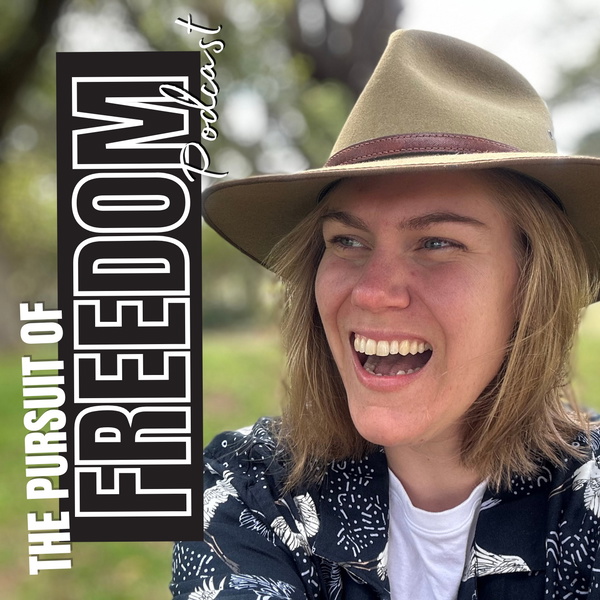
I sit down with Alex Sanfilippo, founder of PodMatch, to talk about a revolutionary approach to goal setting. With the new year in full swing, it’s the perfect time to rethink how we set and achieve our goals.
Alex shares his insights on why traditional, outcome-based goals often fail and introduces his simple framework for setting non-outcome-based goals. He walks me through reverse-engineering a big goal of mine and shows how small, consistent actions can lead to major breakthroughs.
Don't be the one of the 91% that won't achieve their New Year's Resolutions this year!
Key Takeaways:
- Non-Outcome-Based Goals: Focus on daily actions rather than the end result.
- Reverse Engineering: Break down big goals into manageable daily or weekly steps.
- Consistency Over Perfection: Progress comes from small, regular actions.
- Connection Matters: Build goals around serving and connecting with people.
- Flexibility: Adjust goals as needed without losing sight of the ultimate vision.
🔗 Links/Resources
- Learn more about Alex and PodMatch here: www.podmatch.com/free
- Listen to the story of how I came to work with PodMatch: www.thepursuitoffreedom.com.au/58
----------
Support the podcast: https://thepursuitoffreedom.com.au/support
----------
🎤 Send me a voicemail: https://thepursuitoffreedom.com.au/contact
⭐️ Leave a review: https://thepursuitoffreedom.com.au/leaveareview
✉️ Join the email list: https://subscribepage.io/freedom
🎙️ Apply to be a guest on the podcast: https://thepursuitoffreedom.com.au/guest
----------
📖 Chapters
00:00 Reflecting on 70 Episodes and Podcast Growth
02:36 Introducing Alex Sanfilippo and the Power of Goal Setting
04:04 What Are Non-Outcome-Based Goals?
06:16 Leveraging Daily Actions for Success
08:52 Real-Life Example: From Fitness Goals to Health Habits
09:27 Reverse Engineering a Goal: Earning Income Through Podcasting
13:23 The Power of Masterminds: Building Connection and Value
16:12 Simplifying Big Goals: Break Them Into Daily Actions
18:43 Why Connection is Key in Achieving Goals
19:39 Alex’s Definition of Freedom: Peace and Letting Go of Burdens
21:12 Closing Reflections and Key Takeaways
'Til next time,
TRANSCRIPT
[00:00:00] Rosie: Hello, hello, and welcome to episode 70 of the Pursuit of Freedom podcast. I'm so proud to say that number. 70, 70 episodes. That is unreal. And it's not really a number I expected to get to when I launched the podcast. I wasn't even sure how long I would make it, but here we are. I just want to have a quick reflection on the year.
[00:00:22] It has been quite a tumultuous one, I must say, but I'm smiling because it was a great year. I'm smiling even as I'm in my van. I've got a battery operated light so you can see me because my electrical system is working. has decided it's just had enough. My battery bank is kaput. I'm at a caravan park. I usually prefer to be off grid and I'm having to stop and actually look for work so that I can fund a new electrical system.
[00:00:51] And if you know me, you know, I'm not really a fan of working for other people. So it's a pretty big deal for me. But here I am smiling. This year has taught me so, so much. And I have seen the podcast grow a lot. The last three months, there's been the most number of people listening in that there has ever been, which is really cool.
[00:01:11] So keep listening, keep sharing. And stay tuned for this episode where I talk to Alex Sanfilippo. He's the founder of Podmatch, which is a platform I've been using to source some of my guests. But this episode today I think is very timely because it's the new year and it's on trend to set new year's resolutions.
[00:01:33] I'm not the biggest fan and I was going to do a solo episode talking about this and offering some insights. But actually Alex says it better. He is here to share his approach to goal setting and hearing Alex's approach has really, really blown my mind. It's quite simple, but it's, it's, It's powerful. He essentially coaches me through setting a big goal for this year.
[00:01:57] So please listen, because there are stats out there. It's anywhere from 20 percent all the way down to 9%. Only 9 percent of people actually achieve their new year's resolutions. That. is atrocious. So what is that about? I don't think it's that we don't want to achieve these goals. So what's going on? I think it's how we're setting the goals and the goals we are setting.
[00:02:19] So listen up. This is going to be a good one. Happy 2025. I hope you spend some time to reflect on 2024, the good bits, the bad bits, the meh bits. It all happened and it's all okay.
[00:02:36] G'day, and welcome to the Pursuit of Freedom podcast. I'm your host, Rosie Burrows, and I'm on a journey to find my freedom so that I can help you do exactly the same. Join me each week as I share the stories of everyday people who've found their own path to freedom. I'm not going to focus on job titles and accolades because I don't care about that stuff, and neither should you.
[00:02:57] I want to uncover what truly makes you tick. Who are you? When you step away from society's expectations and follow your heart. I still haven't figured it out yet. Have you? Either way, buckle up because it's going to be one hell of a ride.
[00:03:17] Welcome back to the Pursuit of Freedom podcast. I'm really excited for today's episode. I got to admit I'm a little bit starstruck. So if I stumble over my words, that is why. Cause joining us today is, um, He's a serial entrepreneur. He's a podcaster. He's the founder of Podmatch. It's Alex Sanfilippo. And I just want to say thank you for making the time to join us today.
[00:03:41] Alex: Yeah, Rosie, thank you so much for having me and thank you for just your support of Podmatch. You've been, since the day you showed up, it's just been a gift. So I'm really honored and excited to be here with you today.
[00:03:51] Rosie: Now you are an advocate for non outcome based goals, but tell me, What on earth is a non outcome based goal?
[00:04:04] Alex: Yeah, the, the, the goal setting thing. I used to be the guy who's like beginning of the year, here's 50 things I'm gonna accomplish in the next year. And they were all outcome based, which means I'm going to be able to bench press this much. I'm going to be able to, to do this. I'm going to go to this many different countries.
[00:04:16] Right. And that's an outcome, a non outcome based goal to me is more so focusing on the lever triggers possibility.
[00:04:25] Rosie: Hmm.
[00:04:26] Alex: And so what I mean by that, an example. Yes, I'd like pod match to continue to grow because we know when we reach certain financial milestones, we can do things like drop our payouts from a hundred to 25, even though our cost goes up substantially, but we can do that.
[00:04:37] Right. So instead of saying we need to now make this much MRR, Uh, monthly reoccurring revenue, right? And instead of saying that we find the furthest thing from that, that triggers that to possibly happen. And for me, what I've determined that is, is that is one on one interactions with podcasters. As weird as it sounds, when I talk to podcasters, they tell other podcasters.
[00:04:57] And so now I'm like, okay, if we need to go this threshold, I'm gonna make a point to talk to five different people this week. And then I'll, I'll do six if we wanted to go higher. So then on outcome based goal, I'm focused on it. Weirdly enough, it's just, did I meet my quota of talking to six people today?
[00:05:12] This week, have I had these conversations? And to most people, it sounds crazy. Like, wait, your only goal is to talk to six people. I'm like, yes, because that. Is the trigger, right? That that is the mechanism for reaching all these other things. And I like doing that type of goal setting better because if you can connect it to a human, it's so much better.
[00:05:28] If I say I want my MRR to reach this level, then I'm not thinking about the people anymore. I'm thinking of people as dollars. We do not use the word user anywhere on our website, anywhere internally. We call them members of our community.
[00:05:40] Rosie: Love it. Because
[00:05:41] Alex: we do not want to lose sight of the fact that these are humans.
[00:05:43] They are not numbers. They are not users. That is a human being. That is a life that we get the opportunity to serve and to love and to impact. And so when I can bring all of my goals down to be non outcome based, Just six conversations. So I guess there's a, there is like a goal, which is six people today, right?
[00:05:58] And six people this week. And so I just focus on that and I've gotten really good at reverse engineering things saying this is the end result, but I don't want to think about that anymore. I'm just going to leave that. We're not going to write it down anywhere. What do I need to do to get there? I bring it down to the most smallest daily action level.
[00:06:12] And I focus just on that.
[00:06:16] Rosie: This is incredible. You'd like walk us through an example. Of how you would set a goal. Like, okay, maybe we think cause it's, you know, Christmas, new years, everybody's setting goals. This is the time of year, you know, all these ambitious goals. I'm going to lose 10 kilos. I'm going to run a marathon.
[00:06:35] I'm going to earn six figures in my business. They're all very outcome based things, but from what I'm understanding, you're not saying that bad things to want. But we're going about setting the goal. So can you walk us through an example? You tell me what you need from me. I really want to workshop this so people get it.
[00:06:58] Alex: Yeah. I mean, we've talked a lot about business. I'm going to take it away from that. You mentioned the gym is a great example. So, um, one of the things I sacrificed when I started pod match, like. Full transparency, Alicia, I had some savings, which we're very thankful for, but we sold like investment prop, anything we had, we sold everything.
[00:07:14] And we were just like, we're going to go all in on this, which is apparently bad business advice. So I'm not telling people to do that, but we were like, that's the only way we can do this. And over two years before we made a dime with it, we were on our last month being able to pay off the credit card.
[00:07:25] And after that, that would have been it. Like we would have, we would have started going into debt the last month and that is when it turned. And I'm very thankful that that happened. Uh, something I sacrificed around that time was, was, uh, Even going to the gym, like I worked out at home for a little bit, but I just never, I don't, I wasn't very good at that.
[00:07:40] Like, I was like, eh, 10 minutes here, 10 minutes, whenever. Right. And so like, I more recently just finally like got back into a gym membership. I waited too long, but I lost 10 pounds over four years, which doesn't sound like much. I lose weight if I don't work out. Um, sorry to some people that are like, oh, well that must be nice.
[00:07:55] Like I get really skinny and it's uncomfortable. Right. So anyway, I'm working my way back now. Uh, but I decided, okay. What's my goal? Is it to put my 10 pounds back on and I'm like, no, yes, but if I say that's my goal, all I'm going to do now is step on the scale every single day to see if I've got my 10 pounds back and like, I always tell people like, Hey, if you want to like lose weight or gain weight, like don't, don't invest in a scale or a mirror, you know, like invest in the thing that's actually going to do that.
[00:08:21] So for me, I'm like, okay, that's the wrong idea. The 10 pounds doesn't actually matter. What I want to do is be healthy. I know I'm healthier at 10 pounds, but okay. How do I invest in my health? So I got a gym membership and I committed, I'm going to go five days a week, which means Monday through Friday, I'm going to go to that gym for one hour.
[00:08:36] And I'm going to show up there and I make sure that my, especially my first two meals of the day and my last five times a day, I've always kind of just been like that. My first two and my last one specifically are going to be really healthy. And so every day, all I'm doing, again, I'm not focused on putting on the 10 pounds, not focused on getting stronger.
[00:08:52] I'm focused on saying, Hey, I got to remember it's my calendar. I go to the gym and I make sure I eat my first, second, and last meal really well. And so that to me is like a non outcome based goal. It's just a daily action. I built it into a habit and guess what? I'm going to wake up in a few months, not that I'm going to check, but I bet I'll have my 10 pounds where I like to be.
[00:09:09] My energy levels will be up to where I really like them to be as well. I will have achieved the quote unquote goal, but I didn't actually focus on the goal. I just focused on the small daily action instead, the commitment that I made to myself that will ultimately lead me to where I want to go and beyond.
[00:09:22] Rosie: This is such a powerful reframe for me. Can you help me walk through one of mine?
[00:09:27] Alex: This would be so fun.
[00:09:29] Rosie: Okay. I'm going to say this out loud. I haven't really shared this with anybody. So here we go, putting it out into the world. I would love to earn a full time income through podcasting, right? That's a fairly outcome.
[00:09:45] base goal. Yeah. Cause it's monetary. I want to earn. I'm sure if I do the sums, I'll have a figure that I need to just cover everything. So how could I set a goal the way you do it?
[00:09:57] Alex: Yeah. First off, you will need to define this top level at first. Like I would literally ask you to write down paper. So, you know, it's so you can reverse engineer, but So like a full-time income to some people.
[00:10:08] I, I've, I know people in my life, they're like, Hey, if I can make 30 grand a year, that's a full-time income. Mm-hmm. I know. There's like, man, I gotta make 400 or 400,000 or more . I'm like, wait a minute. Like, so you, it's a bit of disparity there. Yeah. May maybe we just, uh, for sake, I'm not like the best at math on the fly, so can we just say a hundred thousand?
[00:10:23] I don't know if that's like ridiculous on either side, but maybe you just say that that's like a full company's nice round, round number.
[00:10:27] Rosie: Yeah,
[00:10:27] Alex: yeah, it's a round number. Yeah. So I'm not, I'm not using it for any reason other than that. Everybody just, and you're like, Oh, Alex, I knew he was like, you're like, I knew he was like that.
[00:10:35] I'm like, like that. Cause it's too much or not enough. Like, well, what are you saying? So let's just say it's that. And so, and you want to do it through podcasting specifically. So like a hundred thousand dollars. Now it's like, what I would do is reverse engineer. Like how much does that equal per day that you want to work?
[00:10:50] Do you like to work four days a week, five days a week, six days a week? I never recommend seven, but if you like to, yeah, it's important to take a rest. So like, let me see, like next year, what, 266 work states seems right. And someone listening is going to be better at this than I am. So they're going to be like, Hey, come on now.
[00:11:07] Uh, you don't, you know what you're talking about. I'm actually going to go over to AI because it actually helps with this a lot. I love this so
[00:11:14] Rosie: much. Is that okay that we're doing this? Is this all right? Yes, please. I love it. I do not plan this stuff. Everybody knows this, but this is genuine. Alex had no idea I was going to ask this.
[00:11:26] Neither did I. And here we are, we're figuring it out. This is how you reverse engineer your goal.
[00:11:31] Alex: Yeah. Yep. Uh, you want to work five days a week? Is that what you said the number would be? Or six? What did you say it was? Or four?
[00:11:36] Rosie: Um, three or four. There
[00:11:38] Alex: the dream,
[00:11:39] Rosie: but four I would do. We're doing the
[00:11:41] Alex: dream.
[00:11:41] Let's do three. Let's do three today.
[00:11:43] Rosie: Alright. Scary.
[00:11:45] Alex: Okay. So what I'm typing is I wanna make a hundred thousand dollars per year bill wanna work three days per week. How much do I need to make per day? Oh my gosh. This is just gonna give us a good baseline to start with. Yeah. So this is a lot like when you break it, even at the day level, it's scary.
[00:12:00] Uh, it says $641 and and 3 cents. Mm-hmm . So that's what you have to make per day. So my first thought is like, what is realistic in podcasting that could potentially even bring that number into existence, right? Like what, what is it? Cause I think a lot of us in podcasting, we always think advertising is the first thing.
[00:12:17] Um, and, um, if you're gonna do ads and want to make that much per day, you'd have to have like an extremely massive podcast and data just shows that most podcasts aren't big. Yeah. Like there's very few that are big and that's actually okay. So to me, like that automatically rules that first thing out. So again, reverse engineering is like, if we're just like looking at, okay, what's the ideas on the table, build out a list of them.
[00:12:38] Advertisements are probably not going to be it because you're going to have to grind so hard to build up that listenership to get anywhere near that level.
[00:12:44] Rosie: Yeah.
[00:12:45] Alex: So now my mind it's like, okay, so what, what's the next most likely thing? Do you need, do you need like a, some sort of high level affiliate for the podcast?
[00:12:53] I still think that's a whole lot of money, right? Like, unless it's like. There's a perfectly aligned brand. But when I think about the pursuit of freedom, I don't necessarily think that there's like a singular product that works, right? Like you're not going to be selling, like, I don't know, I guess you could sell like vacation homes or something like that, but still want to be freedom.
[00:13:09] You need to buy this home. But in my mind, the best thing that you could probably do is going to be to sell your own service through this, because you do a good job voicing this at the beginning of your episodes. Like you're on the pursuit of freedom yourself and you're bringing others with you. You do an incredible job at that.
[00:13:23] I think if you had some sort of. It more so like you're offering some sort of coaching, some sort of mastermind type of thing where you bring people into like a group setting where you're saying, Hey, let's do this together. Let's discuss what we're learning. I think that that would do really, really well.
[00:13:37] And again, I don't necessarily know what the dollar amount would be on something like that. We'd have to figure out how big that we need to be. But my first, even just saying it, I love the idea of like a mastermind. Yeah. And to me, what that is, you bring 12 to 20 people together once a week, once a month, whatever it is, where you all go over the things that you want to accomplish together, what freedom, what your pursuit of freedom looks like.
[00:13:57] And you just really workshop that stuff and make sure that you're helping each other get free. Yeah. If, if 20 year old Alex had that in his life, I would have gotten through some stuff a little quicker, right? Like I'm not, I'm not just writing about rock bottom, but it's like, man, if I could have had that, like I could have probably made some, some big strides.
[00:14:13] So people that are like, I want this right. Like that could be how they can find it. And. So that would be my thought on it, but like, maybe a mastermind, like, does that resonate at all? That sounds really cool.
[00:14:23] Rosie: Yeah. And it's a way to connect with people too, because I find podcasting can be quite lonely outside of recording the episode.
[00:14:31] I feel this lack of connection. So mastermind sounds awesome.
[00:14:36] Alex: Let's see. I'm going to put this in here. So I just say, if I'm offered a mastermind with 20 people in it, again, I'm, I'm using, um, AI right now just because it's quick with math. Like I don't have to like think about any of it. It's just, this is like what it's built for.
[00:14:47] So if you had 20 people in a mastermind, you want to bring a hundred thousand dollars a year doing that, uh, you'd have to have, you charge. You charge 20 people 5, 000 per year. Is that right? Um, but no, can that be right at home? Let me make sure I got this right. Let's see. It is right. Yeah. Okay. I'm sorry.
[00:15:04] Yeah. Do you, do you think it's realistic to find 20 people that would love what you're sharing here to want to go over a year with you? Just meeting once every other week, whatever it might be, right. To really go through this and have access to you. 5, 000 doesn't sound like a lot. Here's the funny thing that when we started and we mentioned 641 a day, only working three days a week.
[00:15:26] Like that sounds crazy. Like people are like, and then we just took a different approach with this mastermind thing, 5, 000 a year to fast track to your freedom. Sounds like that sounds realistic. I think that people would probably want to do something like that. And now your podcast. Is your vehicle for promoting that it's bringing the conversations.
[00:15:44] I'll tell you what would be really cool is if you did this. Some of these sessions almost like live where it's like with your group and you allow them after the recording to ask them extra questions in a dive beam. Not that I'd be the guest for that, but someone who can come in and be like, Hey, Alex, I had, I use myself as an example there anyway, but Alex, I have like another question for you.
[00:15:59] Like how'd you do this? Right. Cause then you're bringing people access to other people on this pursuit of freedom, or maybe that are a little even further in the journey. They can then provide that same insight for only 5, 000 a year. Like think about the value being added there.
[00:16:12] Rosie: This is firing me up. I mean, when I heard 5, 000, it scared me, but you put in perspective the value and it's across 12 months and I'd only need 20 people.
[00:16:25] That's something I can visualize. I have been in a room with 20 people. That's achievable. Maybe not with my audience size right now, but it's achievable.
[00:16:35] Alex: The nice thing is, I think that it doesn't necessarily to be your audience. You just have to reach out to people that would be interested. So it's just like joining, joining communities and stuff.
[00:16:42] I think a lot of people, I'm not saying this is wrong, but a lot of people want to build out their funnels and their system and just let it turn on autopilot. Listen, if you're trying to just meet 20 people, then talk to people, right? And so I just put in here, if you're trying to convert. Let's say you just need one out of 10 people you talk to decides to join.
[00:16:57] Like, I don't know if that's good or bad. That's 10%. So I think that's probably okay. You got to talk to 200 people in order to get your 20 people to join. They don't even need to be your listeners, but then you have this foundation, your podcast, which is the biggest credibility booster is right now. Like I know people talk about books.
[00:17:11] If talk about being on TV and stuff like new segments and stuff. But now we live in a world where if you have a podcast, like you're the top of the top. And so you're meeting people, they don't even have to listen yet. You can just be like, Oh, I have a podcast. And maybe you're like, you know what? You'd really resonate from this story, this conversation with Alex.
[00:17:24] I'm going to send that to you after this call. And now they're like, dang, Rosie is a boss. This is who I want to get my 5, 000 due to be in this. Right. So if you're only converting 10%, that's 200 calls, which now we're back at an impossible number, right? 200 calls. But if you want, um, if I want. To do this in the next, I'm writing this down as I say this six months.
[00:17:45] How will I do that? Let's see if it's smart enough to figure out what I just said. So now you're just saying I want to do this in the next six months. Cause 200 calls again, we hit another impossible number. Right? Right. It's like, okay, that's super overwhelming. If you want to do this the next six months, this comes out to 2.
[00:17:59] 6 calls per day.
[00:18:01] Rosie: That's totally based on a
[00:18:02] Alex: three day work week. So let's just say you're willing to do it for like you're only doing, you're only doing two calls and like, listen, two calls. Can you find two leads? Right? And then the next thing I break into, okay, how many people do I need to interact with to find those leads to have the calls with?
[00:18:16] I'm betting it's 10 percent again, right? We just keep on breaking that number down, but here's where you'll end. You'll get to the point where you say, all I have to do is message five people per day for the next six months and I'll achieve my goal. And listen, I oversimplified all of it. Like there's work, it's gonna be a grind.
[00:18:32] You have to figure out your offer, like all that, how to talk about it. But at its core, you don't want to make a hundred thousand dollars a year. You want to meet five new people every day for six months. That's how I reverse engineer it. I feel
[00:18:43] Rosie: so empowered hearing that. I feel like I just got a free coaching session from you.
[00:18:47] Thank you. This is powerful stuff. don't do coaching,
[00:18:50] Alex: but that was fun.
[00:18:52] Rosie: And it's really tangible. Like people listening can now get their big goal, their big lofty outcome based goal. And you've just demonstrated how to reverse engineer that. Obviously it's different in every scenario, but. I'm going to be going away and definitely going to be doing some reverse engineering.
[00:19:09] So thank you for that. I like the way you do goal setting. Now I have talked your ear off. So we're going to go to the final question, which is my favorite question on the podcast. I ask everybody, and actually that's another goal I can reverse engineer. I want to write a book. With all somehow kind of collating everybody's answers to this question.
[00:19:33] Anyway, that's a topic for another time. So Alex, you'd buy, Hey, all right. Do you
[00:19:39] Alex: want to
[00:19:40] Rosie: write the Ford for me? Let's
[00:19:42] Alex: do it. I'm ready.
[00:19:45] Rosie: Gosh, here it is. I got my first customer. Okay. Alex, what does freedom
[00:19:51] Alex: mean to you? Freedom to me means really intentionally. Discovering who you are at the core. I've met a lot of people that are really successful in my life.
[00:20:02] And a lot of people will say, well, success at a certain level, a certain dollar amount, a certain achievement, a certain, group of different things that you just have in your life are freedom. And what I've realized from meeting these individuals is some of them are the most unhappy, miserable people I've ever met in my life.
[00:20:19] And I don't say it to be rude or mean, and they're not necessarily like voicing out in the world. You can just sense it like, man, this person, they have a yacht, they have an airplane, they have 10 houses. They are so unhappy though. And to me, you're not, if you're free, you're not unhappy. Yes, you have highs and lows, but to me, freedom at its core means that you have this sense of peace.
[00:20:40] Right. And I always think of a butterfly when I think about this, because a butterfly is just like, it's a beautiful creature if you think about it. And one of the things that a butterfly symbolizes is letting go of your burdens. If you ever watch a butterfly just fly, it doesn't seem to matter like what the weather is like.
[00:20:54] It's just graceful. It's just beautiful the way that it continues to move and to glide. And to me, that's what freedom is, the ability to truly let go of the burdens and the things that are weighing you down and just being able to breathe and just really enjoy the moment where you are and letting go of the circumstances a little bit and just making it fun.
[00:21:12] To me, that's really everything.
[00:21:15] Rosie: I love that. And I love how you compare it to, to being a butterfly. That's beautiful. That's beautiful. Alex, thank you so much for your time. This has been a hoot and I know everybody has got so much value from it. So thank you.
[00:21:28] Alex: Thank you. I really enjoyed this and thanks everyone for hanging out with us.