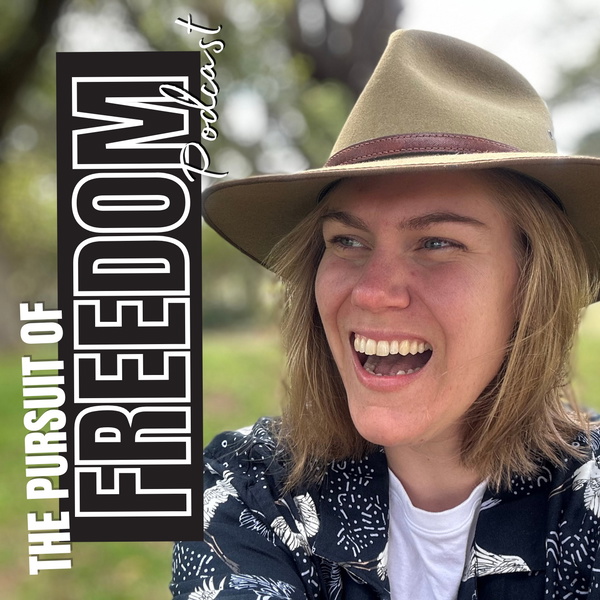
I sit down with Tara Halliday, an imposter syndrome specialist with over 21 years of experience as a holistic therapist and coach. We delve into the fascinating world of imposter syndrome, uncovering what it really means, where it stems from, and how it impacts so many of us. Tara shares the surprising root cause of imposter syndrome—our societal tendency to tie self-worth to our actions—and explains how this can be reframed to achieve deep self-acceptance.
We also discuss practical tools for letting go of stress, reprogramming negative emotional triggers, and fostering unconditional self-worth. Along the way, we bust myths, explore how imposter syndrome shows up in everyday life, and talk about the ripple effect of overcoming it—not just for ourselves, but for our relationships, work environments, and communities.
🔗 Resources Mentioned
- Take Tara's free imposture syndrome quiz for a personalised report: www.completesuccess.co.uk/quiz/
- Buy Tara's book, Outsmart Imposter Syndrome: https://amzn.to/41lJu3D
☎️ Contact Tara
- Website: https://www.completesuccess.co.uk/
- Facebook: https://www.facebook.com/profile.php?id=100009513967101
- YouTube: https://www.youtube.com/channel/UCE0nE91GFiKJJfrIxHY_wuw
- LinkedIn: https://www.linkedin.com/in/tara-halliday-phd/
----------
Support the podcast: https://thepursuitoffreedom.com.au/support
----------
🎤 Send me a voicemail: https://thepursuitoffreedom.com.au/contact
⭐️ Leave a review: https://thepursuitoffreedom.com.au/leaveareview
✉️ Join the email list: https://subscribepage.io/freedom
🎙️ Apply to be a guest on the podcast: https://thepursuitoffreedom.com.au/guest
----------
📖 Chapters
00:00 Introduction and Guest Welcome
01:17 What is Imposter Syndrome?
02:23 Validated Solutions and Tara’s Approach
04:10 Root Causes of Imposter Syndrome
07:11 Reframing Conditional Worth
11:11 The Science of Emotional Rewiring
13:41 Practical Exercises for Immediate Relief
18:13 Addressing Myths About Imposter Syndrome
25:31 Recognizing Symptoms and Coping Behaviors
32:31 Supporting Others with Imposter Syndrome
40:01 The Broader Impact of Emotional Growth
47:01 Defining Freedom
48:56 Closing Thoughts
'Til next time,

TRANSCRIPT
Rosie (00:46)
Welcome back to the Pursuit of Freedom podcast. Please help me give a very warm welcome to the amazing Tara Halliday, who is based in Southern Wales. She's been a holistic therapist and coach for over 21 years, and she's been an imposter syndrome specialist for
eight years now. She's got two Amazon bestsellers and is the creator of the Inner Success one-on-one training program to eliminate imposter syndrome. Tara, thank you so much for joining me today.
Tara Halliday (01:17)
I am so pleased to be here, Rosie. Thank you.
Rosie (01:21)
I'm really excited for this conversation because imposter syndrome is a term that is thrown about left, right and center. And if I'm being honest, I'm not sure I actually know what it is. So can we, can we start there? What is imposter syndrome?
Tara Halliday (01:40)
There's a lot of confusion about what exactly imposter syndrome is, it means, everything. So yeah, imposter syndrome is the secret feeling of being a fraud. When you're not a fraud, it's self doubt, it's feeling like you don't quite belong, it feels like you're not quite good enough. You know, on the one hand, you know, intellectually, you're capable and competent. Inside, you're just not feeling it. And that
Rosie (01:45)
Mm-mm.
Tara Halliday (02:07)
tension that you're trying to hold two viewpoints at the same time, that tension causes a lot of stress and people think it's them. There's something wrong with them. It's their personality at a floor and there's nothing they can do about it, which is not true.
Rosie (02:23)
okay, it's not true. Let's touch a bit more on that. What can we do about it?
Tara Halliday (02:26)
Yeah.
Yeah, so several things that we can do about imposter syndrome. just in the last four years, there's some papers being published in academia, which is finally validating a solution to imposter syndrome. the reason I say that is in 2020, there was a paper written to call the last 40 years,
of research into imposter syndrome, first discovered in identified in 1978, 40 years of research trying to find out what do we know for certain, you know, who gets it when and what to do about it. They said in 2020, there were no validated solutions to imposter syndrome published, which was stunning. Absolutely. mean, and I work in the field and when I came across the paper, I'm like, wow, I didn't didn't appreciate that.
So since then, there's a few been published. And so there's been online training, there's been coaching, and there's been some work in self-compassion. And all of those get between 20 30 % improvement, which is good, which is great. It helps calm this stress down. The work I do addresses the root cause of imposter syndrome. And then we get a 67%.
Rosie (03:38)
something.
Tara Halliday (03:49)
improvement in symptoms. basically eliminate imposter syndrome.
Rosie (03:52)
67 % improvement. Wow.
Tara Halliday (03:55)
It's very exciting. so scale of, know, in scale of one to 10, right, how stressful is imposter syndrome? The average of 8.3 goes down to 2.8.
Rosie (04:01)
Mm-hmm. Mm-hmm.
Wow, when you put it like that, yeah, wow. Yeah. So you mentioned your sort of approach addresses the root cause of imposter syndrome. So what is the root cause?
Tara Halliday (04:10)
Yeah, yeah, it's very exciting. Yeah, yeah.
the root cause of imposter actually identified back in the 1950s. But back in the people didn't think they could change their brain. Yeah, they thought that the idea at the time was the brain was fixed. Once you're an adult, you can't change it. There's nothing you can do, just have to live with it. Which was quite depressing, I'd imagine.
Rosie (04:26)
Okay.
Mmm.
Hmm.
Tara Halliday (04:45)
So, so what they're talking about is, is an unconscious belief that it's something we hold to be true, but we're not really aware of it because it's so pervasive in our society. And the belief is that our worth as a person can change. It's variable and it depends on what we do. If we do something good, we are good. If we do something bad, we are bad. So what it is, is we've, we've put together
We've glued together who we are as a person with our actions. And that is the cause of what they identified in the 1950s as the root cause of all human suffering. That's how big it is. And it turns out that it's the root cause of imposter syndrome as well, in that the symptoms of imposter syndrome match exactly the symptoms of this variable worth or conditional worth.
Rosie (05:18)
Mmm.
Yeah, wow. Yeah.
you
That is so powerful when you frame it like that. So are you saying that our self-worth isn't tied to our actions? Is that what that means?
Tara Halliday (05:58)
That's exactly it. is, that's the freedom right there. And this is what we see. So some of the symptoms of imposter syndrome, see are things like the self doubt, the comparing to others, procrastinating perfectionism, over preparing a whole host of other things, all driven by this feeling that we're not quite good enough and we might be found out.
Rosie (06:01)
I've been doing it wrong
Tara Halliday (06:25)
when we address the root cause, then the driver for all those symptoms goes away. And so instead, and you literally forget to doubt yourself, right? An opportunity comes along and you don't go, who am I to be offered this and accept this or talk to this human being? And what you have instead is, that's interesting.
Rosie (06:36)
Mmm.
Mmm.
Tara Halliday (06:50)
so you're adventurous, you're natural human curiosity, your natural compassion for other people blossoms when you change to really believing and knowing that your worth is unconditional. And the thing is, when we're born, a baby, a baby is an absolute miracle. They don't have to do anything to be worth caring for and loving for, they just are.
Rosie (07:12)
Mm-mm.
Tara Halliday (07:18)
And the truth of human existence is that from that day to right now, nothing's changed. We're as worthy of love and care and affection as we were when absolute brand new baby.
Rosie (07:25)
you
So what has happened between when we were born and then when we're adults?
Tara Halliday (07:38)
Yeah, that is a great question. a lot of people, particularly when we talk about imposter syndrome, they think, well, it must have been some thing, some thing must have caused it, right? Maybe it was maybe it was my parents, but my parents were terrible. Maybe it was my school teacher. Well, you know, you know, there doesn't seem to be like a big trauma that causes it. And that's absolutely right. So what happens is when when a baby is born, its brain hasn't got a
Rosie (07:46)
Mm-hmm.
Mm-hmm.
Tara Halliday (08:06)
framework to identify everything right, it can't say that's a cat, that's a lamp, because it doesn't, it doesn't have that model yet. So as as the child grows, it creates a model round about the age of two, child starts to recognize their self, right, their self, they start to identify that they are separate from
Rosie (08:11)
Mm.
Tara Halliday (08:29)
these other people, they're separate from the table from the dog, they get the ears. And so that is the point at which we're separating out and refining the concept ourselves. at that point would have been the ideal time to learn that our worth is not our actions. It's missed. It's a missed step that
Rosie (08:33)
You
Hmm.
Tara Halliday (08:56)
But now there are a few people, 0.005 % of people, very small number of people, that do get taught that their worth is unconditional and that it doesn't depend on what they do. And for those people, they do get that natural separation of my worth and my actions. for the rest, that's because it's so pervasive in society.
Rosie (09:09)
you
Hmm.
Tara Halliday (09:25)
go, what do you want to be when you grow up? Not what you want to do. Right? So our doing and being are not separated in just messages absolutely every single day.
Rosie (09:29)
Yeah.
you
So am I right in saying it's a combination of we're never explicitly taught the difference and then also there's the social conditioning on top of that? Is that the mix there?
Tara Halliday (09:52)
That's it. Yeah. So the so the way that the brain learns is it's as as you as as we get to adulthood, or as we grow to adulthood, we're continually to refining this model of the world, you know, what you know, what what's real. And so we're updating it. And the more proof we get that one concept is true, the more it kind of gets locked in, the more true it seems to us the more inherent in that's why imposter syndrome.
Rosie (10:05)
Yeah.
Tara Halliday (10:21)
feels like it's who we are feels like it's our personality because we've got these layers and layers of, of proof. So one of the things I do in the one to one work is dismantle that proof. And then we can change the belief that underlies it. So there's systematic scientific way to dismantle that proof and set us free.
Rosie (10:46)
It makes sense because once we believe something, we then look for things to confirm So it's just this vicious cycle. It makes a lot of sense. Would you be able to give us an example of how we break away from that?
Tara Halliday (10:59)
Yes, it would.
Yeah, so it'll go a bit deep into neuroscience, if that's okay. All right, things that trigger us, this is why imposter syndrome is a problem, because it triggers us fight, flight and fleas, the things that trigger us are stored, if you like, in a part of the brain called the amygdala, the fierce, fierce center of the brain, and it basically has this has this list of
Rosie (11:11)
Let's do it, yeah?
Tara Halliday (11:33)
potential threats. And it's supposed to be there, it's mechanism. It's so that we jump out of the way of a moving car, we duck when there's a ball coming towards our heads, know, stuff like that. It acts before we can think. And the conditional conditional worth is one of those in there. So it triggers the nervous system. So what we need to do is unwind that belief. So the memory is stored.
It's stored as a the facts and the emotion that goes with it. So what we do is we take a step by step approach pick one very specific instance, say the time that driver last week stole my parking space. Right. And, and, and then you got emotional reaction to it. Yeah. Yeah, exactly. Yeah. So what we do is we take that one instance.
Rosie (12:07)
Mmm.
yeah, I'm feeling it.
Tara Halliday (12:30)
And then we walk through a series of steps that are designed to release a particular neurochemical in the brain called acetic-coli. And when that neurochemical is that combination of memory or fact and emotion is able to change. So most of the time it's not able to change, it's locked, right? But the acetic-coli...
Rosie (12:54)
Mm-hmm.
Tara Halliday (12:56)
allows it the possibility of change. Now, if we carried on feeling those strong negative emotions, it would reinforce that. If we change our emotions to strong positive emotions, then it shifts it. So then when the acetylcholine, you know, settles down again, what was stored previously as a negative emotion and a fact is a positive emotion and a fact.
and it no longer triggers the amygdala. It basically shuffles itself off the list of threats. So. It does.
Rosie (13:31)
Sounds like magic.
So this chemical, let's see if I remembered it right. Acetacoline, is that what you said? Yeah, So we're changing the negative emotion to a positive one. But how on earth do I do that? If I use the simple example of a bit of road rage, this person cut me off. I am furious. I'm not going to all of sudden say, it's okay, I love you. Or is that possible? How does that work?
Tara Halliday (13:40)
That's exactly it, yes.
Yes.
So first we've got to narrow it down. So it's not all people who've ever caused road rage, very specific, that one person. And then we start to understand. So there's a framework where we can look at people and the ways that they behave from the viewpoint of conditional work, that people behave in unhelpful, unproductive,
in elegant, ways, hurtful ways, right? Because they're trying to avoid the pain of conditional worth. that person would have a reason for what they've done. And if you, and then, so then it's kind of a letting go process. It's like, you know, actually, from their point of view, you know, maybe they didn't see you.
Rosie (14:55)
Mm.
Tara Halliday (14:55)
Maybe they're in a tearing hurry. Maybe they've just had an argument with somebody and they feel entitled to, you know, claim some sort of power back or, you know, feel better about themselves, something like that. So understand that if they've done something like that, it's because there's something really stressful going on for them. Right? And then, yeah, and then what you can do is, okay, if that's going on,
Rosie (15:07)
Mmm.
Right, there's an antecedent there, yeah.
Tara Halliday (15:24)
for you. Well, you know, that's, that's, you know, I'm sorry for you in that. And it's pretty sad that the only way you feel that, you know, the only way you have to cope with this is to steal my parking space. And if, and understanding that if they knew a better way to do it, then they would have done it better. You know, a kinder, gentler, better, happier way to do it, they would have done it. And that kind of
let's go, you can have it. And then when you have the compassion for the other person, how sad that that's the only, that's the best they've got. How sad for them, what was their life like? They must be, you know, pre-stressed all the time. Then you can start have that positive emotion for them. And that's, that's where it comes out. So it's really, you know, putting yourself in the other person's shoes, understanding what, why they're doing it, and having that empathy for them. That leads to compassion. And you go,
Yeah, doesn't mean what they did was fine. Yeah, so it's not letting them off. It's not being a doormat. It's not letting people walk all over you. In fact, when you go through this process, you basically do this letting go on a number of different scenarios between 15 and 30 of them is what will change.
Rosie (16:26)
I was gonna ask that, yeah.
Tara Halliday (16:45)
So it does work. Yes. that will change. But I know, right? It's not magic. It's systematic brain engineering, if you like. Yeah. But if you do those, then you find that you're actually, it's actually easier for you to impose consequences without being angry. So it's like, you know,
Rosie (16:46)
Yeah, damn it.
Hmm.
Mmm. Mmm.
Tara Halliday (17:13)
It's not you speeding and you get pulled over and you get given a parking ticket, Sorry, speeding ticket. That's the consequence of your action, right? officer giving you the parking ticket doesn't have to be angry at you or disappointed at you or anything like that. It's just calmly know that's the consequence of what you've done. So it's actually, what I find is people enforce their boundaries and...
in forced consequences more easily and more comfortably because they don't have this emotional response that they either need to get their vengeance or punish or be disappointed or angry or anything like that.
Rosie (17:55)
Yeah.
So this work, it sounds like it impacts all aspects of life. This isn't just, it's just going to improve this little bit. Cause when you say imposter syndrome, I think of that as a very isolated niche sort of thing. But I'm learning as you talk, it's tied to conditional worth and that we think our actions are tied to our self-worth and it's all very complex.
Tara Halliday (18:13)
does.
Rosie (18:31)
So when we start to undo that.
And what's this chemical called? Aceticoline, right? When we start doing that.
you know, over and over again, keep working through these scenarios. And it sounds like you're, you use the word compassion and it's very much, I guess, leading with empathy and curiosity because I know for me, when I hold onto that anger, it just ruins my day.
Tara Halliday (19:04)
does. Yes. Yeah. Also, goes on when when when if you go into the the that that you know, fight, right, or the flight run away or freeze, right? It releases stress hormones in your body, adrenaline, cortisol, and they're in your muscles, readying you to fight the tiger or run away from it, right? It's very physical response. And it changes the blood flow in your in your system.
Rosie (19:05)
doesn't help me at all.
Mm-mm.
Tara Halliday (19:32)
So the blood flow goes sent to the muscles and it gets taken away from your prefrontal cortex, which is your logical thinking and planning. You literally cannot think so well when you're in that state. Princeton University measured that your IQ drops by 13 points in that state. Your creativity is down by 50 % in that state. Everything that you want, you're more emotionally reactive.
Rosie (19:44)
you
Wow.
gosh! Yeah!
Tara Halliday (19:59)
And it can take up to four hours if you're just walking around and things, can take up to four hours for those stress hormones to leave and for you to calm down again. And that's why you're absolutely right, it ruins your day. So the very first thing, like the number one thing we do in my program is take people through an exercise that gets the stress hormones out of their system really, really fast.
Rosie (20:03)
Yes!
What?
not saying that we're never going to feel the anger or that emotion, right? Is what you're saying, we sort of feel it, but then we're learning how to not hold onto that. Is that more what it's like or what exactly happens?
Tara Halliday (20:38)
So the very first part in the program is learning how to get yourself out of that stressed state really quickly. So it doesn't ruin your day, right? So that your day overall is more calm. If you just did that, that would be amazing. There would be a nice change in your life, everything would be happier. Yeah, yeah. So you'd have this, you know, you'd be chill a lot of the time because, you know, you get over the triggered parts sooner. When we do the...
Rosie (20:45)
Yes, yes, yes, yeah. Cool.
That'd be awesome, yeah.
Tara Halliday (21:08)
the letting go and working on changing the belief in the brain, that stops certain events triggering you. Because it me change the emotional tone, if you like, of that individual memory, then that situation is no longer a trigger. And so what this looks like for people is like, say you're in a meeting with somebody and they start getting very angry, right?
Rosie (21:36)
Mm-mm.
Tara Halliday (21:37)
people have lots of different responses to anger, they might get angry back, they might be afraid, withdraw, they might freeze. But that's all the triggered responses. When you go through this process and develop unconditional worth and somebody's getting angry, it doesn't trigger you. And you start looking at them going, something's going on for them. Why are they that you know, there's there's the clearly stressed, poor thing, right?
Rosie (22:02)
Hmm.
Tara Halliday (22:05)
This is, you know, and whether it's about this meeting or there's something going on in their life, you know, from their actions, there's something going on. You start to have compassion for them. How you know how difficult it must be. And you start to want to try and help them. And this is this this is effortless. So this isn't like, here's my checklist. have angry person. Yeah, it's not that it comes up because it hasn't triggered your nervous system because it's not on the list of threats. And
So you're absolutely right when you said, you know, this, the effect, the ripple effect of doing this work is absolutely huge because it changes relationships, changes personal relationships, working Most importantly, it changes your relationship with yourself.
Rosie (22:44)
Mmm.
Mmm.
Tara Halliday (22:54)
And this is how we're getting rid of imposter syndrome because what we're generating is deep self-acceptance and self-doubt.
Rosie (23:04)
could you share with us, like, how do we quickly, I haven't got the words. You were saying you could quickly release that stress and that emotion out of your body. Could you share with us like a tip on how to do that?
Tara Halliday (23:14)
Yeah, so.
I can show you, It's a shakeout. So all we're doing, so we're not removing the emotion part. The very quick thing is getting, what we're doing is we're getting the stress hormones out of our muscles quickly so that the blood flow can rebalance, we can get back our creativity and our brains and things. So what we do, I'll stand a little back. So we stand up and we start shaking, like shaking my body.
Rosie (23:18)
beautiful. Yes!
Okay. Okay.
Right. Yep. Yep.
Yeah. I haven't even got room in the van. I'm gonna... Yeah.
Tara Halliday (23:46)
Yeah. And then you get faster. And then you shake one leg. Then you shake the other leg. Right. And then you wiggle your back like a dog shaking off water. that now you see I'm a bit breathless having demonstrated. Right. And then you do some slow deep breathing. So you breathe in for four, hold for four, breathe out for four, hold.
Rosie (23:51)
People need to watch this on YouTube. Yeah.
Yeah!
Tara Halliday (24:16)
for, go around that. Then you start bringing your brain, your attention back to the safety of where you are. So you look around the room and you look for everything that's blue, for example, whatever colour you like. And then you listen to what you can hear and I try and identify it. that's traffic, that's a bird, that's a And then you stroke the sides of your arms like a...
you crush your arms in front of you and stroke the top part of your arms like you're petting a dog or something. Really soothing or you can run your hand right down the front of your body. Just strokes. And what you're doing is you're letting your brain know that everything's safe by connecting to all of the senses. So when you do that, then afterwards there is a real stillness. It feels
Rosie (24:45)
Mm.
Tara Halliday (25:12)
harm again. So yeah, that's the that's the quick way to get yourself out of a trigger.
Rosie (25:15)
Wow. Yeah. I love that. So for example, if I'm somewhere, say I was back in the nine to five and someone's really pissed me off in a meeting, what would you suggest I do in between that time and when I can get away and do my little shake off and get present? Like, is there something I could do in the interim? Cause it's probably not appropriate for me to stand up in the boardroom and start shaking it off.
Tara Halliday (25:32)
haha
Well, you know, sometimes people in, you know, if this is an interesting thing, everyone in the culture was aware of this and there was this practice and there was a tense moment and the person leading the meeting said, you know what, let's just all stand up and shake out together. Wouldn't that be amazing, right? If we change the way our work environment handled things like that, it'd be amazing. What you can do.
Rosie (25:47)
Okay.
Good point.
Yeah. Yeah.
Tara Halliday (26:12)
in the moment is recognize it for what it is, right? Use it as a self awareness. Okay, this is me getting triggered. There's a good reason, right? My brain, my amygdala's got a good reason why this is triggering me, right? So it's not that it's just spontaneous or anything like that. And if you know, if you do the other work, then there's something you can do about it afterwards.
Rosie (26:16)
Mmm... Mmm.
Tara Halliday (26:40)
But even just under if I know this is me being triggered, takes you a little bit, puts a little distance between you and that emotional thing. You can do some deep breathing. feel really angry, if you're like on a virtual meeting, or if your hands are under the desk, you might squeeze your hands and release squeeze and release. And that's just a little bit of muscle, muscle flexing. You might
Rosie (26:43)
Mmm.
Definitely.
Tara Halliday (27:06)
glass tables would stop that. Or you might, or you might just be yourself and like, we, can we just call a bathroom break a moment, go into a bathroom stall and shake, just watch you don't hit your hands on the side of the wall. Yeah, just be careful. Yeah, but, do that. And then that is a way to at least calm you down a bit. The fact is, you might have to be with that
Rosie (27:07)
Hahaha!
Yeah.
That would be me for sure.
you
Yes.
Tara Halliday (27:35)
state for the rest of the meeting for the next half hour but then you'll get rid of it so it's not going to ruin your whole day. It might ruin the meeting but it's not going to ruin your whole day.
Rosie (27:38)
Yes, yeah.
Mmm.
That's so powerful and so simple. You just demonstrated it as very quick as something that almost feels a little bit fun, which I love. And talking through this, go, you know, before I met you, would have gone, what on earth does that have to do with imposter syndrome? It's something totally different. So can you talk me through some of the other myths? Cause when I met you the other day, I made a comment and you very kindly
Tara Halliday (27:47)
Yes.
You too.
Yeah.
Rosie (28:14)
sort of corrected me indirectly and I went, because I made a comment about women and imposter syndrome, because it seems like a widely held belief that women experience this more than men. Does that hold true?
Tara Halliday (28:29)
Yes, these short answers, no, Bernie, but you probably want the longer answer. in 1978, when it was first identified, the study was done on female graduate students who didn't feel like they belonged, didn't think they deserved to be there, they felt they were going to get found out and thrown out. about 12 to 15 years after that, further studies
Rosie (28:33)
haha
Yes, yes.
Tara Halliday (28:56)
kind of confirmed this, that women got it more than men. And in the mid 90s, there was some work done where they changed the survey just a little bit and the survey was absolutely confidential, 100 % anonymous. And under those conditions, the numbers came out, men and women equal. So what's going on is that these studies that have found that women get it more than men,
Rosie (29:18)
you
Tara Halliday (29:25)
are actually capturing a cultural trend, which are a global cultural trend, where men are not allowed or unwilling, probably a combination of the both, to expose what they consider to be a personal flaw or personal weakness. And so it's completely apart from imposter syndrome. So when we go back to when we developed
Rosie (29:29)
Yes!
Mm.
Tara Halliday (29:53)
that sense of conditional worth, you see there's no gender at two years old. There's no gender in terms of worth, actions and worth as well. So that reinforces it as well. And, you know, it's a big deal as well. Over 70 % of people, high achievers particularly, experience imposter syndrome at some point in their career.
Rosie (29:57)
Right.
you
Mmm. This is amazing. You're just breaking down that stereotype about men and women. And it's, I think it's important to have these discussions.
Tara Halliday (30:27)
It really is because, you know, if women think that it's something to do with being a woman, it reinforces the idea that there's something fundamentally wrong with being a woman. It's fundamentally wrong. And I have heard one person in quite an influential setting quote some research and the researchers were just speculating. They'd got this disparity to men and women.
Rosie (30:40)
Yeah.
Tara Halliday (30:55)
And they said, well, maybe it's because women have less testosterone and testosterone gives you a bit more confidence, right? And you can see this is really, it really is. So, well, the researchers, often speculate in their papers. They say, we think, well, it might be this, it might be this. They're throwing up some ideas for future research. But the person I was talking about was very influential and she took that to mean...
Rosie (31:03)
That's dangerous, speculating like that. Yeah.
Right,
Tara Halliday (31:22)
That is why women get imposter syndrome. So she's going out giving these talks saying, ladies, sorry, you're going to get imposter syndrome because you don't have enough testosterone or you have less, the less than men. yes. No, no, they, well, they were trying to, they didn't understand. They all hypothesize it because they didn't realize they captured the cultural trend where men aren't allowed to express what they think is a weakness. Yeah. So.
Rosie (31:34)
And that's not what the researchers meant, is it? Yeah. They were hypothesizing, yeah.
Tara Halliday (31:52)
men and women out there, it's nothing to do with your gender. Absolutely nothing to do with your gender. And that is really, really important to know. And you can even feel, you know, for a woman, you're like, this isn't my gender. You know, it kind of like, there's nothing biologically holding you back, ladies. Is what I'm saying, right?
Rosie (32:17)
Right, right, right. In fact, biology is on our side because we can change that, we? We can use our brain and the acetylcholine chemical to...
Tara Halliday (32:20)
Yeah.
We can deliberately change our automatic unconscious response to the world around us.
Rosie (32:31)
Yeah.
Yes. Automatic unconscious response. I want to bring up something you mentioned at the beginning. Tell me if I've recalled this wrong. You said imposter syndrome is when you feel like a fraud, but you're not a fraud.
Tara Halliday (32:54)
Yes.
Rosie (32:55)
So how do I know though that I'm not a fraud? Maybe I am a fraud.
Tara Halliday (33:02)
If you're deliberately lying when you go to your job interviews, you kind of know that you're deliberately lying. But the feeling of being a fraud is really the feeling of, don't deserve this. haven't quite earned this when you have. So logically, you can look at it.
Rosie (33:10)
Okay, yeah. That makes it.
Yeah. Yeah.
Tara Halliday (33:28)
and logically can say, I did get that qualification. I did get that promotion. My review was amazing. I'm not feeling very comfortable internally because I'm doubting that that makes, that proves I'm good enough, right? That my work is high enough, but you can see it logically. there is a quiz that you can do that you can just
Rosie (33:45)
Right. Yeah.
Tara Halliday (33:57)
It's just 20 questions. It's the gold standard of quizzes and it can give you a score. And if it's over 50%, then imposter syndrome is having an influence. If it's over 62%, you do very well to do something about it because it's having a significant effect on your work and your life.
Rosie (34:06)
oooo
Yeah, right.
Yeah.
feeling there's going to be some people listening who are going, this is interesting, but I don't suffer from imposter syndrome. And I'm wondering perhaps if they just can't recognise it because a lot of people you're saying have it. So maybe could you talk us through what it might look like or some of those obvious symptoms?
Tara Halliday (34:33)
Yeah, sorry.
Yeah, so there are three groups of symptoms. There's the imposter syndrome thinking, there's the physiological stress response, and there's the coping behaviors, the automatic behaviors that it generates, it causes us to do. So the imposter syndrome thoughts are things like self-doubt, self-criticism, overthinking, ruminating, feeling like you're not quite good enough, like you know you're good enough, but you're not.
quite, it never feels like you're quite good enough. Feeling like you've just got lucky. Feeling like it was an accident that you got hired. So now you're stuck in your job because you can't leave your job because nobody else is going to hire you at that level again. So that's the, that's the kind of impact that it has. And it's very, very distracting. You've got this nagging voice who says, who are you to do that? Yeah. So that's, that's the imposter central thoughts that then triggers the brain.
Rosie (35:12)
Yeah... Yeah.
Yes.
Tara Halliday (35:40)
in terms of this danger, right? Back to the unconscious part, it's like, this is dangerous. So your body goes into fight, flight and freeze. And we've talked about how disruptive that is. It creates anxiety, overwhelm, it affects people's sleep. it creates a lot of tension. So they might notice that more. And then when we come to the behaviors, there are two types of behaviors. One
Rosie (35:44)
Mmm.
Tara Halliday (36:06)
I don't feel I'm not quite good enough. I feel like I'm not quite good enough. So I'm gonna hide a little. So you might avoid opportunities, like turn down promotions, go sideways instead of upwards in your career path. You hide your opinions, not speak up quite You might
Rosie (36:15)
Yes!
Mmm.
Tara Halliday (36:28)
keep things a secret. So you keep things a secret. Don't tell anyone. So those are kind of like hiding behaviors. And then you've got striving behaviors, You're feeling like I'm not quite good enough, so I'll try and make myself better. So that's perfectionism. Over-preparing, comparing yourself to others. Feeling like if I just get one more qualification, I'll finally feel good enough about myself.
Rosie (36:30)
Mmm.
Tara Halliday (36:56)
Right. And just gritting your teeth and pushing through. So those are the behaviors. So there's a lot in there. So not everybody feels all of them. People have got their own unique combination that's what you might start to recognize. And certainly when I start talking about imposter syndrome, people go, yeah, I do that. yeah, I do that. Tick, tick.
Rosie (37:00)
Mmm.
Yeah.
Yes.
Yeah.
Yeah. I was listening to you talk going, my God, my God. Yeah. Is it safe to say most people at one stage or another have experienced imposter syndrome? Would you say? Yeah. That's more, yeah, that's a lot. Yeah.
Tara Halliday (37:28)
Yeah, 70%. Yeah, the research says it's a lot, 70 and some are now saying 82%. world socially is starting to change and it is slowly becoming more acceptable for men to express their discomfort in any way.
And it's certainly which certainly wasn't the case many, many years ago. So it is slowly changing. So I think we'll start to see those those numbers creep up when more of the studies capture men's response fully. Yeah.
Rosie (38:00)
Right, right, yep.
Yeah, yeah, that makes sense. So if we have somebody in our lives who is experiencing imposter syndrome, what could we do to help support them? Is there anything we can do?
Tara Halliday (38:18)
Yeah, and the key word there is support. One of the triggers for imposter syndrome, because it kind of comes and goes in waves, right? Yeah. And one of the triggers can be a combination of high challenge and low support. So the more support you can give somebody in your life, the better they are, or even just help them get support or help them.
Rosie (38:25)
Yes, yes.
Mmm.
Right, right.
Tara Halliday (38:44)
secure support from someone else. That's a very, very simple thing you can do. One thing that's really helpful is to educate them, right? Let them know because they may be unaware that this is actually imposter syndrome. So I'd recommend my book, Outsmart Imposter Syndrome. That was published last year and you can buy it all over the world.
Rosie (38:53)
Mmm.
Mmm.
Tara Halliday (39:09)
That can be helpful. I've been at signings and someone's picked it up for their son or daughter or partner. so just understanding that this isn't you can be really powerful. there's really three things that you can help people with. It's not you, you're not alone, right? It's not that there's something wrong with you and there is something you can do about it.
Rosie (39:15)
Mmm.
Tara Halliday (39:39)
And that gives hope.
Rosie (39:42)
is really helpful. Those three things you said, three things you can do, tell it's not you, there's nothing wrong with you. You're not alone and there's something you can do about it. It does give that feeling of hope.
don't know if you can hear the birds squawking in the background. Yeah.
Tara Halliday (40:02)
Yes, you're cool with this. We'll you in the good night.
Rosie (40:06)
when you record in a van and you're parked near a beach. Welcome to Australia. I don't think they're experiencing imposter syndrome. They sound free and very happy. But that is really powerful. And I encourage listeners, share this episode with somebody who you think could get value from it. And I think that's going to be most people. Because Tara, you said,
Tara Halliday (40:11)
Love it.
Rosie (40:30)
You know, 70 % of us are experienced imposter syndrome and some studies estimate it to be higher than that. And it's probably going to get higher as people become more comfortable, especially men in sharing that. and what was the name of your book again? Outsmarting Imposter Syndrome? it Outsmart? Outsmart Imposter Syndrome. I'll put a link to that in the description because this, it feels like it's bigger than imposter syndrome.
Tara Halliday (40:46)
Smart Imposter Syndrome. Yes.
Rosie (40:58)
It is imposter syndrome, but it feels bigger because I didn't realise how big and all encompassing it is. So I'm curious, there any other myths that come to mind about imposter syndrome? We've covered a few of them. Are there any others?
Tara Halliday (41:06)
Yeah.
myths I hear are from, you know, influencers who are saying, this is my take on imposter syndrome. you know, so that's really interesting. One of the myths is that it's a beginner's issue. Because it was originally done on graduate students, lot of the research, 60 % of the research has been done on students rather than, you know, older people. And there's this kind of idea of,
Rosie (41:25)
Mm-hmm.
Tara Halliday (41:38)
It's about learning. It's about when you're a beginner, then it's uncomfortable and that must be imposter syndrome. Well, the fact is that it might be, but it might not. And so if it's a beginner's issue, then people will go, well, if I just grit my teeth, push through it, work through it, then when I get more experience or when I get more promotions, there'll come a point where I'm not going to feel this anymore. So, you know, people go through their...
Rosie (41:46)
Right.
Mmm.
Tara Halliday (42:07)
they're 20s and they think, well, I just need to work this out, know, work through it, get through it and it will go away. Yeah. And then you get to your 30s and it hasn't gone away. You think, okay, I'm just going to grit my teeth now and pull through it. And then when people get to their 40s, they see that it's been this repeating pattern. And thinking in high achievers, their job hasn't proved, their seniority hasn't proved to them.
Rosie (42:12)
Mm-hmm. That sounds familiar. Yep.
Tara Halliday (42:35)
that it hasn't changed that feeling of being not quite good enough. Their income hasn't proved it, their qualifications hasn't proved it. so the majority of clients I get, the average age is 45, because that's the point which they finally realize this is a pattern and it's not going away.
Rosie (42:52)
you
Tara Halliday (42:56)
And so that then motor and it's having this big negative impact in my career. mean, you just imagine if you take somebody who's in their mid twenties and they've got this like high, high trajectory in terms of where their career is going to go and you delay each promotion only by two years, right? Two years, two years. So over the course of their career, just their salary can miss out, you know,
Rosie (43:09)
Mm-hmm.
Tara Halliday (43:26)
hundreds of thousands, if not millions of dollars or pounds or whatever currency you want to put on it. And so, you know, if nothing else other than this emotional stress, it's uncomfortable, it affects your productivity, your focus, your relationships, all of it. If we just looked at finances, it's a big deal. So it's not a beginner's issue.
Rosie (43:27)
Yeah.
Yeah.
Tara Halliday (43:50)
sooner we really put that one to rest, the sooner I think people will start to address it.
Rosie (43:55)
Mmm.
Tara Halliday (43:56)
myth is that it's not real. yeah, it's not real. Well, the reason is because of the word syndrome, right? In the medical world, syndrome is a very specific term. And it's one of these things that in the general
Rosie (44:00)
Yes, I have heard this in social media. And yes, I'd love your thoughts on that.
Mm-mm.
Tara Halliday (44:19)
population, it's not. so imposter syndrome was originally identified as imposter phenomenon. And I think that's just too many syllables. I'm not I really haven't got to where that that change was made. But so it's not a medical syndrome. It doesn't need a psychotherapist. It doesn't need a diagnosis. It doesn't need medication. And for that reason,
Rosie (44:33)
Yeah.
Tara Halliday (44:47)
people will say, well, it's not a thing because it's not an actual syndrome. And they're absolutely right. It's not a syndrome, but the experience of imposter syndrome is very, very real. Yes. And that's why you get these statements like
Rosie (44:51)
you
Right. Right.
is huge. I need to listen back to this episode because it's just fascinating to me. If people spent the time.
You know, you spoke about conditional self-worth and we want to move towards unconditional self-worth. If everybody started doing that work, my goodness.
Tara Halliday (45:31)
Yes, the ripple effect is absolutely huge. It's one of the reasons I enjoy working with, you know, high achievers and executives because they have a huge ripple effect influence in their company, just modeling behaviors, changing where they're interacting with people, you know, in a way that allows them to be the very best of who they already are.
Rosie (45:32)
Wow.
Yeah.
Tara Halliday (45:59)
their leadership naturally improves. Their emotional intelligence, I measure emotional intelligence before and afterwards, and their emotional intelligence goes up significantly as well. I mean, it's huge. And so not only do you have somebody who's influenced the company culture,
So the company culture is then more inclusive. It's more about belonging. It's more about respecting other people, treating other people as if they, you know, that they have unconditional worth. more care and attention for people. So all of that influences the culture. But they're also a role model of how to behave because toxic environments, if we go into toxic work environments,
It is said that a toxic behavior is what is allowed. Because nobody says, yeah, you know, we don't do that here. Right. Nobody says that. So it's allowed. So when you've got a different perspective on things, as talked about holding people to account more, then we can, you know, change the toxic behavior in companies as well. So you've got a role model of how to behave and somebody who's
Rosie (46:49)
yeah.
Hmm.
Yes.
Tara Halliday (47:14)
prepared to say this is not how we want to live our work lives.
Rosie (47:21)
Yeah, it's applicable in the work environment, the home environment as parents, or if you're a couple with no children, both, I guess, personal leadership for yourself and how you carry yourself in the community. It fills me with hope. This is really exciting and it's quite achievable to achieve those improvements. You you said your work.
is showing a 67 % improvement and on a 10 point scale, did you say it was from 8.3 down to...
Tara Halliday (47:51)
Yes.
8.3 to 2.8.
Rosie (48:00)
2.3 down to 2.8. My hand is up. Yes, please. Yes, please. Amazing. Wow. Now Tara, I want to end with a question that I ask everybody on this podcast. It's called the pursuit of freedom. So it's a pretty obvious question, but I want to know what does freedom mean to you?
Tara Halliday (48:03)
which makes it so difficult to do.
Freedom means to me the ability to choose. It's the freedom to choose, to make choices. And some of that comes from society giving us the freedoms. But also we generate it internally. So if we're not holding ourselves back, if we're not saying, I can't do that, then we have freedom to really do whatever we want without.
Rosie (48:42)
Hmm.
Tara Halliday (48:54)
working against this block. Yeah.
Rosie (48:56)
Yeah, we do have a lot of control over that. And a lot of what we've discussed about imposter syndrome helps us work towards that freedom. Gosh, Tara, thank you. I'm trying to pull out some of the key things I've learned. guess I'm going to go back to what you said and how we can support people who are experiencing imposter syndrome. Very simple, three things. Make sure they know it's not you. There's nothing wrong with you.
Tara Halliday (49:01)
Yeah. Yeah.
Rosie (49:24)
Number two, you're not alone. I'm going through it as well, because chances are you are. And the third one, there's something you can do about it. And what you shared with us, I don't know if you have a specific name for this technique, but I'm going to call it embracing your inner Taylor Swift and shaking it off. You you shake, shake, stand up, shake your legs, shake your arms, you know, look around and be present, stroke your arms and touch the front of your body.
Tara Halliday (49:24)
Yes.
Yeah. Yes.
did not realize it.
Rosie (49:51)
That is really quite simple to do. And you you said it's a really quick way to release that stress. So it doesn't ruin your whole day. We have all been there. Something happens and you're just an asshole for the rest of the day because things aren't going right.
Tara Halliday (50:11)
Yeah, you know, and, you know, we talk about deep self-acceptance and self-compassion, right? You know, when we've got something that, as you say, makes you an asshole for the rest of the day, when you understand that this is just you reacting to this trigger, you know, okay, well, of course I'm going to act like an asshole because when I'm in a triggered state, I've got all these stress hormones, I can't think clearly, I'm emotionally reactive, I'm more suspicious, I'm more hostile, you know, you know,
Rosie (50:16)
Mm.
Tara Halliday (50:42)
you can kind of say, okay, you understand why. Now, you do that shaking out exercise and then you don't have to do it. But you know, can have that compassion for yourself as well. you don't have to add beating yourself up and judging yourself and criticizing yourself for you a heathen.
Rosie (50:45)
Yeah.
I'm glad you've said that. none of that. Thank you very much.
Tara Halliday (51:01)
Freedom from that as well.
Rosie (51:04)
Yes, absolutely. Tara, thank you very much. I'm going to put all your contact details in the description as well as the link to your book and where can people... yes, the quiz. Yes, everybody go do that quiz. Go talk to someone about this episode and perhaps read the book. I think I might just have to read that book because this topic...
Tara Halliday (51:18)
The link to the quiz.
Rosie (51:31)
is fascinating and posture syndrome is so much more than I thought it was. So thank you for opening my eyes to that. It has been an absolute delight. Thank you Tara.
Tara Halliday (51:42)
my absolute pleasure. Thank you, Rosie.
Rosie (51:45)
Thank you.