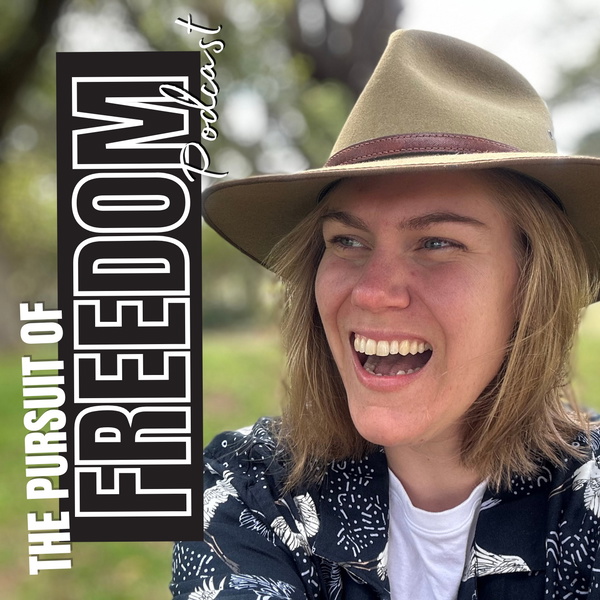
Join me and Ros Cardinal as we discuss the transformative power of shitty life events and how they often push us to make big changes in our lives. Ros shares how her cancer diagnosis was the straw that broke the camel's back, giving her the motivation to leave corporate forever.
Ros now supports women in leadership and, in this episode, emphasises that the corporate environment was never designed for women to thrive. We unpack the challenges women face in the workplace, the majors flaws of traditional leadership structures, and the necessity of setting boundaries to maintain work-life balance.
🔗 Resources mentioned in this episode:
- Top Five Regrets of the Dying: https://amzn.to/40iBpMx
- Laverne and Shirley TV series: https://www.imdb.com/title/tt0074016/
☎️ Get in touch with today's guest:
- Website: https://womensleaderarchetypes.com.au
- Facebook: https://www.facebook.com/rosalind.cardinal
- LinkedIn: https://www.linkedin.com/in/rosalind-cardinal-62520315/
- X: https://x.com/CardinalRos
- Shaping Change Facebook page: https://www.facebook.com/ShapingChange
----------
Download my values mini course: thepursuitoffreedom.com.au/values
Use discount code FREEDOM for 100% off.
----------
🎤 Send me a voicemail: https://thepursuitoffreedom.com.au/contact
⭐️ Leave a review: https://thepursuitoffreedom.com.au/reviews
✉️ Join the email list: https://subscribepage.io/freedom
🎙️ Apply to be a guest on the podcast: https://thepursuitoffreedom.com.au/guest
----------
Chapters:
00:00 Introduction to the Pursuit of Freedom Podcast
00:41 Rosie's Current Situation and Guest Introduction
01:14 Roz Cardinal's Corporate Background and Life-Changing Event
01:56 The Catalyst for Change and Embracing New Opportunities
06:52 Overcoming Fear and Taking Considered Risks
08:45 Encouragement to Follow and Review the Podcast
09:11 Challenges in Helping Others Embrace Change
11:02 Ros's Organizational Development Consultancy
11:38 Women's Leadership and the Glass Ceiling
12:58 Developing the Women's Leader Archetypes Model
14:32 Benchmarking Women Leaders and Expanding the Model
15:56 The Importance of Valuing Female Leadership
21:58 Historical Context and Workplace Evolution
28:34 Examples of Female Leadership and Flexible Work Environments
31:09 Rethinking Work Management
31:41 The Impact of COVID on Work Culture
32:43 Challenges in Implementing New Work Models
34:01 Advice for Leaders on Workplace Changes
34:45 Balancing Remote and Office Work
36:12 Economic Factors Influencing Return to Office
38:10 The Value of Diverse Leadership Styles
44:19 Leadership Beyond the Workplace
46:02 The Importance of Freedom and Choice
48:49 Setting Boundaries and Saying No
50:26 Empowering Women in Leadership
56:07 Final Thoughts and Resources
'Til next time,
TRANSCRIPT
[00:00:00] G'day and welcome to the Pursuit of Freedom podcast. I'm your host, Rosie Burrows, and I'm on a journey to find my freedom so that I can help you do exactly the same. Join me each week as I share the stories of everyday people who found their own path to freedom. I'm not going to focus on job titles and accolades because I don't care about that stuff, and neither should you.
[00:00:24] I want to uncover what truly makes you tick. Who are you when you step away from society's expectations and follow your heart? I still haven't figured it out yet. Have you? Either way, buckle up, because it's going to be one hell of a ride. Hello, and welcome back to the Pursuit of Freedom podcast. My van is currently broken down.
[00:00:46] I'm staying with a friend sitting in on the floor of her spare bedroom. I don't have my boom arm for my mic, but here we are improvising. And I'm so excited for today's episode. We are joined by Roz Cardinal. She is based in Hobart, so a fellow Aussie, and she actually regularly does van life, which is awesome, over in the US.
[00:01:07] Roz, welcome. Thank you so much for joining us today. Thanks for having me. Yeah, of course. Now tell us a bit about your background because you used to be in corporate, but you are no longer in corporate. You do something quite different now. So what was life like in the corporate world and what made you want to make that shift?
[00:01:31] I guess, um, for me. I had a successful corporate career. I was working doing work that I really enjoyed. I was working in organizational development, which is covers things like strategy, culture, team building, executive coaching, that kind of thing. And it was a, It was a comfortable life. I think that's what it was for me is it was a comfortable life.
[00:01:53] The money was good. It was, you know, a great job. And then as it happens to, you know, quite a few people, it's not something you'd wish on anybody, but some kind of big life changing event happens and you really rethink everything. And for me, that was a cancer diagnosis. So back in 2010, I was diagnosed with breast cancer and I was 42.
[00:02:13] So I was quite young. And it was one of those big wake up calls where you realise that everything, you realize all the things you, you, you think you're going to run out of time for. It's that sort of sense of, if this is the end for me, if I've only got six months or 12 months, there's all these things that I wish I'd done, all these regrets that start to come in.
[00:02:33] And for me, it was really about thinking about what that, what my life would look like without that, without those regrets. And so I had six months worth of treatment, which was, you know, just, you know, I couldn't do anything, I was stuck on the couch most of the time, but it was just time to reflect on what life was all about for me.
[00:02:52] And look, my corporate job was great, and like I said, I enjoyed it, but it was, there was quite a lot of stress. It was quite a lot of, um, time and energy. We were running a residential program, which was run twice a week, it was residential overnight. And I didn't go every time, but I went at least once a fortnight, so there was a lot of travel, a lot of time away from the family.
[00:03:12] And one of the things that I said to my husband, I remember quite clearly, I said, if I get through this, we're going to have to start traveling. Because we'd always put it off. It's always, you know, this is not the right timing. The kids are too young. The kids are at a difficult stage in high school. The kids are going to university.
[00:03:29] There's all these reasons why we didn't travel. And for me, that was the catalyst for really sitting back, like I said, and thinking, what do I really want to do with my life? And I knew that I wanted to expand my my reach. I wanted to do more. I wanted to reach more people. I wanted to help more people. And so that led me to quitting my corporate role in 2012, uh, beginning of 2012.
[00:03:51] So it was basically about 18 months after my, um, cancer treatment and starting my own business. And it's been wonderful. I haven't looked back. It's been fantastic. And like you said, we do do the van life in the U S we try and go once a year and, you know, we've, we've traveled all over the United States.
[00:04:06] It's been wonderful. We've really enjoyed it. That's amazing. Something that's come up in conversation with a few people recently on the show is how it's often these awful life events, you know, for you, it was the cancer diagnosis that seemed to result in these big life changes. And we all of a sudden go, you know, what am I doing with my life?
[00:04:30] What should I be doing? And I'm curious to hear your opinion. Do you think It requires an event like that to be able to make these big changes, or does it just accelerate it happening? I think it, it accelerates the process because it does make you think, if this is the end, you know, excuse me, if this is the end for me, if I'm never going to get to do what I've wanted to do, and that can really accelerate the process of going, I need to do something completely different.
[00:04:58] But you don't have to go through that. But I see people Make big changes at different points in life. It's usually a catalyst of some sort. It's a, the kids leave home and suddenly we're empty nesters. Yeah. Or a midlife crisis of some sort which happens to people. Or something goes on, a relationship breaks down or they lose their job or something where they go, Now I've got the opportunity to just do something completely different.
[00:05:19] Um. You know, if I'm in a job or in a relationship or, you know, whatever it is, it can be really comfortable. And it's that sort of sense of even though you might want something more, there's not the incentive to go out and do it. And then something will occur in your life where you go, now's the time, the time's right.
[00:05:35] You know, I don't have the restraints that I thought I had. Like with, you know, if I lose my job, it's like, well, I could get another corporate job exactly the same, or I could go and start a business, or I could go and work for somebody else, or go back to university, or whatever that looks like. And, um, I remember running a program, this is one of the corporate residential I was talking about, and we did do a big segment on, exactly that reflecting on life.
[00:05:57] And as a result of that, we did have quite a few people who chose to leave that organization and go do something completely different. So we had a accountant who went back to medical school and became a doctor, you know, like mid forties, seven years worth of training and interning and all that sort of thing.
[00:06:13] And she's now at a GP. I actually, she's at my local GP clinic. And we had somebody who quit marketing to become a nurse and we had somebody who quit marketing to start their own business. Um, and it was just that catalyst of going, thinking about what I want for my life and suddenly realising that It's great how it is, but it's not exactly what I want, and there's something else out there.
[00:06:32] Well, get in, in a minute, into the work that you do, but I've got another question on that vein. I meet a lot of people who go, Oh, I wish I could do that. But I just can't. That's not realistic. What are your thoughts on that? And what would you say to people who are in that mindset? You know, humans are amazing.
[00:06:53] We really are. We can do anything we want if we set our mind to it. And when people say it's not realistic, there's usually some, it's fear holding you back. Now it's not saying you take stupid risks. It's not saying you quit your job and decide you're going to just, um, be unemployed and wander around the countryside busking for a living.
[00:07:11] Or if you want to do that, that's all power to you. But you don't have to do that. It's considered risks. Often the risks are imaginary. We look at it and we go, there's too much risk in that. Like starting a business. I mean, people said to me at the time when I said, I'm going to leave and start a business, people jumped the risk.
[00:07:27] They're like, um, you know, running a business is really hard and what happens if you fail and where are you going to get your clients from? And that's a really big, you know, it's a big thing to do with your life, but it was a considered risk because I knew I was employable. So if it didn't work out, I'd get another job.
[00:07:41] So it's that sort of sense of, you know, you can do almost anything you want to do. Right. like somebody quitting accounting and going back to med school for seven years to become a doctor. You know, it's phenomenal. I looked at that and went good for her, but she loves it. She loves what she does now, you know, and it's not to say.
[00:07:56] You know, a lot of people do that. They get caught in, I went through university, you know, I finished school, went to university, I got a degree as say an accountant because I was good at numbers and it's not something I love doing, but it pays well, I get good money. Maybe I'm working my way towards becoming a partner in an accounting firm or something.
[00:08:13] I really, really wish I'd done something else, but we think, We're stuck with that career forever because we chose it when we were an 18 year old kid straight out of school. And look, when you're 18, who has any idea of what they really want to do? You know, there's nothing wrong with chucking in a career in your mid thirties or your mid forties or your mid fifties or your mid sixties and going and doing something completely different.
[00:08:34] You know, the risk is there. It's really, like I said, it's not an imaginary thing, but it's like we create a bigger barrier than it needs to be. A quick interruption before I continue my conversation with Ros. If you haven't already, can you please hit the follow button? It's the easiest way you can support the show.
[00:08:50] It would mean the world to me. It helps push the podcast to more listeners, which will help me get more amazing guests just like Ros, who we're talking to today. And, um, It also gives me a confidence boost. So hit the follow button. And if you're feeling adventurous, why don't you leave me a review at the pursuitoffreedom.
[00:09:07] com. au forward slash refuse. I think one of the things that I struggle with is when I come across these people, they are desperate for that change, but it's almost like they're not ready. And my automatic reaction is, I want to help, you know, I want to coach them and help them and get them on their way to the new path, but sometimes they're just not ready.
[00:09:29] Would you agree that sometimes people aren't ready or maybe aren't in the right mindset to even consider that there's a different path? Yeah, look, people in different phases of life. Look, sometimes there are very real restrictions. Like, for example, if you're a single parent and you've got kids in school and you're the main breadwinner, sometimes you are pretty constricted.
[00:09:50] You know, chucking everything in to start a business maybe isn't the right move for you right now. So there are going to be times in life where it's, it's not possible to do the things that you really want to do. But a lot of the time, Not being ready. Again, it's a, it's a feeling. It's a, I'm not ready because of all these barriers I'm putting up.
[00:10:09] And I was reading, and I've read it a few times now, that there's people who are end of life nurses. And they will say that at the end of people's lives, nobody's sitting there going, I wish I'd worked more. They all talk about, I wish I'd followed my dreams, I wish I'd spent more time with my family, I wish I'd written that book, I wish I'd started that business.
[00:10:27] They all have these dreams, and nobody ever says, I wish I'd done more work in my 9 to 5 job. Yeah, that's, that's really powerful. I know there's a book on that, I can't remember the title, but yeah, it's, it's powerful stuff, and I think framing it in that way, perhaps, can help us make those brave decisions.
[00:10:46] You know, fast forward a bit. Changing tacks a little bit. Tell us about the work that you do now. You're no longer in corporate, but you do some pretty exciting stuff and there's still sort of links to the corporate world in what you're doing now. So, tell us some more. So, I've got two um, main things that I do.
[00:11:05] The first one is what I left corporate to do, which is my organizational development consultancy. So I stayed with what I knew, what I knew I was good at, which is, you know, helping organizations become better at what they do through, it's really about leveraging people. It's that thing of, if we, helping organizations become more human, more human centric, because when people are happy and people are flourishing, organizations do better.
[00:11:25] We know that. So that's that sort of key arm of it, which is strategy, culture, exec coaching and so on. And then there's this other line of business which has kind of grown out of a, it's grown out of a number of experiences I've had. I was working with a lot of women who were getting to a certain point in their career without bumping the glass ceiling.
[00:11:44] And we know that's a reality. You get to this sort of point in your career where it becomes more difficult for women to advance for a whole range of reasons. But what they were doing is they were looking at the glass ceiling and going, I don't know that I want what's on the other side of that. I don't know if I can, I've got the energy to fight my way through it.
[00:12:00] And even if I do, on the other side of it, I'm looking at it and I don't like what I see. I don't want to be part of that world. I don't want to be part of the, the pressure and the hustle and the long hours and the expectations and the, the dynamics of that kind of environment. I want to do something else and I don't know what that something else is.
[00:12:15] And so in working with those women to do things like leave. a government job and become a CEO at a not for profit or, uh, quit a job and become, you know, start a business or change careers completely and, and those kinds of things. Um, it started, I really started to think about like, why is it that the corporate and government environments kind of, you know, almost eject women when they get to this certain point in their career?
[00:12:39] Like why? And, um, You know, it kind of gets written off as, oh, it's a midlife crisis or whatever, she's just decided to quit work and become a yoga instructor. And I've had people do that, by the way. Quit work and become a yoga instructor. Um, and, um, But there's something in the way that work's structured that's actually making it very difficult for women.
[00:12:58] So I started this journey of trying to figure it out and I just put something up on LinkedIn and it ended up going viral in the end and people from all over the place were getting in touch. And I talked to 538 women from around the world in an initial, I suppose you'd call it a focus group. And they contributed interviews, they contributed surveys, they contributed to group sessions.
[00:13:18] And out of that built this really fabulous idea for women that women's leadership can look different and that women don't need to feel like they have to fit into the, the mold of what they, when they look through the glass ceiling and see something and go, I don't want that world. They could create something different.
[00:13:35] And so we created a model and it came together really beautifully with this group because I was able to, um, you know, send them an email that said, Please finish this sentence, you know, a sovereign woman is and then all these beautiful words came back and I was able to flesh out a model and we've called it, um, the women's leader archetypes because archetypes are a pattern of behavior that people can recognize.
[00:13:58] So if you say that person's a real drama queen, everyone knows what that means. The drama queen is an archetype. So we developed this model with, with four empowered archetypes and four shadow archetypes that appear when we're not at our best. And then that kind of, so I started in 2016 and that model was developed by 2018.
[00:14:16] And then I launched it as an assessment tool and, um, just in the last sort of 18 months or so, we've ended up with more than 10, 000 women have, having taken the assessment in 93 countries around the world. Wow. So we've got some fabulous, fabulous data on how women lead. And the lovely thing about it, too, is that we're able to now benchmark because previously I'm accredited in over 25 different psychometrics and diagnostic tools.
[00:14:41] And when I work with leadership using these diagnostic tools, we're comparing women leaders with other leaders who are doing In the majority of their men. So we're comparing women with a male benchmark. So I really wanted to develop something where we're benchmarking women against other women. So you can see that how I compare as a leader with other women in the way how women lead as opposed to comparing myself with the male centric idea of leadership.
[00:15:06] So that's the business that I'm kind of really working on now. So the consulting is still ticking over, but I'm really sort of working into this space of helping women become, um, to become better leaders, not just in, in a, in a leadership role inside an organization, but better community leaders, better leaders in their families and so on through this model of this is how women lead when we're at our best.
[00:15:25] This is what it genuinely looks like. We don't have to model ourselves on male leaders anymore. Because that's what we did, you know, I did it in my early career, because you've only got men to look at as what does leadership look like, you know, it's men. And discovering the fact that women can lead quite differently has been quite profound for the women who've been through the process and been through the assessment tool.
[00:15:49] So it's something that I'm really, um, working on. You know, there's, there's two, two prongs to it. One is the women that we work with. And the other part is how do we change the system we work in so that it values female leadership, rather than. Ejecting them. How do we change the conversation at the top table that goes, Women's leadership is important, it needs to be valued, it needs to be respected.
[00:16:11] Both voices are equally as valued. Men and women. Both styles of leadership are equally valued. Male and female, not the male model being the, the woman. The, the paradigm that we measure ourselves against. And then, um, about a year ago now, I released a, an accreditation program for coaches to actually become accredited in the model and the tools to use with their clients.
[00:16:31] And that's been a real focus again for me is kind of, um, mentoring those women and supporting them to grow their businesses and become better coaches. So that's where I'm at. Long story, I know. Wow. Bye. Bye. Just, just up to that little thing, right? That's, that's amazing. That's, that's a huge piece of work.
[00:16:49] And I've got so many questions going through my mind, but let's start with one. Do women in leadership differ from men in leadership? I actually haven't worked with many female leaders. And that's the, the challenge for all of us is that we haven't. So we've only seen the male style of leadership. And what you see with women, um, I'll kind of take you back to some of the women that I spoke to.
[00:17:11] So I had women who were running businesses and there was a beautiful woman I spoke to called Jess and she has started a business in the US and she's the, largest provider of cockroaches to the live reptile trade in the US. So apparently owning lizards as a pet is a thing. Like, ew. But anyway, owning a lizard as a pet is a thing and they, they eat live cockroaches.
[00:17:35] So she started in her garage and grew, started growing cockroaches. And as the demand grew, she started reaching out to women that she knew who were lower socioeconomic areas, women, single mums, people who were struggling on welfare, and offered them the opportunity to join her, I suppose you'd call it a consortium.
[00:17:53] And now she's grown this network of women who just all work together beautifully, collaboratively, and supply these live cockroaches to people who want them for their lizards. And they sell to zoos and all kinds of things. But she built that. She could And she said, she could have When the demand started to go up, she could have built a big shed and expanded her operation.
[00:18:12] She could have built a factory. She could have hired people, but she didn't want to do that. She wanted to create a ripple effect for other women like her, and she chose to do that. And In talking to, like, there's a woman I spoke to who runs a speech pathology practice and she said that in her business, she doesn't feel like the leader.
[00:18:29] It's like a really collaborative effort. So women in leadership, it tends to be like a Venn diagram, not like a pyramid, like, you know, your traditional hierarchy where the higher you go, the fewer jobs there are and the more the competition ramps up. It's like this Venn diagram where we overlap where we need to and we all work together.
[00:18:46] And she said. She hasn't deliberately employed only women, but she said when I interview men, they always end up opting out of the process, because they look at what we're doing and go, that's, I don't understand that, I'm not sure how that would work for me. But she said she's got all women practitioners, they're all, um, part time because they've got families, and she said that, If somebody's sick or one of their children is sick, they all huddle together and go, right, let's split up the clients.
[00:19:12] So they will divide that person's clients for the day up into, you know, hand them off to other people. And everybody looks after it. Everyone steps up and takes an extra client or two that day, and they fix it all, and everybody's happy. The client's happy. You know, there's no impact on anybody. But she said this lovely sense of collaboration, because there isn't this sense that you now owe me because I did something for you.
[00:19:31] You owe me one. I looked after your client. You owe me something. It's just, that's what we do. We support each other. She said it's like working in a sisterhood. And I love that about this sense of female leadership, the collaboration, the connection, the engagement, the empathy that comes with it. This beautiful sense of getting things done through people.
[00:19:49] Yeah. That I love. And that's quite different from my experience in corporates and government. And for a lot of other women as well. It's a very, very different experience because we're used to that hierarchical. Mm. Um, and look, there's nothing wrong with it. It's, it's very tactical. It can be quite strategic.
[00:20:04] It's very, it's very, Um, but it is that hustle culture, whereas women's leadership is much more balanced and much more, you know, care for the people and then the people will look after the work. So do you think we're losing female leaders in the, in the traditional sort of corporate world because that it is so male dominated?
[00:20:25] Yeah. And that's what women are saying to me is, like I said, they'll look at it and go, I don't want that world. And I know there has to be something different and something better out there. So I'm going to find out what that is. And I've seen women who've coached women who've exited and become a CEO at a not for profit, or they've headed up a small charity or something like that.
[00:20:43] Because for them, it's about the mission and the give back to the community that's really important. And they'll often look at it and just go that. Look, some women do it successfully, but they often end up, um, because they've leaned into that male style of leadership, they end up getting labelled as they're too bitchy, they're too bossy, they're too loud, they're too opinionated, they're too, I even heard somebody say once, she carries her balls in her handbag.
[00:21:07] Oh my god. Which is, yeah, which is horrible, but they do, they get that sort of reputation for being tough as nails, you know. You know, you've got to be tough enough to fight it out with the blokes, or you end up with them becoming very submissive to the team. They become, you know, they sort of move into that very feminine type of role where they're the, the supporter.
[00:21:27] So, if the executive team is running late and they're going to have to have lunch, she's the one who will get up and take lunch orders from everybody and trot across the road and bring the sandwiches back. You know, or does the photocopying if somebody forgets their board papers, that kind of thing. So, You know, it's, it's quite rare.
[00:21:44] It does happen, but it's quite rare that you see women really step into that top team and do it in that really genuine authentic, feminine leadership way. So what do you think the major flaws are in the, in the system? The way it currently is. Look, it's a really, Interesting question, because if we go back, take a step back in human history, and this is where I went with the research, is I went back to what was it that we used to do before we started creating workplaces?
[00:22:11] And if you go back pre industrial revolution, we lived and worked together in families. You know, we worked in villages, in families, in small groups. We worked with people we knew, we had close bonds and close connections with them. And then 250 years ago, we took all the men out and put them into a workplace called work.
[00:22:30] And so those workplaces were designed by men, for men, in ways that worked for them because women weren't there. We just weren't represented in any capacity in the early days of the Industrial Revolution. We didn't come into the workforce until World War II, and then we went out again, and then we came back.
[00:22:47] And it's only really been, um, look, the generation before me in the Commonwealth Public Service had to resign when they got married. Wow. You know, because they were taking a man's job. I was actually talking to somebody. Today, I think it was, or it might have been yesterday, he said that, um, she used to get a pay slip from her job that actually had a, men got a, like a bonus.
[00:23:08] It was like a family bonus because they were supporting families. So women didn't get it, the men got it. And so we've been underrepresented in leadership. And the problem we've now got is that the workplace, like I said, has been designed by men for men. And so that even that hierarchical structure with one person at the top, it's not really something that comes naturally to women.
[00:23:28] So you get. You're forced into this competitive environment where the higher you go, the fewer, the fewer jobs there are, the scarcer the resources are. So we're always sort of fighting for a piece of the pie. Whereas in women's leadership, it's almost like if there's not enough pie, we just make another pie, we bake another pie.
[00:23:43] We just keep baking pies until everyone's got one. We don't go, we've got to fight over this last piece of pie that's left. I remember reading about Native American leadership and it was fascinating because they said the men lead everything outside the village and the women lead everything inside the village.
[00:23:59] And I thought that was lovely, the sense that you've got two different sorts of leadership in two different spheres, but they're both equally, equally valued. And that's what I think we've got wrong in the workplace. And the thing is, it doesn't even really work for men, because you've got men who never see their families, men who drop dead at age 55 of a heart attack at their desk because they're working so hard.
[00:24:22] Because it is so competitive and so driven. And you know, it's even, it's shifted, become even worse over the last 20 or 30 years. I mean, I remember my parents working and they never brought work home. They never thought about work once they got home, you know, they turned off at five o'clock, whereas now we're on 24 seven and there's this constant drive to do more and to deliver more.
[00:24:42] Workplaces are talking about doing more with less, which means the people have to do more work. And I think we've got to a point where, sure, there are going to be some organizations that could become more efficient. But overall, I think we've got to the point where we're driving people as hard as we can possibly drive them.
[00:24:59] And it's just not working for anybody. And that's the thing that needs to change. So, How do we change it? It's tricky. I wish I had the answer. If I had the answer, I'd be on it like a shot. But yeah, look, it's having conversations and I've been having conversations with senior women about this and they get it.
[00:25:19] They go totally, it resonates with them. They're going, yes, you know, we need to be thinking about how do we make more part time available? How do we make it easier for people who want to have a life outside of work? I even remember talking to a, you know, Um, I had a male, a departmental secretary come and talk to a women's leadership group I was running.
[00:25:37] And somebody said to him, what's the secret? If you gave some advice to us about the best way to have a career as a deputy secretary or a secretary, what would that be? And he said, get a wife. I've got one. They're awesome. And he said, my wife has done everything. She's managed the house. She's raised the kids.
[00:25:53] She's booked our holidays. She's paid the bills. She's organized everything so I could focus on my career. Yeah. Mm hmm. And. You look at that and go, what kind of life is that for him? The fact that he's had no input into, I mean, you know, he's gone on the holidays, but he's had no input into the running of his life.
[00:26:11] And that leadership inside the village. But again, you look at that and go, is that, Is that really what you want? Is he going to be one of those people that gets to his deathbed and looks back and goes, Gee, I'm glad I worked all those hours. Or is he going to go, wish I'd seen the kids a bit more. So the challenge is we've got to have those conversations.
[00:26:29] We've got to be open to it. It's almost like we can't see there's a different way of doing it. We've been stuck in this, this is just the way it is. If you want to be successful, you've got to work long hours. If you want to be successful, you've got to climb the corporate ladder. Yes. If you want to be successful, you've got to do what's required and put in and have a no life.
[00:26:47] Rather than going, haven't we had enough of this? Mm. Could you give an example of maybe what it could look like? I actually was talking to somebody just the other day about this, who is working in a, an industry that's very driven. It's, it's basically those do, you know, that kind of billable hours where you've got to account for every six minutes of your time.
[00:27:10] And we were talking about this. She's a, she's a young woman. She's got, um, kids. And she said, there's other women working in that same organization who are, childbearing age, they've either got them or they want them. And they were talking about it and she said to me, she said, I really just wish, maybe we should go and start it ourselves.
[00:27:26] Maybe we should just start an organization that's just for women. And we all work together and we look after each other's kids. And if somebody's got a baby who's sick, they can bring it to the office and we'll help take care of it. And we can have a work life balance and we can feel like we're contributing to something bigger than us.
[00:27:42] So it's not just about making more money. It's about how do we have lives because they're looking at it and going, the next step for us would be. moving into a partner. And the expectations of partners are so big. We just don't want to do that. Again, that glass ceiling, looking beyond it and going, I don't want that.
[00:27:58] And she really, it was almost like you could see her getting fired up. You could see the imagination going, she's going, it'd be amazing. And we could work together and we could have our kids around us and we could look after each other's kids and we could do all this stuff. And it was just, maybe have a, she said, maybe we could get a childcare to actually come and look after the kids on site room for them.
[00:28:15] And, you know, Yeah. And a room for kids, older kids to come after school so they can come into the office and they can hang out. It was just this beautiful sense of family about it. And she said that, she said it would be like a sisterhood. Mmm. And I love that. I love that too. Yeah. And have you seen any examples of, of things done differently?
[00:28:34] Like, um, female leaders in the workplace who have managed to create. a better system or a better environment to work in. Yeah, I have, um, I've had some of them as coaching clients. I've had some amazing women coaching clients. I had one who, um, became a managing director, uh, of a company and she set out to create something that was going to be really flexible and family friendly.
[00:29:00] So it was before COVID and they moved to flexible working. They Redesigned their office, they engaged some consultants to have a look at how people use the office space and what people actually did with it. And they discovered that people didn't actually need a desk to call in like a desk space. They just said people were only at their desk about 50 percent of the time.
[00:29:19] They're off in meetings, all the rest of it. So they moved to this very flexible, you carry your laptop around. You can go anywhere and they've got different spaces that people can use. They've got collaboration spaces and focus spaces and, you know, a cafe where people can sit and, you know, use their laptop.
[00:29:34] And she said that the whole thing was designed around, how do we help people work really effectively? But how do we help them thrive? How do we give them what they need to be successful? This idea that you can sit and work in a bean bag if that's what takes your fancy, you know? And, um, She role models flexibility.
[00:29:53] She role models going home early to pick up the kids from school. She role models good boundaries around switching off at night, you know. Like, she'll put in a full day's work, don't get me wrong. She leaves it to pick up the kids at three, but then she logs back on at, you know, seven o'clock after they've gone to bed and does more work.
[00:30:08] But she sets these boundaries around her availability and her staff know that. And I found that really refreshing and we had some great conversations when she was, um, Um, You know, sort of going through this whole, you know, my next step is managing director. What do I want this to look like? And when she got the job that, how do I want to structure this so that it works for everybody?
[00:30:25] And she found that even men, like men were saying, I actually want that. I want to go home early and pick my kids up. And she's going, go for it. Knock yourself out. Go get your kids, you know, have fun with them. And it's, you know, she's moved on to do something else now, but what she created was that quite phenomenal, this sort of sense of, sense of people first, you know, look after your people and they'll look after the work.
[00:30:50] Yes. So why isn't this done more? Is it because it's harder to lead a workplace in this way or is it because it's such a foreign concept? It's, it requires a great deal of trust, right? Because you need to trust that people will do the right thing. You need to trust that. And you also need good systems in place because what we tend to do is we manage by, um, hours of work.
[00:31:15] It's like if you're at your desk from 8 in the morning till 6 at night and I can see you, I know you're working. And in fact, we know that not to be true. We know that somebody could sit at their desk and play solitaire all day and we probably wouldn't, wouldn't know the difference, you know. But, um, we've been managing by hours of work rather than going, you know, You know, I trust you to do your work.
[00:31:34] I'll give you some tasks. I'll give you some goals. And as long as you achieve your goals, I don't really mind where you work or how you work. Just go do it. But the trust is the bit. And I remember when COVID happened and I was doing some work with a company in Melbourne that was, um, they used to, um, it was like a, you know, It's not really a support net, but we're like a safe space for CEOs to come and talk about some of the issues that they were facing.
[00:31:56] And when COVID first hit, the main topic of conversation is how are we going to make sure people are working because we can't see them. And it really quickly turned into how do we stop people from working really long hours because they're busy. They're doing insane amounts of work because they're at home.
[00:32:11] But then when I talk to people in the organizations, what I was hearing is, I'm so productive because I don't have that three hour commute. I don't have an hour and a half in the morning, hour and a half in the afternoon in Sydney, in traffic. I can get up and go for a walk with my kids and the dog, and then I come home, we make breakfast, we sit and have a chat, then we all sit down at the kitchen table, the kids start schoolwork, I start my work, and I'm so relaxed, and I feel so productive because of it.
[00:32:35] And so the big piece there is the trust and then COVID kind of finished and we've, we're clawing it back, which is so disappointing. Do you think leaders are scared of trying something different? I don't know that it's scared necessarily. It's just, um, because of the busyness of work, because we've created this monster, I don't think people, um, They often don't have the time to sit and really think something through.
[00:33:03] So an idea gets presented and it's that knee jerk, quick, yes or no answer because this sense of urgency around I have to make a decision quickly because there's so much else on my plate, I need to just get this one off and out. So if somebody says, um, hey, what about this idea of a four day working week?
[00:33:21] They look at it and go, too hard, get rid of it. No, we're not doing it. Whereas if you sat and reflected on it and went, okay, let's explore this. What are the pros and cons? What's everybody else doing? How's this working? What's the evidence that this is a good idea? They might actually go ahead and implement it.
[00:33:34] So I think, again, we've created this monster with work where it's all consuming. It's this idea that you've got to spend your whole time with this sense of urgency about it. You know, I've got to run from one meeting to the next. I've got to do this. I've got to do that. My to do list is a million items long.
[00:33:48] I never get a breather. I'm out. And that's, I think, the problem, the fact that we don't get time to really reflect on something and make a really good decision based on data rather than just a yes, no. Mmm. So what advice would you offer to leaders who want to try something different, but are just feeling overwhelmed or it feels too hard?
[00:34:12] Where did they start? What's a good first step for them? Whenever we're looking at any kind of change to the workplace, um, my advice is always talk to your people, listen to your people. You know, let's engage with people and see what they want. Um, with the ex, you know, without setting the, the expectation that we'll do it, you know, you, somebody said, let's work one day a week and still get paid five days, you know, it's like, okay, no.
[00:34:38] So, realistically, we can't implement everything, but start talking to people and start listening to people and see what they want. And um, yeah. You know, as regards to remote work, for example, most people, when they're asked about it, will say, I'm pretty happy to come to the office two to three days a week.
[00:34:54] Because I can talk to people, I can have meetings, I can collaborate, I can nick up to the post office during my lunch break, all those kind of things that go with the convenience of being in the CBD. But I want the flexibility to have a couple of days at home. And we know that You know, we've asked people about it, but you see organizations like the New South Wales government, um, mandating return to work because they're concerned about coffee shops in the CBD that aren't doing very well because workers aren't around to buy lunch there.
[00:35:23] So, I understand the reasoning behind it, but at the same time, you've, you've given somebody this gift. in 2020 of the flexibility and we're in the end of 2024 and you're taking it away. And that's four years is a long time to, to get used to something and to enjoy it. And then to suddenly be told no. And look, I have, um, a couple of clients here in Tasmania who when the Tasmanian government mandated return to work, they quit their jobs because they were, you know, doing, loving what they were doing.
[00:35:52] They were working remotely from somewhere in the state that wasn't convenient to kind of drive to Hobart to, to work. And, um, one of them I know got a job with a mainland company that, You know, snapped her up. She's in marketing. They snapped her up and they said, work from wherever you like. We don't care.
[00:36:06] We need you here. I think it's based out of Sydney. If we need you here, we'll fly you up. Yeah. Yeah. So why on earth are some governments mandating this return to work? Why do you think they're not considering? alternative solutions? Because you mentioned that example of, you know, they're worried about the coffee shops, you know, or local businesses going out of business because the workers aren't there.
[00:36:31] Look, there's a number of economic factors at play. There is that, that's how do we support the local businesses in the CBD when the CBD is drying up and becoming dead. The other thing is that a lot of the big office buildings are owned by superannuation companies. And if you have high vacancy rates in the CBDs, that obviously starts to affect the economy.
[00:36:51] And look, I remember working with a client during COVID who went down from having five floors in a building to having one. Because they said, we're not coming back to work. It works so well. There's no way we're going to drag people back to work. Even when we're We're allowed to, so we'll come down from five floors to one, we'll put hot desks and meeting rooms in, and the expectation is people will work from home, but if they want to come in, there's a desk for them if they want to.
[00:37:15] And because there are some people who can't work from home for various reasons. So then you've got four vacant floors in that office building that have to be filled somehow. Yeah. So, I completely understand the economic drivers behind it, for particularly big business and government who've got that lens on it, which is how do we sort of make sure that people You know, landlords are making money, that superannuation funds are making the money that they, they have from owning the building.
[00:37:39] How do we make sure the small businesses like the coffee shops and the takeaways and things stay open? So, I totally get that. But we are seeing people who are making decisions about moving on to do something else because of that. It's a wicked problem, isn't it? There's so many different moving parts and so many knock on effects, but I think it's great that there are people out there like you who are challenging the status quo and going, hey, there is a different way.
[00:38:04] And I'm curious what your thoughts are, and I, I have a suspicion of what you'll say, but I'm going to ask it anyway. Is there a type of leadership that is better than others? And is it possible for men and women to work together in harmony? Absolutely there is, because like I said, it's about both styles of leadership being equally valued.
[00:38:25] And we see that in research that's been coming out, you know, over the last year or so around organizations who've got equal representation of male, male and female at the board and also at the executive level perform better financially. So we've actually got proof that the model can work when you've got the both, both types being equally valued.
[00:38:44] Because they are quite different and, um, it's not to say that there's a better type, it's just that they're different. Mm. Yeah. And you get that, like I said, if you've got this, um, almost like this male, male centric, um, leadership about, you know, drive and delivery and getting things done and achieving things and that sort of really strong, um, you know, it's like that hustle culture.
[00:39:05] That's great because it delivers things, it gets things done. It absolutely does. But then if you've got this, um, more collaborative, more human centric voice there as well saying, you know, yes and, it's not a yes, but it's a yes and. And it's. It's, I mean, the two styles, if, when they're done really well, they can actually look very similar because they've got similar characteristics to them.
[00:39:28] But really, if you sort of said, if we combine them into one leadership style, what does the perfect leadership style look like? It really is this combination of having great vision. And being able to communicate that to people. So you've got to, you know, this is where we're going. Being able to articulate how we get there so people have confidence that we can do it.
[00:39:46] Um, the nurturing and the growing people and bringing them on the journey with us. This idea that we, like I said, look after the people and they'll look after the business for us. That's what it looks like if you kind of go, let's, if we combine it all and went, what does great leadership look like? That would be it.
[00:39:59] Because when I ask people, Which I do quite a lot. You know, tell me about the leader who's brought out the best in you. If you can think about someone in your career who's been a great leader, what are their characteristics? And that's what they say. They'll say they had great vision. They listened, they communicated, they supported me, they mentored me, they had my back, they were non defensive.
[00:40:16] They were, you know, we got on really well. They cared about me as a person, you know, That's what humans want. That's how we want to work. I mean, just listening to you talk, I think I'd go back to traditional nine to five work or if it was like that. Sounds glorious. Yeah. I know. Me too. Yeah. And so would lots of others.
[00:40:37] But it's just this, um, like I said, we've just got a broken system and it's driven by Um, it's driven by profit and it's driven by outcomes and it's driven by, um, you know, hustle and the, the status and the, you know, it's the more, more, you know, consumer type of thing. You know, buy more things, have more stuff, you know, have a fancier building, all the executives have better cars, that kind of thing.
[00:41:03] And it's just all the, it's not what people really need. We don't need that. No. And you see people in organizations looking at how much we pay executives and looking at it and going, I'm working really, really hard. So that guy can buy another Mercedes Benz, you know, why do I want to do that? Right. Yeah.
[00:41:19] Why do you want to do that? Who's that serving? Yeah, absolutely. So what about these naysayers who might go, well, yeah, that's all great, Ros, but at the end of the day, we need to make as much money as possible. So why would I waste my time? You know, turning things on their head and changing everything. It's working.
[00:41:42] It is, but it isn't. So one of the things we know about people being, um, engaged and flourishing at work is they are more productive. We know this about people. So you might have people that you think are being productive, but if they're unhappy at work, they're going to be spending more time. a fair bit of time not actually working.
[00:42:00] You know, if, and we see it when, just say for example, you announce a change in the organization. So we say, we're going to be doing some restructuring. And the first thing that happens is productivity goes through the floor because everybody is spending their time talking about what's going to happen. Am I going to have a job?
[00:42:15] That kind of thing. And it's the same thing when people are unhappy, they spend their time, um, they'll work because they have to, but they're, They're not going to go above and beyond. It's that discretionary effort that you haven't tapped into. They'll do enough to keep their job, but they won't do any more than that.
[00:42:29] You know, they'll take a long lunch. They'll slide off early because nobody's looking. They'll kind of, you know, if they're working from home, they'll log off and not actually work. I've actually heard of people who've developed a program that makes it look like you're clicking the keys on your keyboard when you're not.
[00:42:42] So it tricks the key, you know, the keystroke loggers. People will find all kinds of ways. I actually read about a guy who outsourced his job to China. He's got a And he was, he was an IT developer and he out, he basically, I forget what they're paying him, you know, to say for argument's sake, he was getting 150, 000 a year.
[00:42:59] And he picked up some Chinese developer for 35, 000 a year and basically just let this guy do all his work. And he got caught because they eventually noticed that there was logins on the system happening from China. And that's how he got caught. Um, but when you've got people who, um, are genuinely engaged in what you're doing, they love the vision.
[00:43:18] They feel like they're making a difference. And the key thing here is. Two things. I feel like my work is adding value. Yeah. And I'm valuable. So I have value and my work adds value. And then people will go above and beyond. I mean, you don't want them working crazy hours, but people will put in, they'll really, they'll come to work.
[00:43:34] They'll do an amazing job for you because they, it's like the sense of ownership. And that's the key. So when people say, um, You know, if we start implementing all of these things, we're going to lose productivity. They actually find that's not true. In companies that implemented the four day working week, where you work four days, get paid for five days, but you still got to have five days worth of productivity.
[00:43:54] People can do it. They've done it. They can do five days worth of work in four days because it's the incentive. Oh, this is, this is so exciting. And I just hope that we see more and more companies or businesses do this, but I'm curious how your work on leadership and your thoughts around it transfers to.
[00:44:19] life. So outside of work and business, what does leadership look like in, in life in general? The key component of my model is, um, like I said, they're based around archetypes. So the sovereign archetype, which is something that when you think about a sovereign, that's exactly what it's summing up. Somebody who is, um, you know, Self actualized, they're confident, they've got very secure in themselves, they live their best life.
[00:44:45] And that's what it looks like in all aspects of your life, at work, at home, in your family, in your community. Somebody who's living their best life. They're making good choices for them based on what's right for them. And, and for the community, they don't sort of, you know, it's not that arrogance of I'm going to do what I want and stuff you all.
[00:45:00] But it really is when you spend time with a woman who's in that, you know, operating in that sovereign archetype, they're quite amazing people to spend time with because they've got this joy about them. loving life. They're loving making good choices. They're working at something they love doing. You know, they might even be working doing volunteer work somewhere because, you know, like I'm going to Africa to build schools for kids because, you know, it's that joy of giving back and doing something really profound.
[00:45:25] But it's the self actualized nature of that where I'm living my best life. And that is an amazing role model for other people at work and in home. For your family, it's an amazing role model for kids growing up, is having a parent who's just living their best life and being the best version of them.
[00:45:42] Yeah, sounds awesome. Why wouldn't you want that, right?
[00:45:50] Something I want to ask you, and I think it's, highly relevant to leadership. And it's something I ask all my guests is what does freedom mean to you? For me, freedom is about freedom of choice. And that was the big decision I made around my cancer journey was about being having the freedom to make good choices for myself again, stepping into that sovereign archetype for freedom is, um, you know, having enough money to pay the bill.
[00:46:20] So you're not worried about where the next. Paychecks coming from and going, now I've got the freedom to choose to work with this client or to turn them down if I don't feel like working with them. I love that freedom in my business to have somebody come to me and go, we'd like you to do this and be able to save them.
[00:46:33] Actually, that's not something I wanted to do, you know, and move on from that without sort of like this panic of, Oh God, I might've lost a client. It's the freedom to be able to, Um, you know, make choices about how you live your life, you know, how you want to structure your life. Do you, are you one of those people that wants to, um, you know, spend a lot of time meditating or exercising and you've got the freedom to do that?
[00:46:53] Do you want to travel? You've got the freedom to do that. It's that sort of unplugging from expectations about, you know, because a lot of what we do is based on what we think we should do. Yes. And you hear that word should. I should do this. I should do that. I should do more exercise. I should spend more time doing this.
[00:47:09] And when it's a should, it's, it's got this real feel that you're not convinced. Because if you were, you'd go out and do it. And the shoulds are what takes up so much of your life. You know, I'd really love to travel, but I should work harder, you know. I really want to do this, but I should apply for that promotion instead, you know.
[00:47:25] I'd love to spend more time with the kids, but I should, you know. And it's just, it's so limiting. It is, and what you said, I'm probably going to use the wrong words, but it's, you're not, when you say should, you're not really convinced. Because if you were, you'd do it anyway. That's powerful. Yeah, it's that thing of, you get that, you know, It's, and again, it goes back to the regrets stuff that we talked about at the beginning.
[00:47:49] You know, nobody's going to look back and go, gee, I'm so glad I spent all those hours working and I got that big promotion and never saw the kids, you know, and the kids don't remember it. They're never going to go, um, gee, we're so glad dad and mom worked so hard. They're going to remember the time you spent with them.
[00:48:03] They're going to remember that you didn't show up for the school play or that you missed their sports carnival. I mean, I was a single mom when my kids were little, and I know that. that I missed all these things. And my daughter said to me years later when she was an adult, she said, Mom, it used to really upset me at the time, but now I understand.
[00:48:19] And I look back on that and my kids were upset because I didn't go to their sports carnivals and things like that because I was working. And it was that shoulds, I should, you know, it's that drive. I have to provide for the family, so I have to do the things I don't, you know, I have to go in early and work late and do overtime.
[00:48:34] And, um, Looking back on it, they were shoulds, you know, it's, I didn't have to, no one was holding a gun to my head, you know, if you don't work overtime, you get when a sack you, it was just, you know, the shoulds that get in the way. So how do we avoid the shoulds? I know a lot of people struggle with that.
[00:48:54] There's a difference, like I said, between having to do something because you don't have a choice, like you're a single parent and you're the breadwinner. That's different from having choices where we go. You know, well the kids school carnival is a great example. I know lots of parents who've said to me, I really wanted to go, but I didn't feel like I could because I had an important work meeting.
[00:49:17] But I also know other people, like I know a guy who told his CEO he couldn't meet. He was a fairly, he wasn't a senior person, he was a middle level and the CEO wanted a meeting with him and he got, it lobbed into his diary and he turned it down because he goes and gets the kids after school and it was after three o'clock.
[00:49:32] Mm hmm. And that takes a lot of guts to say no to your CEO because I'm sorry I pick up my kids after school. That's the deal. And that's somebody who's really standing, standing true to their values and going, this is important to me and I'm going to do it my way. And that's the thing is being really, really clear about what you want, what's not negotiable in your life and then sticking to it because boundaries are hard and they're really hard to break.
[00:49:57] The hardest, the hardest boundaries are the ones you have to set for yourself. Oh, yeah. That's so true. Oh my goodness. Yep. I'm laughing because I can relate to that. Oh my goodness. If there, well, it would be a take home message for the listener. So you'll be glad to hear about 70 percent of them are women.
[00:50:16] And a lot of listeners are solopreneurs or small business owners, so they're not necessarily in that corporate setting. So what message would you have for them? Look, I think for everybody it's, and you know, this is true for myself as well as everybody else, it's get really clear on your purpose and your values and then stick to it.
[00:50:37] You know, once you know your purpose and you know your values, and then you can set good boundaries, you can, you can design your life around your values. Like, my top value is making a difference. And that's what I do. And if you can figure that out and live by that, that really is freedom, you know, because you're doing what makes you happy.
[00:50:56] Yes. Preaching to the choir. I'm a huge advocate of that. Getting clear on your values and what's important to you.
[00:51:08] Making decisions becomes so much simpler. Not necessarily easy, but when you're clear on what's important, it's quite simple to make those decisions. You go, well, no, that's, that's not taking me in a direction where I want to be. It doesn't let me be with the kids or it doesn't let me do blah. Yeah, yeah, exactly.
[00:51:26] So it's that school carnival. Decision is like if family is my top value, mm. And my workplace says to me, or a client says to me, if you're a solopreneur, a client says to me, can I book you between this time and that time? That's when you go, no, because the school carnival is important to me, and I know that family is my number one value.
[00:51:44] So if I don't go to the carnival, I'm not living my values and I, I'm gonna regret it later. Just listening to you say that makes me feel empowered, you know, saying no to that situation. Oh, I think people, um, we think that people will, will take our boundaries badly. So we think if we say no to somebody, they're going to hate us.
[00:52:05] Or if we say no to a client, they're going to take their business somewhere else, right? But it doesn't happen like that. It very, very rarely happens like that. If a client says, can you please do this in this time slot, and if I say to them, like I don't work Thursdays, I have Thursdays with my twin grandsons, and if I get a client who says, can I have a meeting with you on Thursday, and I say, look, I'm sorry, I don't work Thursdays because I look after my grandsons, I've never had a client say, sorry, I'm taking my business somewhere else.
[00:52:29] They just go, Oh, how's Friday for you? Right. Yeah. Yeah. So for listeners going, Oh, I couldn't do that. Give it a go. It's free. See what happens. And if you've got a client who sacks you because you said you can't work on Thursday because you mind your grandkids, do you want that person as a client? Exactly.
[00:52:48] I don't. No thanks. Yeah. Here's to setting firm boundaries and being brave on that. I think every time I do it, I actually feel like a weight has been lifted. That's so true. Yeah. I used to default to saying yes, and it would, I would just end up in the most terrible situations. I wouldn't be happy. I'd be overworked.
[00:53:08] My, my work wouldn't even be to my usual high standards because I'm committing to too many things. And yeah, I've got a lot better at saying no over the years and it's, it's still scary, but it's a great feeling. And it's about the way you say it too, because. Right. You know, you don't have to feel like you're going to insult somebody or upset them by saying no.
[00:53:32] So it can be, look, I'd really love to help you, I just don't have the capacity right now. Or I'd really love to do that for you, but I don't work on Thursdays, can we make it Friday instead? So it's being really clear, but also being very, um, I suppose elegant in the way you say it. It's not just, no, I don't do that.
[00:53:48] It's, look, I'd really love to do that, I just don't work Thursdays, can we do it next week? You know, or I'd really, I'd love to help you with that, but I'm maxed out right now. Um, I can probably do something for you in a couple of weeks. How does that sound for you? Yeah. Yeah. You don't have to be an asshole to, you know, when you say no, you can do it with respect and empathy.
[00:54:07] And I think people respond very well to that. And look, even with, um, you know, the, the worst person to the people feel they have to say no to is maybe their boss. But even that can look like. Look, um, I'd love to help with that project. I've got a lot on right now. Um, would it be alright if I pushed a deadline out on this project in order to make room for the new one?
[00:54:28] So again, it's, it being flexible, but, you know, sort of saying, look, I've got a lot on. Here's the five things I've got on my plate. Which one do you want me to drop off? You know, you can still do that. Um, and I find that saying no, this saying yes to everything comes from the shadow archetypes because it comes from either we say yes because we want to prove ourselves, we want to prove how clever and competent we are, we want to prove that we can do a lot of work, or it comes from this sense of I want to prove what a nice person I am, I need you to like me, I need to be people pleasing, so I say yes because I don't want to hurt your feelings or disrupt the relationship.
[00:55:02] and getting back to I, and I, one thing I do say to clients is if you need, if you're one of those people that says yes automatically and you've got to find it hard to say no, buy some time. Yes. So say, can I have a think about it? I've just got to check my diary. Let me get back to you in 15 minutes. And then you've got time to think about, do I really want to do this?
[00:55:20] Am I doing it for the right reasons? If I really want to say no, how do I go about saying no in a way that feels authentic and genuine? Yeah, that's awesome advice. And that's actually something I've tried. And it's great. It just allows me to remove myself from the situation, pause, have a think. Yeah, that's, that's great advice.
[00:55:39] Definitely, definitely helps me and I, I highly encourage people to give that a go if they have, have trouble saying no. Because sometimes you don't even think you just blur out. Oh, yeah, I can do that and you walk away and go. Oh my god What did I just agree to? Yeah, or you say yes, then you look at your diary and go I've got it available.
[00:55:58] What did I do? Yeah Yeah, I've done that. You go. Yeah, sure. I can do that Monday Then you look at Monday and you've got a workshop for the whole day, you know Roz thank you so much. This has been a really stimulating conversation. I've really enjoyed it. And I love talking to people who like to do things a bit differently and dare to envision a different society, different workplace, different, you know, how leadership can look different everywhere.
[00:56:29] I'm curious to see where your work goes. And actually I'd love to, is it, is it available somewhere online, your model and the archetypes you were talking about? Yeah. So I, Last year, again, I moved it to its own website because it kind of got to the point where it was important enough to have a stand alone home.
[00:56:47] So it's womensleaderarchetypes. com. au is the website. And if you go there, you can find out more information about it. And particularly, I'm looking for, at the moment, like I mentioned, Accrediting other women coaches to use the model. So that's what I'm looking for is women coaches who want to take this forward in their own work.
[00:57:05] And when I first launched the accreditation, I thought I'd get mainly leadership and career coaches because that's my background. Right. But I actually found that we've got women in there who are I've got somebody who's a yoga instructor. I've got someone who's an art therapist. I've got someone in the group who's, um, doing a diploma in natural medicine, and she's going to combine it with aromatherapy work.
[00:57:28] I've got a women's, um, sexuality coach. There's all kinds of different modalities in there, which has been so fascinating because these women are, they're so talented. Looking at the archetypes and going, I can actually see how I apply this to my work with my modality. And like I said, I was expecting career and leadership coaches, and I've got a few of those.
[00:57:44] But it was, it's been surprising the, the breadth of people who are coming and actually going, yes, I can use this. And that's just testament to the power of the work you're doing. It's not just specific to one area. And I love that you're attracting all these different types of coaches and people in different, um, niches and fields.
[00:58:04] That's very, very cool. Yeah, and look, when I look at it, I don't, I haven't invented anything new. It's almost like it's surfacing this It's surfacing the way we used to do it. We're just kind of going, you know, we met 250 years ago. We messed it up, right? You know, the industrial revolution, yeah, big oopsie.
[00:58:26] And look, good intentions and all, like it was a great idea. The industrial revolution was a great idea. Let's, you know, get people off the farms and into factories, you know, cause that's awesome for them. But it's kind of going back to what we used to do, which is going back to recognizing that we. We work best when we're in community, we work best when we're with people that we connect with, we work best when we're treated like human beings with lives, not just cogs.
[00:58:47] And that was the Industrial Revolution, was treating people like cogs in a machine, you know, this productivity, the, you know, sort of taking away people's, um, people's ability to think for themselves. It's like you work in a factory and your job is to just push this button every two minutes and that's all you do, or you, a bottle goes past on the assembly line, you stick a lid on it, going back to Laverne and Shirley, for anybody that's old enough to remember that show.
[00:59:09] Not me. That's their job. Ha, ha, ha, ha. It was a sitcom about two women working in a bottle factory. And that's literally what they did. They stuck the lids on bottles as they were casting the assembly line. And that's not, that's not work. That's soul, soul destroying. Yeah. Oh, I could just, I could keep talking to you for hours.
[00:59:26] Honestly, this is, there's so many layers to this. Um, but again, thank you, Roz. This has been amazing. I will put links to your website, um, and everything in the description. And we actually connected on LinkedIn. So definitely go follow Roz on LinkedIn. Um, is there anywhere else people should follow you, Roz?
[00:59:46] Well, you can find me on LinkedIn. You can find me on Twitter. Sorry, X as it is these days on Facebook. Um, Shaping Change has a Facebook page and Roz Cardinal is my business page for the archetypes. Um, I'm not on TikTok. I've refused to do that, but you know, you find me on, I write on Medium as well. Cool.
[01:00:04] So there's a few places you can find me. Oh, fabulous. Thanks again, Roz. And we will talk soon. Lovely. Thank you for having me. I've really enjoyed it. Likewise.