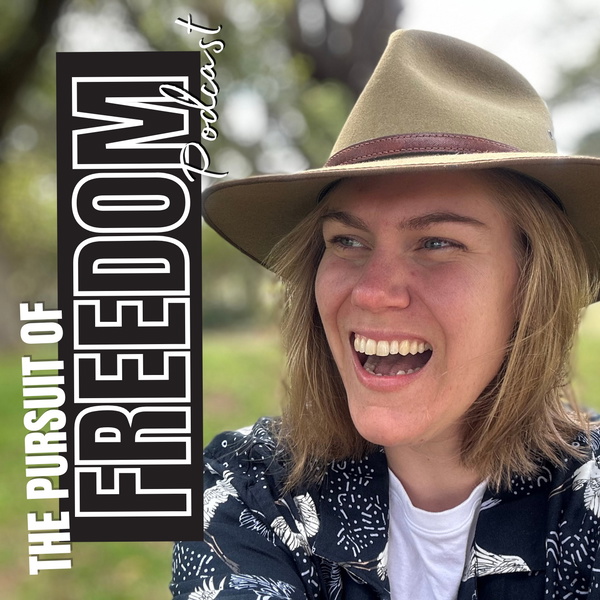
I chat with Sarah Jolley-Jarvis, a podcaster, entrepreneur, and author, who shares her journey from corporate to entrepreneurship. Sarah discusses the challenges of balancing work and family, the importance of understanding sales as a means of connection, and how to overcome the fear of selling. She emphasises the significance of identifying an ideal customer, finding a unique sales style, and handling price objections effectively. Sarah also highlights the importance of support in business and defines freedom as the awareness of choice in one's entrepreneurial journey.
Key Takeaways
- Sales should be about connection, not pressure.
- Understanding your ideal customer is crucial for success.
- Sales is a skill that can be learned and improved.
- Don't be afraid to ask for help in your business journey.
- Pricing should reflect the value you provide, not just the cost.
- Overcoming the fear of sales starts with understanding your purpose.
- It's important to maintain a pipeline of potential clients.
- Your sales style should be authentic to you.
- Freedom in business comes from having choices.
- Failure is a part of the entrepreneurial journey.
🔗 Resources mentioned in this episode:
- Selling Without Sleaze: https://amzn.to/40hJZvf
☎️ Get in touch with today's guest:
- Facebook: https://www.facebook.com/sarah.jolley.71
- Instagram: @sarah_jolleyjarvis
- LinkedIn: https://www.linkedin.com/in/sarahjolleyjarvis/
----------
Download my values mini course: thepursuitoffreedom.com.au/values
Use discount code FREEDOM for 100% off.
----------
🎤 Send me a voicemail: https://thepursuitoffreedom.com.au/contact
⭐️ Leave a review: https://thepursuitoffreedom.com.au/reviews
✉️ Join the email list: https://subscribepage.io/freedom
🎙️ Apply to be a guest on the podcast: https://thepursuitoffreedom.com.au/guest
----------
'Til next time,
TRANSCRIPT
Rosie (00:46)
Welcome back to the Pursuit of Freedom podcast. Joining me today is Sarah Jolley-Jarvis. She's all the way in the UK. I can't remember what town Sarah, you can tell me in a minute, but Sarah's awesome. She is a podcaster. She's a mom. She's an entrepreneur. She's an international bestselling author.
And she's all about doing sales without being a dickhead, which honestly I'm all about and I love because I struggle a lot with sales. but Sarah, thank you so much for joining us today.
Sarah JJ (01:19)
thank you for having me.
Rosie (01:21)
Yeah, I'm excited to dive in.
want us to go back because I feel like this, your story is going to resonate with a lot of people.
Especially women, especially moms, because you weren't always an entrepreneur or business owner, weren't you? What did you do before the Sarah of today? What was life like?
Sarah JJ (01:42)
So I've always been around entrepreneurial stuff. My parents run their own business. But I went to uni and then off the back of uni, I got a corporate job. My parents were like, if that's what makes you happy. I think they were a bit like, why would you do that? But as a positive observer, they were just like, yeah, whatever, float your boat. So yeah, I got into medical devices, pharmaceuticals over here in the UK. And I was in that.
Rosie (01:49)
Okay.
You
Sarah JJ (02:11)
for 15 years. was basically a rep, so I'd go around and speak to clients and drive around in my car lots of miles. And then the kind of progress is you then start coaching other members of the team. And so I did that.
Rosie (02:12)
Mmm.
Sarah JJ (02:28)
And then an opportunity came up in the company that I was in to work at the head office as a product manager. So I'd be using the sales team as my route to market. So I would train the sales team on how to sell my product and then support them with that sale of the product. And that would involve also going out to clients, et cetera, et cetera, but in a more product management role than a promotional role.
Rosie (02:29)
Mm -hmm.
Mm.
Sarah JJ (02:54)
And so I did all that. I was getting mentored by the CEO. It turned out that my manager was intending to leave within the next couple of years. And so she was priming me and another colleague to go into her role as national sales manager. And then I decided to have a baby. Put a little spanner in the works, but I was very adamant that I was going to come back.
Rosie (02:57)
Mm -hmm.
Mwah.
HA!
Sarah JJ (03:18)
and I was going to work full time, et cetera, et and that was my opinion even after she was born up until I think it was like seven or eight weeks old where I went around to nursery and they showed us around and they said, we put them in little tables so that they sit and eat almost like a family because for those which are here five days a week, that's the only time that they get to sit around as a family. And I remember being like, well, that's not happening.
Rosie (03:29)
Mm -hmm.
Hmm
Sarah JJ (03:46)
I was like, no, you're not being my child substitute family. And I was like, I can't go back. And then I was like, so my company, in theory, was flexible, but not really. So if of the 400 employees, one person worked school hours, nobody worked part time. So one worked 9 .30 till three. And that was a big deal. And I was like, I don't, I don't.
Rosie (03:52)
Mm -hmm.
Mmm.
Wow.
Sarah JJ (04:13)
blame them that was their culture, they haven't moved on from that. But I didn't feel like I could do my job well and be the parent I wanted to be. I know some people do it really well, they work full time and everything else, but that just wasn't what I was wanting to do. and so I was like, right, I'm gonna have to do something else. My husband at the time was in the online space doing digital marketing for a company and
Rosie (04:24)
Hmm.
Sarah JJ (04:36)
I would hear him on calls and I'd be like, that person needs help with their sales or that person needs help with their sales. and I was like, cause it's all well and good generating leads for people, but if they're not able to convert them, that's really frustrating. And it also turns out there's an awful lot of people out there who can't generate the leads. And so if you can't generate decent leads or enough of them, then that's when you really start to struggle.
Rosie (04:54)
Mm -hmm.
Sarah JJ (05:02)
And then you put too much pressure on your sales and you're like, my sales is no good. And actually it's not your sales. It's the fact that you're not cutting enough people through the door having conversations with you to actually generate the customers you want. You're never going to get 100 % success rate. The sales guys that you're aiming at like 40 % is being really, good. A lot of people, it's 25%, 30 % of calls result in a sale.
Rosie (05:05)
Mm -hmm.
Sarah JJ (05:32)
they're professionals. Yes you do hear online. I've shared online the fact that I've had an 81 % conversion rate on one of my... I've got a knock at the door. That's really helpful isn't it? Just bear with me a second. You're frozen anyway but I better take this one otherwise who knows what's going to happen.
Rosie (05:53)
Yeah, yeah, all good. Okay.
You
Sarah JJ (05:55)
Hiya, sorry I'm on the work, you alright?
my word, that's what happens when you move to the country. The man comes and asks you if it's okay if you blocks the road with some cows. So, so then, yeah, it was a case of, right, you know, I started sort of investigating, supporting people and, and, and I kind of looked into like what
that might look like. had a beta group, which turned out nothing like my expectations. And I think that's where my way of working kind of really began to evolve was I was very clear that these people needed help in their sales course. And it was like, it became very apparent to me very quickly that these people were putting way too much pressure on their sales calls. And so they needed to generate better quality leads. They need to be having conversations and spending their time with more suitable candidate, potential customers. And so,
Rosie (07:12)
Yeah...
Mm -hmm.
Sarah JJ (07:32)
That came from my beta testing. That's why I'm always so keen with new businesses that people get out there and they start testing. Like straight away, I've got somebody at the moment I'm working with who has spent a
Rosie (07:43)
Mmm.
Sarah JJ (07:44)
working on a signature course. Having never spoken to a potential customer for that course. It is
painful. It's really sad because then you go out and you start
Rosie (07:53)
my goodness. my goodness.
Sarah JJ (07:56)
and you start marketing for that course because you've put so much effort into that course.
And so then you're
committed to selling
Rosie (08:04)
Yeah, yeah.
Sarah JJ (08:06)
that option that you don't, you're not open then to actually what the market's telling you. So I, yeah, I began to help people
with, with their
Rosie (08:16)
Hmm.
Sarah JJ (08:18)
Normally, start openers, but some also some businesses where they've got a sales team or a small team in place. And I can support them with
Rosie (08:28)
Okay.
Sarah JJ (08:28)
I've done a little bit of dipping back into pharmaceuticals and supporting pharmaceutical companies as well. then, yeah, I, I, and then I moved, we relocated because we could, so we moved to the coast. And so I now live in Devon. We've actually just relocated from one house to another as well down here. So that's all been going on. So, so yes, it is, you know, obviously, I could never have done that in my
Rosie (08:35)
Mmm.
Mm -hmm.
Sarah JJ (08:57)
It was my medical devices, a career, because I would have had to have been somewhere. The people who lived in Devon and Cornwall, the people who lived in Scotland, never left their posts because once they got in with a
Rosie (09:04)
Mm.
Yeah.
Sarah JJ (09:10)
and they did well and they enjoyed it, they stayed there. And people didn't move on because there's not as many jobs around these areas and the territories are massive. And so I would never be home, which wouldn't fit with the life I'm trying to create for my family. So, you know, being able to do this.
Rosie (09:20)
Mmm.
Sarah JJ (09:26)
has meant that we've been able to relocate. We both work online and so we can be anywhere. So we chose to be here.
Rosie (09:36)
I go back to the version of you that chose sort of the corporate path, right? You grew up in an entrepreneurial family. You're clearly an entrepreneur. You love life at the moment. So what drew you to going down a more traditional path?
Sarah JJ (09:41)
You
I I'd had from, so since we've been traveling, so I took a bit of a break for 18 months and we traveled around the world when I was 30 with my now husband. After that, we've had kind of businesses on the side and actually sales and sales reps, a lot of them have businesses on the side and they are quite driven, they are quite
they are quite entrepreneurial. I think
Rosie (10:14)
Mm -hmm.
Sarah JJ (10:16)
possessed me to want to go into a more corporate setting was
and my degree was in business and public policy. I
was very much following the path really. So it was like the expectation was you went to university, the expectation when you're at university was you've got a job. And
Rosie (10:28)
Mm.
Yeah.
Sarah JJ (10:39)
I think when you're young, you're just like, well, this is the path well trodden. There was one guy off my course who went
set up a sandwich shop
Rosie (10:48)
Yeah.
Sarah JJ (10:49)
uni and I was like, what was the point of doing your degree? And I think there was that pressure to also use your degree. It's like, I've got this
Why not use it? And
Rosie (10:58)
Yes.
Sarah JJ (11:00)
so that's kind of what sort of got me into that kind of scenario. Did I think that I was going to end up running a business? I don't think I did. Not at that stage. I think I thought I would climb the corporate ladder. But actually,
Rosie (11:15)
you
Sarah JJ (11:16)
yeah.
It's
and I'm okay at taking orders from somebody. But there's a lot of frustration. There was a lot of frustration for me in those roles.
My biggest draw
Rosie (11:34)
Mm -hmm.
Sarah JJ (11:35)
of going out independently, even though it was quite scary, was my family. And it's really weird what you do when you have children. Like it just, it's like these hormones just take over.
all of a sudden you're
Rosie (11:46)
you
Sarah JJ (11:48)
I'm going to do this and I'm going to do that. And stuff that you would just never take yourself out of your comfort zone. And I think, you know, it is a massive, great big change. And it's something like 76 % of women who work for themselves, worked for themselves for the freedom and the flexibility. You know, so a lot of us are coming
entrepreneurial
Rosie (12:08)
Mm -hmm.
Sarah JJ (12:10)
because we want the freedom and flexibility. What I find is that
People tend to be, I'm really good at this. So what I'm going to do is I'm going to go out and I'm going to sell this. And some people they do it, I've had a breakthrough. I've had something happen and I want to support other people to do that. That's another kind of driving force. But I think, you know, a lot of the time they've got an area of expertise or an area that they're passionate about, but what they're not passionate about is the sales and marketing. So they find themselves in this.
with a business where they're spending more time doing sales and marketing than they are actually doing the implementation that they're so good at. And so I refer to that as like your little zone of genius. And it's like, spend so much time outside of their zone of genius that they can't even begin to sort of remember what it was they signed up for. And it's like, when you're doing something day in, day out that isn't natural to you and you don't enjoy, you can quite...
Rosie (13:00)
Yeah.
Yeah.
Sarah JJ (13:13)
quickly become disillusioned. And I think that's why, you know, you've got all the different stats out there, but the most sort of banded around one is 70 % of businesses fell within the last three years. And, know, there is that element of it's the slog, you know, you get disillusioned and you think, you know what, I'd be better off getting a job. Actually, there are bits of my job that I
Rosie (13:14)
Mm
Sarah JJ (13:38)
more than I like what I'm doing now. And that's how people can get really kind of...
Rosie (13:39)
Yes.
Sarah JJ (13:44)
They end up, they give up, go back to their
Rosie (13:48)
That's a really valid point. And I've been in that head space before. In fact, I hate to admit it, but recently I was like, should I just go back and get a normal job? Like, you know, just get some regular income and I don't have to worry about all the annoying bits that I don't like and that are hard. And the fact that I even had that thought to me is terrifying because I was so miserable in my traditional jobs.
But I know there's a lot of business owners or entrepreneurs who hit that stage. Like this is too hard. And they give up. Maybe give up is not the word, but it feels too hard and too overwhelming. They don't know what to do. So they go back to what they used to. So how.
do we get through that? And let's think, let's look at it from the lens of sales, right? Because I think that's a big stumbling block for a lot of people. It's scary. How do we push through that and stop hating sales?
Sarah JJ (14:37)
You
think it's understanding why you're doing it. And I think it can be scary if you're chasing a sale. So if you're like, I need to make a sale this week, your energy coming into it is very scarcity. It's very desperate. It's very pressured. And so I don't think that helps. You're kind of putting people off. You can get those vibes from people that they're just chasing that little bit too hard and from a place of kind of desperation.
Rosie (14:58)
Mmm.
Sarah JJ (15:17)
So, you you, you need sales, but sales is like, I took her under like gardens. It's like, you know, you've got a veggie patch and you know, you've got to plant the seeds. You've got to put the effort in, you've got to tend to it. And people are, you know, they'll kind of neglect the sales side of stuff because they don't want to do it.
And then all of a sudden they'll be like, I need a sale. So all the focus goes into that and they kind of push themselves through and it's like, you know, I'm kind of safe. And then that's when the feast and famine happens because then you get busy delivering for those individuals. You enjoy being busy delivering for those individuals because that's what you're good at.
Rosie (15:49)
you
Sarah JJ (15:53)
And then, and then you're back to, wait a minute, that, client's coming to an end or whatever's happened. And so you've got to find some, another client. And so then you're going back and you're kind of intensely farming your little veggie patch. Whereas actually if you can keep things ticking over, you can have things there ready. And I think that's the main thing is, making sales a habit and also seeing it for what it is, which is connecting and building your network. I think it's very easy to get caught up in.
Rosie (16:01)
Yeah.
Mmm.
Sarah JJ (16:22)
I'm selling this person this thing. I'm trying to take their money from them. And especially women in business, we seem to think that if we get enjoyment from it, we shouldn't be charging so much. Whereas guys do not have a problem with enjoying what they do and charging for it. But I think we seem to feel like, you know, is there something wrong with that? It's like we can work in both the currency of enjoyment and money. You can receive both. and so, yeah, I think
Rosie (16:45)
Right.
Yeah.
Sarah JJ (16:50)
that there's that sort of element of, well, I've got to be pushing and asking this person for money and stuff. At this end of the day, if you truly believe that what you can do for that client is transformational, it has an impact, then why wouldn't you want to help them? These people have a problem. They have something that they need solving. You can help them solve it. And so...
You've got to think that you can get money from anywhere. You can, like sometimes that might feel like that's not the case. But you can sell organs. You can get money if you need money.
Rosie (17:16)
Hmm.
Sarah JJ (17:28)
But you can't... That
has a problem. You have time and you can go and you can spend that time doing a number of different things in exchange for money. Some of which you're not going to want to do, but you could.
there's options for you, whereas that person's problem can only be solved by your solution. And so it's very, very easy to think I need money, but we forget that actually that person needs your solution. And if you're thinking, well, actually, my solution is not
Rosie (17:45)
Hmm.
Sarah JJ (17:58)
that special.
then that's when, you know, get help and get somebody to work through with you and get clear on actually the impact you do have and the value you do bring. Because you need to believe that.
Rosie (18:06)
Mmm.
Sarah JJ (18:11)
You do need to believe that you can wholeheartedly make a massive difference to that person. You know, whether it's an essential or whether it's just a nice to have, a nice to have can still have a massive impact. So, you know, it's sort of changing
attitude towards sales.
Rosie (18:26)
Mmm.
Sarah JJ (18:28)
And, you know, if you're in the service based side of things, then it's a real like two way, like figuring the person out process. It's not just a case of, you know what, I need a customer, you'll do.
You know that you've got to work with this person closely and it's like if you look beyond the transaction of the money to the end point, so the result that you're trying to achieve for them and it's like can I achieve this result for this person? Is this person the right sort of person to achieve this result with? And that's what you're going for. You're going for the testimonial because that testimonial will get you more clients.
Rosie (18:58)
Mmm.
Sarah JJ (19:05)
because you can use that testimonial as evidence of like, look what I can do, look what this person's achieved with me, and then you can get more results for that, for people. So, you know, it's looking beyond the transaction.
Rosie (19:18)
Mmm.
Yeah. How do we figure out our ideal customer, Sarah? Because you've touched on it a bit then, you know, who can you help the most? Right? How on earth, I'm still figuring this out and it's driving me bonkers, I got to say. Makes me want to have a tantrum. But I, everyone I speak to, well, it depends where you're on your business journey, right? But a lot of people who are in similar stage to me, yeah, it's this, it's a big struggle and that self belief comes into it as well.
Sarah JJ (19:25)
Hahaha!
Yeah.
Rosie (19:48)
But I'm guessing if you aren't clear on who you serve and who your ideal customer is, how are you going to be good at sales?
Sarah JJ (19:57)
Yeah, the worst thing you can do, so I speak to people and they're like, yeah,
my offering,
offer, my product is suitable for anybody from the age of like 16 to 60. And I'm like, but it's not, it can't be.
You you want it to be because you feel like if you niche down, you're like, I don't have enough clients already. So if I niche down, I'm going to have even fewer. Whereas that's not the case. What is the case is that you can be too vanilla. You can be too middle of the road. You're not appealing to anybody. The online space is a great opportunity, as is in -person stuff. But you've got so many voices.
Rosie (20:19)
Mm -hmm.
Sarah JJ (20:37)
At least within person things, if you're networking or you're in a particular geography and you've got bricks and mortar, then at least you're restricted by the geography and the competition and the noise within the area. But outside of that online, there's no restrictions. If they can understand the language you speak, then you can in theory market to them.
Rosie (20:51)
Mm.
Sarah JJ (21:01)
But the problem is, so can everybody else. And so there is just so much, it's like walking into a really, really noisy room. And it's like, you can shout louder, you can mock yourself, you can spend money on ads, et cetera, et cetera, to raise your noise above the general chatter. But really what's gonna have the biggest impact is to really cut through. Like in a crowd, you hear your name, you turn around.
Rosie (21:06)
Mm.
Sarah JJ (21:28)
and you look around to see who called your name. That's what
Rosie (21:30)
Mm. Mm.
Sarah JJ (21:30)
trying to do with your
You're trying to call out your ideal customer. If you're going, hey, women, women, then it's like, are they going to turn around? Are they going to be like, well, that's a bit generic. They can't be me. Or it can't be very important because they're not even referring to specifically me. And that's where you're at. Whereas if you can be like, the women.
Rosie (21:45)
Hehehehe
Mm.
Sarah JJ (21:53)
under the age of 20 and over the age of 15, you know, come over here, then it's a lot more specific and you're thinking, wait a minute, what have they got? What they got for me? And so, buying able to niche down, like, you know, for example, like people say, yeah, you know, women, can, very often I hear people say, yeah, I can 25 to 45. And I'm like, but within that age,
group, you've got people and this is, it's more about their life stage. And you know, are they individuals? I've got clients who market to people who are pre -children, people who have children, people who are childbearing age, but don't have children, choose not to, won't have children. I've got people who have got kids, you know, aiming at individuals, women who are, the kids have flown the nest or they've, and so you're talking to them very, differently. It's somebody who's not got children.
Rosie (22:23)
Mm
Mm -hmm.
Sarah JJ (22:51)
who is below the average age for having them. So they're kind of in that carefree stage. Then, you know, talking to them about kids flying the nest, they don't relate to it. You know, talking to them
their motivations for getting into
to relooking at themselves, they're just not resonating. And, you know, people who I've been there, it wasn't an easy journey to become a parent for us. And so I, you know, it really used to pee me off and people used to assume.
that, you know, have you not got kids yet? And it was quite,
any sort of marketing, mumsy marketing at the time was a proper
Rosie (23:26)
Alright!
Sarah JJ (23:30)
off for me. That wasn't their fault. They're marketing to people who, you know, are of, who have got that circumstance. And so it's about calling to you. If you're going to be somebody who bangs on about having kids, about balancing family, et cetera, et cetera, I was not a good candidate for that person right there.
Rosie (23:34)
Mm -hmm. Mm.
Sarah JJ (23:50)
because it was just too much for me. So it was better that I knew straight up that this person was going to bang on a lot about children and therefore I could go and find somebody who didn't. And that's the thing is you're thinking, I'm putting people off and I don't want to put people off, but you can't be everything to everybody. And for those people now, like I would be a really bad person to be around for somebody like me when I was struggling.
Rosie (23:54)
Mm
All right.
Mm -hmm.
Sarah JJ (24:20)
to have children. And so it's good that I know. And it's good that you're kind of letting them know in advance so they can go and find their people and that the people who are drawn to you can work with you, they can relate to you. And that's the thing is, is you want to be relatable. You can think, well, you know what I'll do? I'll just park everything personal. But then people buy from people and who's the person?
Rosie (24:29)
Hmm.
Mm
Sarah JJ (24:48)
And so, you you don't need to be some crazy performing clown on TikTok, dancing on the table in a Wonder Woman outfit, like some people do. You don't have to do that. The best thing to do is to be yourself. And that's what regularly people say is, is, you know, how do I remember how to be online? And I'm like, by being as close to yourself as you possibly can. There are probably bits that you want to tone down or bits that you might want to ramp up.
Rosie (25:12)
Mmm.
Sarah JJ (25:18)
But in general, being true to yourself is the best way to find your people. The more off -piste you go with your natural self, the more off -piste you're going to go with your clients. If you think about friends, if you think about when you've tried to be somebody different, you end up with a group of friends that you're like, who are you? How have I attracted this? And you've attracted this by not being you. It is the same with your customer base.
Rosie (25:34)
Mmm.
Sarah JJ (25:46)
different if you're a product based business because it doesn't matter so much but if you are a service based business you're to have to spend time around these people then you know you want to make sure they're your sorts of people.
Rosie (25:47)
Mm.
Yeah. And on that being yourself part, I think that's especially true in sales because there's all these people, all these gurus, whatever you want to call them out there who have very strong opinions about how you should sell. There's some very opinionated people out there and you know, as early business owners, you try all the things, you know, this is the way that works. This is how you're to get lots of money and help lots of people.
Sarah JJ (26:13)
Mm
Rosie (26:26)
And it just doesn't feel right that it seems to take people a while to admit that and go, this isn't working for me. Doesn't mean that strategy doesn't work for other people, but this isn't working for me. So how, how do we figure out our style for sales? Because am I right in saying that there's not one way to do sales?
Sarah JJ (26:50)
Definitely, there is no one way to do anything around business. There's so many different ways of doing things. And I think I always liken Sleaze to, because my book, Standing Without Sleaze, is teaching you to not be so sleazy, is to help you to feel more authentic. Sleaze is like a chili scale. For some people, you're going to be like, that's a bit much. I can't, I don't want to do that.
Rosie (27:02)
Yeah.
Sarah JJ (27:12)
And that's absolutely fine. It's finding it within your remit. And what I found with clients is, that some people be like, I don't think I can do that. And I'm like, that's fine. Okay. If it gets to the point where I'm like, yeah, that's fine. But the likelihood is, is that you're going to be selling less if you don't do this. And then, you know, I flagged it with them. They can make a decision at the end of the day. It's your business.
Rosie (27:24)
Mmm.
Right, right.
Sarah JJ (27:38)
You know, you can be, if you don't want to go down the route of focusing in on one kind of audience and one niche, then that's your choice. Will you make life harder for yourself? Absolutely. Is it still doable? I think it can be. I think it's a lot harder. But you've got to a lot more messages out there to see what sticks. But you could do it. I wouldn't recommend it.
Rosie (27:39)
Mm
Yes.
Hmm.
Sarah JJ (28:05)
But when it comes to sort of promotions and deadlines and that kind of stuff, some people are well up for the deadline promotions. Some people are like, well, no, it doesn't feel right. And so, you you've got to do it within your kind of comfort zone.
Rosie (28:08)
Mm -mm.
Mm
Sarah JJ (28:23)
And that's the main thing is, is don't treat yourself, but it's creating a toolkit. you have a lot of the time, if you can create go -to responses. So that's what I encourage people to do is, is to create their own responses to their own sales scenarios. If somebody says to you, that seems expensive. What do you do? And if you have a system where
This person says this, right, okay, this is how I say in advance. And I'm not talking necessarily about scripts. I'm just talking about having planned out in your head. You may have it written somewhere. And what you say when somebody says something, it's like, okay, in response to that, say this. And all it is, is it's just a different way of communicating. It's a more structured way of communicating. Like anything, when we start learning something, we don't...
Rosie (28:43)
Mm. Yeah.
Sarah JJ (29:08)
it's very difficult to trust ourselves because there's all these people out there doing it better than us. And so, you know, it's very natural to adopt somebody else's way of doing things because it's worked for them. And then to realize actually that doesn't, you know, it's a bit like anything. It's a bit like going to university and following the norm. You know, I went to university, I followed the norm, I went and did a corporate job.
Rosie (29:14)
Yes.
Sarah JJ (29:30)
and then because that's what everyone else is doing and it's safe we naturally follow the crowd but then over time you're like actually this doesn't seem to be working for me this doesn't feel right and understanding what does feel right to you you know like that self -awareness piece and I was talking to somebody last week and I said to them that the
Rosie (29:49)
Hmm.
Sarah JJ (29:51)
The sort of microscope that's put on your personality and your flaws and your areas of expertise when you start working for yourself is so intense.
And it's understanding that, okay, this is where I feel okay, this is where I don't feel okay. And to speak to somebody regularly in the street about, know, where's your comfort zone when it comes to sales? They're probably like, why what? Because it's just not relevant to them. And so, you you've got to find your way. And some of that is discovering it for yourself. But, you know, when you think, I feel awful, I've spoken to people with some real horror stories of
Rosie (30:27)
Hmm.
Sarah JJ (30:34)
pressure selling techniques and making people feel bad. So picking at the pain point and things like that. the conversations I've had with people, they've been like, I felt awful. People have said to me, well, actually, if I carried on like this, I'd probably kill myself. It is very frightening then. That's not your area of expertise to talk to somebody and support somebody around that. But that's the scenario people have found themselves in because they've
Rosie (30:38)
Yeah.
Hmm.
Sarah JJ (31:03)
taken up sales techniques that haven't been right for them and their audience. And so it is around creating a toolkit for yourself. That was the reason I wrote my book was to make it more accessible for people to change people's outlooks on sales. And also it's no good to just change someone's outlook. Like, you you can't think like this anymore. And it's like, but okay, but then what am I supposed to do instead? And so, you know, to support that, that's why
Rosie (31:10)
Mm.
Yeah.
Yeah.
Sarah JJ (31:31)
I've gotten the book around.
Rosie (31:32)
Yeah.
Sarah JJ (31:33)
helping people to create their toolkit so that actually they've got an alternative to the safety blanket that is somebody else's approach. like my worst case, like my worst nightmare would be for people to basically take on my sales approach and just be a mini me, because they're not me. They're not attracting, they're not wanting to work with my audience. They're not wanting to sell the expertise that I'm selling. And so the best thing they can do is to,
Rosie (31:42)
Hmm.
Mmm.
Sarah JJ (32:02)
is to find their own way, which works for them and works for their audience. It takes time. It takes experimentation. But you build longer term. And I think that's the thing is, is in the short term, if you go in there and you're very precious sale, yes, you can make sales in the short term, but you damage long term. And you don't get people coming to you three, four years down the line because they were absolutely put off and run a mile.
Rosie (32:26)
Mmm.
Sarah JJ (32:30)
after their first experience with you. Whereas, you I've got people who've had conversations with me like six years ago now, and who then sort of appear at the right time for them and start working with you. And that doesn't happen if you use bad sales approaches. You know, people always remember how you made them feel. And so, you know, how do you want to make that person feel? What do you want to leave that person feeling and thinking?
Rosie (32:31)
Right.
No.
Mmm.
And what are your thoughts on sharing price ahead of time? Because I've had so many different opinions on this and I don't know where I stand. So I want to hear your opinion. What are your thoughts? Do we share our prices ahead of
Sarah JJ (33:13)
So I would tend to say on a website or something like that, then having prices starting from is a good idea. It gives them a starting point. So if you have an hourly rate, if you have a lower price course, give them the price starting from, which is a fair sort of reflection.
of the starting price of working with you. So for example, you know, I'm not going to put prices starting from $3. I have a $3 course, but that doesn't give them a fair
what it would be to work with me. And so what I would say is I'd probably give my hourly rate. And so, you know, prices start from, do I often provide my hourly rate? Absolutely not. No. Most people go into packages, there's not an awful lot you can do in an hour.
Rosie (33:53)
Mm -hmm. Mm -hmm.
Okay.
Mm -hmm. Mm -hmm.
Sarah JJ (34:05)
and you can set somebody on the right direction, but that's normally not enough. But it gives them an idea. And then if they're thinking, know what, I want something really bargain basement, they know that that's not the case. But the problem with providing
full price, so for example, signature course, you're providing your full price upfront. The challenge with
is that there's no context.
So there's no context over what they get. You're relying on them to read all the details and not just cut to the price. You're also unable to relate it to their circumstance. So if you tailor it, for example, then I'd be like, tailor prices start from. And it's like, might be that the minimum you do with somebody is a two week session, like two sessions. So then quote two sessions. But the key thing is to...
Rosie (34:34)
Mmm.
Sarah JJ (35:00)
to be clear on, okay, this is generally what I sell and this is kind of the starting point for that option. And what it does is it saves you from wasting your time, it saves that individual from wasting their time. To
your full price
Rosie (35:14)
Mmmmm
Sarah JJ (35:16)
full up there to start with is just, there's no point. If that was the case, if you could sell off, because I've seen people recently, I know that somebody who's encouraging people to do it.
Rosie (35:24)
Mm.
Sarah JJ (35:28)
is to put their price in their bio on LinkedIn. And I just feel like that's way too forward. What you're going to do is you're going to get people who discount or buy based on price. Whereas actually they should be on outcome. There's not enough room up on your bio for a case study. But that's kind of what you'd want up there first and foremost is this like actually, this is
Rosie (35:33)
Mm. Mm.
Right.
Mm -mm.
Sarah JJ (35:57)
results I'm getting, this is what people can expect and that helps an awful lot more than providing a price point because you know if you're paying a thousand bucks but you don't get anything and then it's like well that was an absolute waste. Whereas if you know you're paying a thousand bucks and you're getting a really good result or you you're getting an amazing result and everything turns around and you're making
Rosie (36:03)
Mm.
Mmm.
Mmm.
Sarah JJ (36:24)
you know, five figures a month within like weeks, then you know, how much more are you willing to pay for that? But it's context. I always say like, because I regularly talk to people over people think that the way to increase their prices to increase the time scale that people can work with them, for example. And I'm always like, actually,
if I could say to you,
Rosie (36:43)
Yeah, yeah.
Sarah JJ (36:45)
know what, Rosie, I could I could teach you to get a million pounds tomorrow, or I could work with you for a year and teach you how to make a million pounds.
Rosie (36:53)
You
Sarah JJ (36:54)
Which one are going to pay more for? Like, you're going to go for the tomorrow. Yeah, you're like, a whole year's worth of work. And it's like, no, people want the results. And that's a really good example of
Rosie (36:56)
Hmm. I want it tomorrow. Yeah.
Sarah JJ (37:08)
the context isn't there when
Rosie (37:07)
Yes.
Sarah JJ (37:09)
put your price on your websites or on your Facebook page or whatever else. There's no context. There's no context to the speed at which.
Rosie (37:18)
Mm -hmm. Mm -hmm.
Sarah JJ (37:23)
And so, you know, that's where you want to have those conversations. You can qualify people so much more than you used to be able to in the DMs. And sometimes you can sell to people in the DMs, particularly if they've seen something, they're convinced about it, they're just checking a few details. You know, what I would say is, is there's a lot more movement towards that than getting people on a discovery call for like an hour, 90 minutes. It's just too long. So, you know, it's always worth...
Rosie (37:41)
Mm -mm.
Mm. Mm -mm.
Sarah JJ (37:50)
bearing that in mind is that a lot can be done before you even have a call with them. And again, you know, what value is it? People are busy,
value their time. And so it's like, do they need that length of time?
Rosie (38:02)
Yeah. Yeah. So do you, do you recommend selling on a sales call or are you just more flexible? Like if it makes sense in the DMS, do it there or only jump on a call when it makes sense to, that's kind of what you were just saying then, isn't it?
Sarah JJ (38:16)
Yeah, that's my kind of rule of thumb. I think that if you are inexperienced at selling in the DMs or you're inexperienced at sales, the best thing you can do is have a call because you get real -time feedback. Yes, you put yourself under more pressure, but you
Rosie (38:22)
Mmm.
Sarah JJ (38:31)
the context of what
saying because you've got no tone.
got no understanding of tone on messenger and message. And so what I would tend to do is I need to know information. And this is the thing with qualifying is people want to be qualified.
Rosie (38:39)
Mm
Sarah JJ (38:45)
Do they want to be asked how much their budget is? Potentially not. But do they want people to say, what's your
Rosie (38:52)
Mm -mm.
Sarah JJ (38:52)
are you looking for? Yes, they do. Because they want to feel like that's a genuine good option for them. So that person needs to be able to ask the questions to find out if this is the right solution for them. so often I speak to people and they're like, well, this person's, they've messaged me and said they're interested. And I was like, but are they a good fit?
And they're like, I don't know. But they're
but I'm just going to
to them anyway, because they want the client. And so that client wants to feel
you're
them and you're making sure it's a good fit for them too. And so by doing that, you can ask a few questions and then be like, hey, should we just jump on a quick call? Because actually, these questions will be quicker. Everyone likes a time efficiency.
on a quick call.
Rosie (39:40)
Mm.
Sarah JJ (39:43)
20 minutes is enough to commit, find out more information. If it goes well, then great. If it doesn't go well, then it's okay to call it a day early. But if you've committed to an hour where you're going to go through and give an audit and do this and do that, and in reality, if you get one in four converting, that's good. That means you're spending four hours to get one client. You're going to have to build those four hours into your costings.
Rosie (40:04)
Mmm.
Sarah JJ (40:09)
and how many people can you do in a day? How can you scale? And that's before you've even started with the actual delivery. Also, you've also set the tone that that person has a lot of time with you upfront. You're either gonna leave them feeling like, I pay my money and then I get a subservice in comparison to what I got when you were chasing me,
Rosie (40:19)
Mm.
Hmm.
Sarah JJ (40:31)
they're going to expect that length of time with you.
So they're either gonna feel robbed or they're gonna feel like that's the normal. And so it's setting the tone of the relationship. You we all know in relationships not to make yourself too available, not to be too needy early on because it gives the wrong indications and it sets the tone. You know, don't be the one who's over eager. It's the same thing in sales. Sales is like dating.
Rosie (40:37)
Right, right.
Hmm.
there's so many nuances to it. You know, hearing someone like you talk about it is really, really cool. I hear it and go, well, yeah, that makes sense. But if I was to sit by myself and go, should I share the price of my website? Should I like, would never clue.
Sarah JJ (41:11)
Yeah. Yeah.
Rosie (41:13)
I want to touch on this money objection, right? That's expensive. I can't afford that. Because that's a common one I've come across.
And I'm curious, how do you respond to that? Because I feel most of the time it's not really an I can't afford it objection. I feel like there's another reason, but that's what people say. How do you approach that?
Sarah JJ (41:36)
So you've got to think, right, that that's perceived value. It's a massive bit of feedback on what they believe what you're offering is worth. And the vast majority of the time,
Rosie (41:45)
Mmm.
Sarah JJ (41:50)
a massive
Rosie (41:50)
Right.
Sarah JJ (41:51)
on your sales conversation, on your sales process, on how pre -sold that person is. So you haven't related the outcome thereafter sufficiently to
the offer that you are providing them with. So that either the problem isn't big enough that you've gone and associated your offer with or you've just got them on a call, you've been really enthusiastic, you've just blurted out all the features and probably not the benefits. And then they're like, and they're trying to piece together in their head, how does this actually work for me? You've got to appreciate that price objection. I can't afford that. That's a bit above my budget.
Rosie (42:26)
Yeah.
Sarah JJ (42:31)
are things that they're the most likely objections because they're the easiest ones to say and they're the hardest ones to overcome and so they know that they're kind of a bit home and dry if they say to you can't afford that. So what you want to do
to
Rosie (42:45)
Mm -hmm. Mm -hmm.
Sarah JJ (42:47)
okay what was your budget?
So early run in the sales conversation, which is really tricky because a lot of this time this is a learning for next time. It's not unsalvageable at the point of that's expensive, but you're really backpedaling.
Rosie (43:01)
Mm -hmm, mm -hmm.
Sarah JJ (43:04)
and so whenever you get that kind of
the best thing you can do
to review your sales process, to review what went on in the call. If you have a call recording, should we do it on zoom? It's very natural for calls to be recorded. So you can go onto the call recording, and see from there, what went wrong, where you could have been more detailed, et cetera, et cetera. and so definitely it is a massive, massive red flag to go back through and to improve your sales process.
It's something that you do naturally, salespeople do naturally all the time. I used to come out of the sales course with the sales guys. Some of these guys had been doing sales for near on 40 years. They were near retirement and we would still come out, sit in their car and they would go through this went well. This didn't go so well. This is what I do differently next time. And it's just second nature to them. you know, they were the efficient salespeople. It wasn't me because gosh, it's like at the time, like
Rosie (43:58)
Mmm.
Sarah JJ (44:01)
for some of these guys, I was in my twenties and they're like this little jumpstart comes and tries to tell you what to do. But it's like, actually
welcomed that sounding board. They
the new energy, the different perspective on things, the younger perspective on things, the less jaded perspective on a market. You you think about it, people coming
Rosie (44:21)
Mmm -mmm.
Sarah JJ (44:23)
having a new perspective, it's great. But only if you see it as great and not a threat.
And so these guys would go through and they'd be like, this isn't great and that wasn't so good and this was good and we'd talk about it. And also I'd have a different perspective because I wasn't in it at the time. And so I wasn't having to think on my feet as well
Rosie (44:39)
Mm.
Sarah JJ (44:40)
observe what went well and not so well. So it was really good opportunity. You've got that with Zoom. Zoom's there. like, even, Fathom can even write notes for you now. And so you can go through and you
be like, okay, could have, this is a bit weak here. I didn't pick up on that, et cetera, et
As far as saving,
that sale right in front of you as that comes out of that individual's mouth. It's understanding, okay, if you didn't find out the budget, which you kind of should have done earlier on in the understand, okay, well,
budget are you working to?
Okay, and if that person's willing to work with you, if they do see the value, if it's a genuine objection of money, I don't have the money for it, they do see the value, then it's like, right, okay, so how can we work together to make this happen?
Rosie (45:13)
Mmm.
Mm -hmm.
Sarah JJ (45:24)
And they'll be open to that because they see the value and they want to make it happen. If they're not convinced, then that's when you're going to get, well, no, it's probably better. I'll leave it for another time, et cetera, et cetera. If they're to work with you on payment plans, if
willing to work with you on, okay, well, I could probably
Rosie (45:40)
Mmm, mmm.
Sarah JJ (45:42)
this back. So never ever drop your price, okay? You're providing the same thing. So therefore
cost per hour, your
Rosie (45:49)
Mm -hmm, mm -hmm. Yeah.
Sarah JJ (45:52)
per hour is just going down.
And I've met people who've dropped it and dropped it and dropped it. And actually they'd be better off working in McDonald's, which is just soul destroying. Okay. So, you know, you don't want to drop the price and keep the same offer, but what you can do is you can shave bits off. It's like, okay, well, you can have less time with me. You can do group check -ins, et cetera, et cetera. There's ways to do, to work around it and that you can reduce it to come to that sort of budget level sometimes, which is why it's good to have a starting from price.
Rosie (46:02)
Yeah.
Sarah JJ (46:23)
If they're thinking it was 20 pounds or $20 and it's actually 200, it's like, you are so far apart that there's just, there's no point. And then, you know, if that's genuinely unrealistic for your market and they're only going to get terrible people providing that service at that price, then tell Because they don't know, they're not in the market all the time. So in a very nice caring, right, know, from a place of caring.
Rosie (46:32)
Mm -hmm. Mm -hmm.
Sarah JJ (46:50)
You know, that is really low. You're unlikely to be able to find somebody who's half decent to do that. You're probably better off training to do it yourself than getting somebody else to do it for you. That kind of conversation
really help. puts that seed of doubt in their minds.
Rosie (47:02)
Mmm. Mmm. Mmm.
Sarah JJ (47:04)
You've let them know, you've informed them, you've kind of given them more information on it. And so they're much more likely, you know, you're a source that they can trust to come back to you in future. You could also...
find out from them, okay, well, you you could reiterate, you could go back. It's tricky, but you can go back to the sales process. So you can be like, well, wait a minute, you know, what are you trying to get at here? How important is this? And it's like, okay, well, I said I'd sort out X, but actually that's like 10th on my list of problems right now. My main problem is this. And it's like, fair enough. And it might be that for that main problem, you can't help.
Rosie (47:44)
Mm. Mm.
Sarah JJ (47:46)
And that's the thing is, is I've had conversations with people. I've been like, you know what? Right now, this isn't your problem. I had a client a few weeks ago and I was like, right now, do you need this business to be working? Do you need to spend this time on this business or do you need to focus on your family? And they were like, I don't need it. I just want to do it. And I was like, right,
Rosie (48:00)
Mmm.
Sarah JJ (48:03)
we'll
Rosie (48:03)
Hmm.
Sarah JJ (48:04)
you here. Come back when you are in a position to focus in on your business. I speak to people on a daily basis who aren't in that position where they need the money from their business.
And so they're not able to park it when some crisis happens within their family. And so that person was in a really good position to be able to do that. And so why I've come across a
Rosie (48:22)
Right.
Sarah JJ (48:25)
of
Rosie (48:25)
Mmm.
Sarah JJ (48:26)
who are, you know, and they've said it to me, like, you're not committed, etc, etc. Because my children come first. I, you know, like that for me, that's important for other people, it will be their lifestyle or other commitments.
Rosie (48:35)
Yes.
Mm, mm.
Right.
Sarah JJ (48:42)
you've got a really lovely dog, you know, like you're like, no, I'm not going to go and ship off to another country. And because that's not a thing for me, because I want to stay here with that.
Rosie (48:44)
Mm -hmm.
Mmm.
Sarah JJ (48:53)
it but it's like, it's what's important to you. And it's like, you're not going to compromise on that. And so, you know, is understanding, right, you know, where does my where where am I kind of
points at which there's no compromise. And with price, you want to have that kind of area of no compromise. I'm not willing to do that for that. Don't just chase the money because the problem is, is somebody where you reduce your price, you're more than likely going to be your more tricky customers. And so it's one of those things that you drop the price to be helpful.
Rosie (49:13)
Mmm.
Mmm.
Sarah JJ (49:27)
And then before you know it, they've got you run ragged. And actually, you could have used that time to find a customer who was willing to pay the amount and who wouldn't have run you ragged.
Rosie (49:36)
Hmm. Yeah. And it's when you're desperate for that sale that you're taking on clients that actually, yeah, they're going to be a pain in the butt. And actually are they really the person you want to be working with? No.
Sarah JJ (49:40)
Yeah.
that
idea and I think that's why it's really important to be always feeding that veggie patch and to always be making an effort to have conversations with people. I say to people, know, what have you got in your pipeline? And they're like, nothing. And I'm like, well, that's not good enough. Like, there's no reason, there's no reason why you can't have people, even if they're a bit of a long shot, even if, you know, there's no reason
Rosie (49:50)
Mmm.
Yeah.
Sarah JJ (50:15)
had a conversation with somebody who's a potential customer and you shouldn't have a few calls lined up for the diary.
If you're putting your time and effort
your sales, and it doesn't take that much time and
Rosie (50:26)
Mmm. Mmm.
Sarah JJ (50:28)
it's like half an hour a day, an hour a day is enough to be generating those leads. It's just working smart.
Rosie (50:39)
Hmm. I feel like I have a million other questions. This topic is fascinating to me. and I highly recommend people read your book. Actually. It's is it selling without sleaze or sales without sleaze.
Selling, yes, selling without sleaze. Go check it out. Very affordable, very actionable. And if you're in Australia, it's actually on the Kindle Unlimited thing and you can just sign up for a 30 day free trial and read it that way. Didn't come from me. And I think it might be depending where you are in the world on audible too.
Sarah JJ (51:07)
Okay, okay, Yep, you can, you can.
Rosie (51:14)
yeah.
Sarah JJ (51:15)
It is, yes.
It is on Audible, yeah. Read by me, which was
Rosie (51:21)
Now, Sarah, this is a question I like to ask all my guests. And I think it, I really want to hear your answer actually, because earlier in our conversation, you said, I think it something like 70 % of women get into business for more freedom and flexibility. So I'd love to know what does freedom mean to you?
Sarah JJ (51:40)
I think that not being answerable to people, I think it's interesting actually because I think we can set our own boundaries on freedom and I think sometimes we're like we can't do that and it's like well actually why can't you do that and it's actually that appreciation of choice and I think actually more than anything
Rosie (51:55)
Yeah.
Mm.
Sarah JJ (52:03)
the awareness of having choice because I think I speak to people quite often who I'm like you have a choice here.
And they're like, I don't have a choice. And it's like, no, you do. just, for whatever reason,
Rosie (52:15)
Yeah.
Sarah JJ (52:17)
written
Rosie (52:17)
You do.
Sarah JJ (52:18)
off. know, like when I jokingly said about selling organs, I mean, obviously, if you've only got so many organs, you can sell. But, you know, it's a choice and it's a
And it's like, you
it kind of just points out that actually there are options open to us that...
you know, straight away you're going to be like, well, I'm not going to sell a kidney. And it's like, okay, so that's
then what's
Rosie (52:38)
FFFF
Sarah JJ (52:39)
yes. And I think we can get ourselves
stuck on what we
Rosie (52:41)
Right, right.
Sarah JJ (52:43)
do that we then can't flip it and be creative and understand what we can. And so I think it's actually the self -awareness of that sense of choice.
Rosie (52:47)
Mmm.
Sarah JJ (52:57)
is freedom for me.
Rosie (52:58)
Hmm. Yeah, that resonates. Hmm. Choice is huge. And I, yeah, I agree with your opinion that we have, we, have choices and we make choices and I, some people don't like me because I call them out on their bull crap. You know, I wish I could do what you're doing. You're so lucky. Cause I live in my van and I'm traveling. I'm like, well,
Sarah JJ (53:20)
Mm -hmm.
Rosie (53:24)
I am a lucky person, but you know what? I made a choice to do this and it wasn't easy, but I chose it. I chose not to stay in the situation I was in. You, that person over there, you're miserable and you're choosing to stay in that situation. We all have different choices. They might not always be the ones we like, but there's a choice involved. So I think taking that agency is important. I really like that you've linked freedom to that.
Sarah JJ (53:39)
Yeah.
Huh.
Definitely, it's definitely the mindset behind it. You've got to have freedom, there's freedom there. And I think when we went traveling, I appreciated the amount of freedom you get from having a British passport, that some people never get a passport.
Rosie (54:05)
Mmm.
Sarah JJ (54:06)
You have your freedom right there. You have that opportunity to travel, to go to countries, to not be restricted, to be allowed in, to be allowed to work. We've got working holiday visa, whatever, agreements between Australia and England and New Zealand and England. Well, the UK. Some people never use that, but it's there. And so...
Rosie (54:09)
Right?
Mmm.
Mm
Sarah JJ (54:33)
think that's the thing is,
Rosie (54:33)
Right. Yeah.
Sarah JJ (54:36)
your mind's got to be open to it. mean, sometimes you've got to be aware that exists. I mean, I don't even know how odd I was when I realized that, you know, you can get a working holiday visa, etc, etc. I remember I was 28 when I realized it expires when you're 30. And, and so, you know, it
Rosie (54:49)
Yeah.
Sarah JJ (54:53)
it's just one of those things that,
you know, you've got it.
There's all these options around you, but you've got your head has to be in the right place to take those opportunities. And I think that's where the difference can happen. It's very, very easy for our minds to keep us trapped. are as humans, we are programmed to keep ourselves where we are because we feel safe. And actually you need to, the growth happens outside of that space.
Rosie (55:07)
Mmm.
Yes.
Mm. Mm, mm.
Yeah, I agree. And it's like, we, we're programmed to avoid pain, right? All that risk of that fear of failure. And we tend to focus on the things that could go wrong. We, we just obsess over, what if this happens? What if, what if I don't make any sales? What if I don't money make any money? I have to stay in this job. I've got a mortgage to pay. I've got kids. I've got this. I've got that. They're all valid concerns, but what about the potential upsides? What about all the opportunities? I think.
Sarah JJ (55:32)
Yeah, risk.
Rosie (55:55)
If we become just even just a little bit more open to, yeah, daring to, to dream a little bit, great things can happen. And once you start looking for opportunities, it's amazing how many come your way. It really is.
Sarah JJ (56:02)
Yeah.
I think that's the thing is, is it's thinking positively. It's like, actually, yes, what happens if, but what happens if this does really well? And I think a lot of people leave because they're motivated by the dream and then they're hit by the reality. And I think that a lot of the time the reality is between the worst case scenario and the dream.
Rosie (56:17)
Mmm.
yes, yes.
Sarah JJ (56:31)
It's the middle ground, but I feel like, know, at
if it was a
Rosie (56:34)
Mmm.
Sarah JJ (56:35)
because I love a graph, but if it was a graph, you know, you'd have that kind of
and the kind of worst case scenario. And we are
between those two lines. And, you know, sometimes you are heading towards this is amazing and then it turns around and it goes back down again. But that's kind of,
Rosie (56:46)
Yes.
Yeah.
Sarah JJ (56:51)
you know, it's life. It's not,
Rosie (56:52)
Yes. Yes.
Sarah JJ (56:54)
nothing is fun all the time.
And I think the problem with human nature is that it's programmed to keep us safe, not happy. And so you can be kept in a really, really unhappy place because you're too afraid to make a change. Human nature was not designed to keep us
Rosie (56:59)
Mmm.
Ooh.
Sarah JJ (57:15)
It was designed
keep us
Rosie (57:16)
dear.
Sarah JJ (57:17)
problem is, is
whole safety thing is that
naturally stay places where we're unhappy because that's not what we're motivated towards preventing.
Rosie (57:23)
Mmm.
Sarah JJ (57:30)
So it's like, as long as you're alive, your head's gonna keep you in that situation, regardless of how unhappy you are.
Rosie (57:34)
Mmm. Mmm.
is so powerful. I have never heard it quite put that way. That's really powerful, but it's, just, makes sense. We are just, we, we're designed to keep ourselves safe. Not happy. Whoa. That's, that's huge.
Sarah JJ (57:38)
So.
Mm.
Not happy.
Rosie (57:52)
Sarah, thank you. If there's one message you want to leave our listeners with today, most of them are female, about 70%, which I love. all real breakers, most of them early stage entrepreneurs. Is there anything, any take home message you want to leave them with?
Sarah JJ (58:10)
I would say to them to get help and support with your business journey. Okay. I think that it's lonely. You can make mistakes. can, you can get, you don't even want to get to the point of feeling like you want to give up. You know, having that kind of safety and security there of somebody pointing the right direction, keeping you.
out of making silly mistakes and costly mistakes is massive and something that you really, really want to invest in. That doesn't have to be me. Yes, I do that. But find somebody who resonates with you, who's doing the things that you'd like to be doing that you can see yourself doing. And that's the thing is, is, you know, I've had lots of mentors, some great...
Rosie (58:52)
Mmm.
Sarah JJ (58:58)
some not so great, all very successful. They've all been really good at what they do, but what they do hasn't necessarily been what I do. And so, you know, find somebody that you're like, actually, you know what, I could see myself dancing on that table in a Wonder Woman outfit if that's what they do. Or, I wonder if she could hear mine. Or, Percy, come and say hello. Come and say hello.
Rosie (59:16)
Mmm.
My dog says hello. Yeah!
Sarah JJ (59:26)
the mindset to know. Tilly's
Rosie (59:36)
So cute.
Sarah JJ (59:37)
Yeah. So,
yeah, so, you know, I think that's kind of main thing
is don't do it alone. You know, like, you just have to be massive investments. It can be as simple as starting with somebody's book. But don't assume that
Rosie (59:49)
Mmm.
Right.
Sarah JJ (59:54)
you're supposed to know all of this. Business isn't second nature to everybody. If you're the first person in your world to have set up their own business, why do you think that you should know all the things? People are so quick to do classes when they're having babies, yet babies, people in the caves used to have babies. It's been going on for how many thousands, of years of people having babies. Yet we go for classes.
Rosie (59:55)
Mm!
Right.
Hmm. A long time.
Sarah JJ (1:00:24)
You know, like we go for classes to learn about that. And so why wouldn't we go to classes to learn about about having a business and running a business effectively? And so, you know, that's worth thinking around. Don't put too much pressure on yourself and don't beat yourself up for what you don't know.
Rosie (1:00:41)
Mmm.
Yeah. Why, why should we know it all? I think there's a lot of shame surrounding that. Like if you don't get it right the first time or if you have to ask for help, like, you're not good enough, but Why shouldn't we ask for help? That's great advice.
Sarah JJ (1:00:47)
Mary.
Yeah.
And so many entrepreneurs have
Rosie (1:00:56)
Yeah. Right. Let's talk more about the failures.
Sarah JJ (1:00:55)
Like so many, like Richard Branson, Virgin,
Rosie (1:01:01)
Yeah.
Sarah JJ (1:01:00)
Yeah. And, you know, like we
want to, you know, you don't want to aspire to be a failure,
Rosie (1:01:05)
Have you f
Sarah JJ (1:01:06)
but, you know, you want to be realistic with like everyone fails at some point.
Rosie (1:01:10)
No.
Yeah, absolutely. And this is a yes or no question because I'm mindful of your time, but I have to ask, have you ever failed in business?
Sarah JJ (1:01:22)
Absolutely. Yeah. Yeah. We had to fold a business because you I'm supposed to say yes or no one I said yes, absolutely. But yeah, you know, like we had to fold a business because it wasn't scalable. And we'd had investors. And you know, there was a lot of money gone into this business. But it just wasn't
Rosie (1:01:28)
Yeah!
Yeah
Sarah JJ (1:01:41)
it wasn't going to be the scalable business we thought it was. And when it came to
Rosie (1:01:43)
Mmm.
Sarah JJ (1:01:46)
you know, testing it. Absolutely.
I don't think I know anyone who I would classify as a success in business who hasn't had a failure. It's just not what we necessarily talk around.
Rosie (1:02:02)
Mm, mm.
Sarah. Thank you so much. We have been dealing with a little bit of lag or at least I have on my end. but I just want to say thank you so much. You are a font of knowledge. And again, I highly recommend people go check out your book. It's selling without sleaze. I will put a link to that in the description. Go follow Sarah. think Facebook is your main social media. it?
Sarah JJ (1:02:10)
You
You're welcome.
Facebook and Instagram. I'm also on LinkedIn and so helping people to set up their business from their kind of corporate side. So all the places.
Rosie (1:02:38)
all the places.
Awesome. and Sarah mentioned before, she is a business mentor. So check that out. If you're interested, I don't think she's going to sell to you with any sleazy business involved. That's guaranteed.
Yeah, thank you. Woohoo, we did it.
Sarah JJ (1:02:54)
Thank you, Rosie.