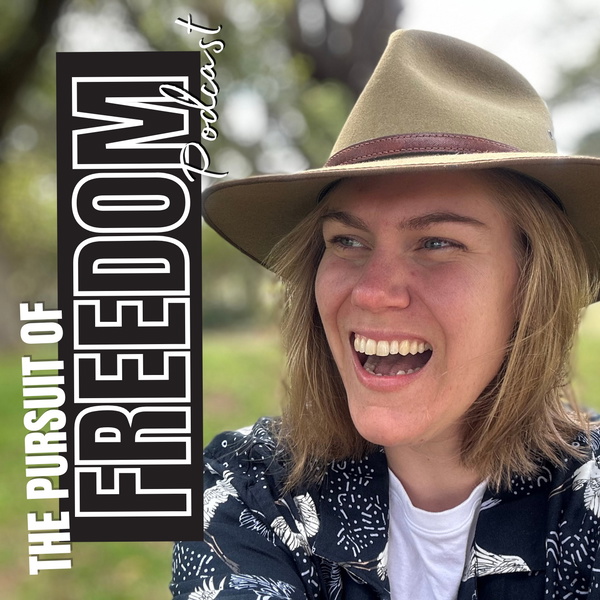
Kris Wilson Slack shares how she broke away from the corporate grind and discovered her true self. She unpacks her journey of personal growth, uncovering how discovering her personal strengths has lead to a more fulfilling life. We also discuss the importance of self-awareness, believing in yourself, and how women were never taught how to find their voice.
🔗 Resources mentioned in this episode:
- VIA Character Survey (free): https://www.viacharacter.org/account/register
☎️ Get in touch with today's guest:
- Email: kris@managers2leaders.com
- Website: https://managers2leaders.com
- LinkedIn: https://www.linkedin.com/in/kwslack/
- YouTube: https://www.youtube.com/@Managers2Leaders
----------
🎤 Send me a voicemail: https://thepursuitoffreedom.com.au/contact
⭐️ Leave a review: https://thepursuitoffreedom.com.au/reviews
✉️ Join the email list: https://subscribepage.io/freedom
🎙️ Apply to be a guest on the podcast: https://thepursuitoffreedom.com.au/guest
----------
Chapters
00:00 Welcome to Episode 54
00:41 Introduction to the Podcast
01:51 Meet Kris Wilson Slack
04:59 The Journey to Leadership Coaching
07:52 Embracing Choices and Accountability
12:21 Finding Your Authentic Voice
16:16 Understanding Strengths and Values
20:34 Applying Strengths in Life and Work
28:44 The Trap of Traditional Career Paths
29:50 Realizing True Career Aspirations
31:30 The Journey of Self-Discovery
32:14 Overcoming Personal Insecurities
32:51 Finding Freedom Through Service
33:37 Advice for the Lost and Stuck
35:01 The Importance of Connection and Self-Reflection
40:40 Accepting Others' Journeys
44:40 Embracing Change and Flexibility
47:33 Defining Personal Freedom
52:56 Podcast Wrap-Up and Call to Action
'Til next time,
TRANSCRIPT
[00:00:00] Hello? Hello and welcome to episode 54 of the pursuit of freedom podcast. I've had to rerecord this intro five times because I keep getting the episode number wrong. That's how hard it is for me to keep up right now. Crazy stuff. Before we get into the episode, I need to ask you a favor. Could you please make sure you are officially following the podcast?
[00:00:20] This will do two things. It'll mean you never miss an episode. But also it will mean the algorithm will start suggesting the show to more people which will help the show grow. And it will help me continue to get more and more awesome guests. Just like today's awesome. Guest, Kris Wilson Slack. Let's get into it.
[00:00:41] Rosie: G'day and welcome to the Pursuit of Freedom podcast. I'm your host Rosie Burrows and I'm on a journey to find my freedom so that I can help you do exactly the same. Join me each week as I share the stories of everyday people who found their own path to freedom. I'm not going to focus on job titles and accolades because I don't care about that stuff and neither should I want to uncover what truly makes you tick.
[00:01:09] Who are you? When you step away from society's expectations and follow your heart. I still haven't figured it out yet. Have you? Either way, buckle up, because it's going to be one hell of a ride.
[00:01:28] Welcome back to the Pursuit of Freedom podcast. It's a Thursday here in Australia, about 7. 30 in the morning. It's nine degrees Celsius. I thought it didn't get hot cold here, but it's pretty chilly. Um, I may or may not be live streaming to LinkedIn right now. I'm not sure. Whoops. So if I am, hello, LinkedIn people, it's nice to have you here.
[00:01:51] Um, joining us today on the podcast is Kris Wilson Slack. I'm so excited to have you here, Kris. We've had to reschedule a couple of times and I know you've got a lot going on. So I really appreciate you being here this morning. Thank you so much. I am so
[00:02:08] Kris: happy to be here, Rosie. Thank
[00:02:09] Rosie: you. Sometimes I read a bit of a guest intro and I'm excited.
[00:02:15] Veering away more and more from that as the more episodes I do, I think I've recorded maybe 50 episodes now, just over. And so let's, let's experiment a little bit, if you're willing. Cool. So let's try this. If I was to meet you at a traditional networking event, we'll start with something boring. How would you introduce yourself?
[00:02:37] I'll go, Oh yeah. Hi, I'm Rosie. You know, Oh, hi, I'm Kris. I'm like, Oh, Kris, what do you do?
[00:02:45] Kris: That's so difficult. You know why? Because I. I have these traditional networking events, especially, you know, they're almost always on video. Right. So you have to say, hi, I'm Kris Wilson Slack. I'm a leadership coach. Right. But I don't think it's really about, I don't think that's, I don't think that's fun.
[00:03:03] I think it's kind of boring. Right. And so, you know, I, I tend to introduce myself, you know, I'm a coach, I am, you know, a cat mom. I do all sorts of things. And because I think we're all well rounded people, I think we all really want to just talk. And I usually try to find something that I can connect with somebody on.
[00:03:25] So I will say, you know, yes, I'm a leadership coach. I am, uh, a Freemason. I am a cat mom. I am, uh, A, um, I do web design. I do all kinds of different things. I write, I do my own videos. I've been starting watercolor, you know, there's all kinds of different things in the, in the traditional networking sense, I guess I would say, yes, I'm a coach, but I believe that leadership coaching, which is what I do is also life coaching.
[00:03:57] And so I'm a leadership life coach. I'm all about helping people live an authentic and conscious life. whatever that is for them.
[00:04:07] Rosie: So there you go. I love that answer. And for people listening, I didn't prep Kris on this and I loved your answer when you said, yeah, isn't it a bit boring at those networking events?
[00:04:18] And I went, mm hmm. And I, I always struggled, struggle answering the question. What do you do? Because. I have so many interests and I don't see myself as limited to whatever I choose my job title to be. I'm still not really sure what my title is and I'm okay with that. But people really struggle when they can't put you neatly in a little box.
[00:04:42] Kris: Yeah. But I think, you know, I think it's all about relationship, right? It's really, you know, being, learning what our relationship is with the people that we're talking to. And yeah, sometimes it's networking and boring and all of that, but you know, I think we can always find something fun in it.
[00:04:59] Rosie: So when I first met you, I think you shared you'd been in corporate for like 35 plus years, you know, decent chunk of time, you're not in corporate anymore.
[00:05:08] So what happened and how did you find yourself where you are now? Ooh,
[00:05:16] Kris: you know, you know, life is a journey, right? Um, I was in corporate because originally I believe that's what I had to do. I lived in Silicon Valley and I grew up, you know, with Atari and all of those, you know, Apple becoming the thing. I, I grew up with all of that.
[00:05:35] And, and. Being in that area. That was what you did. That was how you became successful. And I feel like over time as I've grown as a person, as I've grown, you know, in my consciousness, I've been able to say, I'm so much more than this. I kind of did a traditional Tech role. And then I got to the point when I was in my last corporate gig, um, with a cybersecurity company, uh, I had a really great director who afforded me a lot of freedom to be able to move from one job to another job, whatever, whatever was not only helpful for them, but also within my skillset.
[00:06:15] And I got to do, you know, four or five different jobs. But I knew at this point in my life I did not wanna be. Moving up the corporate ladder. That was not who I was. And so I spent about three or four years. I said, you know, I can be a coach. I can take all of this management experience. I've learned all of this, hopefully life learning and relationship building that I've learned and be able to help all the other people who I see struggling in these silos and.
[00:06:45] And help them become freer from that. Those kind of that corporate paradigm, that chain, that mentality, chained mentality that you get when you're in that environment. We are so siloed. We don't, we need somebody on the outside to be able to say, Hey, you know, you can do something different. So I knew that.
[00:07:08] And I prepped for a couple of years, you know, squirreling away all of the resources that I needed and getting the training. And, um, and then I just said, I had actually, I had a friend who is a very dear and wise friend and she, her husband had passed and she was still working at a university in Oklahoma.
[00:07:29] And she said, you know, I, Just did it. And when I just did it, the universe opened up all of these opportunities for me, resources, family moves, all this kind of thing. And I said, I'm going to do it. I'm going to believe in me and believe in the universe and just do it. And so I did.
[00:07:49] Rosie: Wow.
[00:07:49] Kris: There you go. Wow.
[00:07:51] Rosie: You just did it.
[00:07:52] And I, I think that's kind of what it comes down to because I'm going to speak to my own experience. For so long, I wanted to go off and do my own thing outside of the traditional nine to five, but it was never quite the right time or I just needed to do a little bit more research or, you know. One day to make it happen, you eventually you just got to do it.
[00:08:17] Do you think you can ever truly feel ready to make a big change like that? Absolutely not. No.
[00:08:25] Kris: You know, it's funny, it's funny that you say that there's two things I think of. The first thing I think of is like, you know, I lived in Germany for a couple of years and it was, I lived in North Germany where it's gloomy and rainy and cold all the time.
[00:08:41] And I said, you know. A friend had said to me, he said, well, you know, it's raining out there. If we, you know, we shouldn't really go out. I said, you know what, if I waited for the rain to stop, I would never leave my house. Right. And so you got to be able to get up and go do it and just get an umbrella,
[00:09:01] prep yourself, you know, and then, and I think that, um, And in my, the Masonic stuff that I do in that, in that organization, I've held, I've, I've managed run a couple of different, um, groups in different locations. And I remember looking at the first time I did it, which was 20 years ago that, you know, looking at the woman who was, you know, helping me get this started.
[00:09:28] And I said, I'm not ready. And she said, nobody's ready. Nobody's ever ready for this stuff. And. And, and it's just, it's, you never ready. So you just go, you know what? Just do it. It's the Nike philosophy. Just
[00:09:41] Rosie: do it. Yeah. And it's become cliche, but I think it's so true. As you know, I live full time in my van and I'll meet people and they go, Oh, I wish I could do that.
[00:09:53] You're so lucky. As if this just kind of fell on my lap. I never know how to respond to that because it's a, it's to me, this was a choice and it wasn't particularly easy making this happen. And I truly believe that each of us. is making a choice. So if someone's going, Oh, I wish I could do that. It's like, well, why aren't you?
[00:10:15] You're choosing not to make this happen. Um, and I'm oversimplifying it because obviously we all have different circumstances and there's lots of things at play, but I truly believe we all have a choice. So if, if someone's staying in a role, for example, that they really hate and they're not enjoying it, and it's really impacting their mental health, physical health, relationships, they go, Oh, I just, I can't, I, you know, this is just what it is.
[00:10:49] Yeah. I go, you're making a choice there.
[00:10:54] Kris: And people hate it when you point that out to them, but it's true. You know, it's I, I just had a conversation with somebody a couple of days ago who was like, well, you know, um, you know, he said, my wife didn't really choose this. And I said, Oh, yeah, she did. She married you.
[00:11:12] So yeah, he chose it. You know, these we'd make choices all the time and we don't realize their choices. It's like, Oh, I have no choice. Yeah, you do. And you choose to put these things in whatever priority. And, and there's no judgment about that. There's no judgment. Right. Right. But
[00:11:30] Rosie: own it. you know, just own it.
[00:11:32] Yes. Yes. That accountability piece is huge. It is huge. It's not about, uh, finger pointing or blaming. It's just, Oh, actually I have a role to play in that. I have a role to play in my misery right now or whatever it is.
[00:11:49] Kris: Whatever it is. Yeah, exactly. Choice is one of those funny things because I, I think that that's all our life really is.
[00:11:56] It's kind of a series of choices and weighing what is what. And like, you know, I've just kind of taken the philosophy throughout my entire life. It's like, if I sat and I thought about it, I'd never get doing anything and just get, make the choice and go do it and then own whatever comes, whatever comes.
[00:12:16] Rosie: Right. So let's, let's talk a bit more about the work you do. And I feel like it's more than the work you do, right? There's, I, I, it's not really just your work. I feel like there's a lot of underpinning why you do this,
[00:12:30] Kris: but
[00:12:31] Rosie: we, we haven't brought this up yet, but you. I'm not sure if it's exclusively, but you very much are passionate about working with women.
[00:12:37] Is that right? In leadership? Yeah. Yeah, absolutely. And I remember telling me, it just stood out to me because it resonated so much. You said to me, nobody has taught women how to find their voice. I went, Whoa, yeah, that's, that's true. Yeah. So let's unpack that a bit.
[00:13:04] Kris: So I think that, um, especially in the corporate world, especially, especially there, I think when it comes to our own domains, we may have a little bit more of understanding of an understanding of what, what roles we play, but we still play roles.
[00:13:21] We still, there's something that's coming from the outside. That's really telling us that. When we're in some kind of a work environment, um, you know, there, psychology shows this men are agentic and women are community based. And what I mean by that is that men have a very clear idea of their self when it comes to work, who they are, what they do, how they do it.
[00:13:48] And a lot of men identify, create their identity from their work, right? Women generally in, and I'm saying, Jen, these are all generalities, right? Women generally are community based, we are family based, we are group based, and so when we do that, we tend to diffuse our personality through the community that we're a part of.
[00:14:12] We tend to forget what our own character strengths are, what our own values are, and we take on, we can take on the flavor of whatever group it is, whether it's your family and how your family is, or in your group. Corporate life and what your role is there in, especially in the corporate world. I would say in our families, it's degenerated over the last probably 30 or 40 years as well.
[00:14:39] But in the corporate world, women are generally not taught even basics like, you know, management styles and, um, leader leadership styles. It's not really management styles, but leadership styles, um, how to find your own values, how to seek a job that actually fits your values and your, your strengths, right?
[00:15:00] You just end up poking around. Trying to find what is you until the right thing pops up and we spend 20, 30 years doing that. I think that's especially true now because so many people who are younger in the workforce pushed for their own identity. But they really don't, they push for their own identity and who they are in their character strengths, but they don't know how that fits in to the corporate culture, whatever corporate culture it is.
[00:15:31] Sometimes they don't understand how it fits into the family as well, or their community. So my goal, I'm really passionate about this, especially with women, is to help them focus on. Let's find out what your strengths are. You know, you're unhappy in your job. You're unhappy with this particular community group you belong to or whatever it is, let's find, let's take a step back.
[00:15:53] Let's look at you. Let's focus on you, find out what your strengths are. And then once we do that. You start moving forward with like, okay, let's start looking at your environment, your environment, supportive of those strengths. If not, can you live with that or can you not live with that? And so we kind of take it step by step from there.
[00:16:16] I take it to the point of there's a concept, a Japanese or an Okinawan concept called Ikigai and Ikigai is really about finding out your life's purpose. And my whole goal. Over the course of coaching and getting through this is not just getting through knowing what your character strengths are, but knowing what your purpose is.
[00:16:36] And which is a journey in your life, but a lot of it, we're not taught that I don't, I would honestly say men aren't taught that either, but they tend to get a little bit more, a more corporate in executive kind of thing where women just get nothing. You go be this or one of the two, right? So, so that's my purpose.
[00:16:58] That's what my purpose is.
[00:17:00] Rosie: Just, just that little thing. It's huge. And whilst I've never been in a, a formal leadership role, I truly believe each of us is a leader. I used to be a teacher and I think in the classroom, you very much are a leader and in the early days, I'd try all these different hats on.
[00:17:22] Like, I didn't really know what kind of teacher I was. So I just adopted these personas and it didn't feel like me, but it's like, well, this is what, this is what's expected, you know, or that's what so and so does. So how, how do we find our authentic voice or our authentic way of showing up? Like, how do we know who the heck we are?
[00:17:44] How do we figure that out?
[00:17:47] Kris: I think it starts. First, I think it starts with really wanting to know it. A lot of people, a lot of people, and I'm sure that you run into them all the time. They're not, they, they, they think they know who they are and they're good with where they are. They don't really need to change or do anything like that.
[00:18:03] I think it really comes from a first sense of curiosity. And then I think it comes from being aware of, of really three things. Um, what energizes you, what gets you up in the morning when you, when we get so mired in the mundane, it's really about paying attention to that feeling of like, Oh, you know, I really want to get up and I really want to go do this because this excites me.
[00:18:32] Right. Um, so it, it has to be energizing. It has to be effortless. It has to be something that you You recognize in yourself that you can do with really not thinking about it. You know, one of the things I love to do is I love to write that is effortless for me. It's, it's a little less energizing these days, but, um, but it, but it does, once I get into it, I'm so excited.
[00:19:01] Right. And then the last thing is that it really needs to be essential to who you are. Like if, if you don't recognize yourself, if you say, If I say, well, you know, I'm, I'm a writer. And then all of a sudden I'm not a writer. Is that essential to who I am? How do I feel about that? So with those three things, the effortless energizing and essential, if you kind of think about those three things in what you do day to day, you start honing in takes time.
[00:19:32] You have to hone in on what those strengths are. And generally we have three to five. That are that are top of mind, top of top of the list. And they might change around depending on what groups we're working with or what, you know, what our situation is, maybe what our work is, what our roles are, but those five characteristics generally through, like I said, three to five kind of characteristics are the things that we hold.
[00:20:00] Close to us. And that, that really fill that, that void and make us who we are, but it does take a lot of focus and a lot of paying attention. What I call string spotting. Well, what the, uh, positive psychology world also calls string spotting.
[00:20:17] Rosie: Yeah. Strength spotting. So where do you start on that? It sounds so simple, but I know just from my own journey, it can be really hard figuring this stuff out.
[00:20:31] It's like, Oh, hang on. I don't know myself at all. So how do you, how do you begin this journey of strength spotting and better understanding who you are?
[00:20:42] Kris: So I use a tool. I use a tool called the VA character survey. It's called values in action character survey. It was built out of positive psychology in the 90s.
[00:20:50] Um, Um, it's a, it's a really cool tool. People have taken it across the globe. Millions of people. Um, it is global in its nature and they, they identified 24 character strengths values that are essential to happiness and success in our life. Okay. You take that list of 24 and there's ones that you find that are your top five, those essential, effortless, and essential, essential, effortless, and essential.
[00:21:21] And then, um, and then you take this and you take a look at what your top five are now in general, people go, yep, yeah, that's me, you know, and people say, what is it? It can move around a little bit based on your age and based on, you know, again, where your focus is at the current moment, but it's not going to change drastically.
[00:21:50] One is not going to become 24, 24 is not going to become one. And the, and it's not that 24 is also bad. It's the 24 is just something that you don't find a value that that's high enough in your life that takes out any of these others. Okay. So you take a look at this and you find these. And then the strength spotting piece of it is once you understand if you agree with what you figured out and then you kind of take these you strength spotting is an activity that you do where you kind of have to do what I call just, um, observation, listening and observation and be in a meeting, be in a group, be talking with somebody, me talking with you.
[00:22:32] Right? Um, I'm going to say certain things, or I'm going to feel certain way, or I'm going to, I'm going to come up with an idea. Maybe all of those things feed into what my character is, what my strengths are. You know, you may come up with an idea and I may say, Hmm, I wonder what happens if we do this, this, and this, or maybe I wonder what does this mean that it may be curiosity is a value and a and you can write that down.
[00:23:01] And then when you hear. Other people responding to you or asking you for those strengths back, that's also another thing. I, I encourage my clients to take journals and write down and spend at least one week after they get their survey, at least spend one week figuring out when they're in the area where they're having a problem, how often do they get to exercise these particular strengths themselves?
[00:23:26] And then how often do they hear it in the people around them? And so it takes focus, takes consciousness. But I think after a while you get to figure out like, oh, I'm a curious person and I don't get to be curious in this job. So no wonder it's my number one trait. No wonder I'm not happy with that. Right.
[00:23:45] So, um, so there's a, there's a lot of different ways to do it. And then. Yeah. And the next step after that is figuring out, okay, now we figure out the path through whatever it is that's getting you stuck wherever you're at.
[00:24:00] Rosie: I love this so much. So I, I'm someone who's very passionate about finding your values and, and sort of going from there.
[00:24:06] And, um, this is on a similar vein, right? These finding these strengths or characteristics. And I actually jumped on and found this, um, via survey. Cause I was so curious, I'm like, what is this? And I was like, Oh, there's a free version, you know, so I jumped on and you're right. The top five that came out, I went, huh, yeah, that does sound like me actually.
[00:24:30] It was really good to hear you talk about the next steps from there. Cause I was like, well, great. What do I do with that? And so here you say, you know, that the listening and observing, that's a huge part, right? Just tapping into that and reflecting and, um, Seeing where these strengths show up or maybe where they don't and I liked your suggestion of the journaling.
[00:24:51] You know, how often am I able to exercise these strengths or characteristics
[00:25:00] Kris: and, and what is the response when I do, you know, sometimes people have, um, some of, uh, like some characteristics are adjacent. Like when you have two people who have curiosity, who are talking, my primary is not curiosity, but if you have two people who are curious, talking to each other, you can go down all kinds of rabbit holes.
[00:25:19] Right. And I'm sure it's really fun. But if you get somebody who is very, uh, methodical curiosity can be an annoyance to them. And so, especially if it's a boss, they're like, I didn't ask you that. Just give me this. Don't ask me any questions. Just tell me the answer. Right. Um, and it's not that they're being mean, it's just that that's their particular strengths, their particular focus.
[00:25:44] And so. When you notice it in yourself and then you notice how people respond to you or you notice how they particularly, what are their strengths, you can start to form a better picture about why something is working or why it's not working, whatever you're in. Like I said, work, family, corporate, whatever it might be.
[00:26:05] I mean, a community might be any of those things. And. It just, it does take a little bit of time. All of these things though, all of these characteristics are also from a positive point of view. So you can over exercise one or under exercise one, like curiosity might be apathy or it might be, you know, being a nuisance, you know, it could be over exercise, but they're not in a negative vein, right?
[00:26:31] It's kind of all about tempering them, using them to the best of your ability in whatever situation you have and enjoying it. Whatever that is.
[00:26:42] Rosie: I love how this applies. You've brought it up a few times. It could be in a family context. It doesn't have to be in that corporate or workplace context. This is applicable across life.
[00:26:54] It really is. And I, I think it would, Or it does. It helps you understand yourself better, but others as well and how you interact with them and perhaps some of the friction or tension you've been feeling and the frustrations you go, Oh, okay, hang on. We just operate a little bit differently. That's why there's a bit of a friction or a bit of a clash there.
[00:27:14] They're not an arsehole. It's just, okay, we view the world a little bit differently. So how can we come together and make that work?
[00:27:21] Kris: Yeah. How can we leverage each other's strengths to the best of our abilities? Yeah. And I think that, um, you know, we spend a third of our life or more in, especially if you're a traditional corporate person, you're spending that amount of time with these people that you work with doing this particular role.
[00:27:40] You spend the other third sleeping and you spend a smaller amount of time with family and community. But it goes back to what I was talking about. The beginning is that I do think that leadership Coaching is life coaching because it's, it is all interconnected. If you're not happy in exercising your strengths in one place, it's going to affect how you feel in the others.
[00:27:58] And, and especially if you're aware of it in one place and not in the others.
[00:28:05] Rosie: So are you saying it's possible to. actually enjoy your work and be happy in the workplace? Oh, heck yes. Because I, I talk to a lot of people, like I've, my journey, I've found that my workplace is not in a traditional setting, right?
[00:28:22] I'm, I'm sort of creating my workplace around me and not in a school where I used to work or a university, all that. But there's a lot of people in my life who in More traditional workplaces and their view is it's just the way it is like Rosie You're so unrealistic. Like this is what life is you go to work.
[00:28:44] You're underpaid. You're underappreciated like You pay your bills, that's it, that's just what life is, like, get over it, you're not going to be able to enjoy work, like, what are you talking about, what planet do you live on? I think people look at me like an alien sometimes. So. I think that is
[00:29:02] Kris: sad, I think that is so sad.
[00:29:04] I was, I felt trapped there because I, you know, when you realize we, it was kind of like we were talking earlier about choice. Right. I think that, you know, we, we choose that because we think there is no other way. And I wish I had learned earlier about. About this. You know, I, it's funny. Yeah. I don't know if you have them in Australia, but we, when you're in kids in high school, when you're, you know, 14, 15, 16, they, you always get career placement, right?
[00:29:41] You get career training, right? And they give you a test and you take the test and it tells you where you're going to land. Right. And, and I took mine. And I remember really starkly that I was either going to be a nurse or a counselor or a coach. And I was like, this is crazy, this, but I can't do any, I, Oh, I'd hate being a nurse.
[00:30:04] No, I can't do. So I went, you know, the way my father told me and the way tradition kind of puts, and here I am, you know, a while later. And I'm like, Oh, I really was this, but I had to get there, right? I had to grow, but I do wish I would have learned that earlier because I think I would have been, I, it would have been the nice to have been happier earlier.
[00:30:34] I think a lot of it is also, especially earlier generations, there's, you know, mid century to the end of the 20th century, there was a lot of focus on you need to be making money, you need to be having is being right. And. It's not that, but I think that hasn't really come into the consciousness of people, especially in America for the last, probably the last 20 years.
[00:31:00] And it's still a difficult thing, you know, having is being, and it's not, no, it's not, you know, but again, it's a
[00:31:08] Rosie: choice. Yeah. Having is being, you know, I have never heard it put that way, but it's so true. Well, it's not, I don't believe that, but it's so true that society, that's what it prioritizes. It's what we have.
[00:31:26] It's those tangible things, how much money you own, where you live, the house you have, the car you drive. Was there a tipping point where you went, Oh, actually, that career test back then, the, the, the nurse, the coach, um, I've forgotten the other one, you know, maybe that wasn't too far from the truth. Because it's interesting, isn't it?
[00:31:45] The journeys we go on and you look back and go, huh, I kinda, it was there from the beginning, but I had to go on this journey. To come to that realization, so was there one specific moment where you had that realization or was it gradual over time?
[00:32:04] Kris: Oh no, it was, it was gradual. I think, you know, I, everybody has a story.
[00:32:10] Everybody has something they've had to get over. For me, it was my family. I had to get, I had to, I had to go through the journey at that point in time, at that point in my life, I was so insecure, so incompetent. I didn't know who I was. I had no voice. I mean, you're 15, 16, 17. But at that point, I, I really didn't believe in myself.
[00:32:30] I, I existed for my family and to take care of my family. It was a very dysfunctional family. Everybody's got something again, that I think we have to get over. And I think it was for me. It was the journey of going through of that, going through my relationships to where I am now. Um, I attribute a lot of where I am to getting into an organization that helped me realize that you can find freedom for yourself in service and in that service, become free.
[00:33:07] And when you find that you find in yourself, what it is that you can offer. And that's part of the journey. Right. And then when you realize it, it probably wasn't until I actually became a coach and I went, Oh my God, I had a career test and this is what I was supposed to be. Not until then, but you know, but this whole, it's been, you know, a good 40 years of a lot of slogging through getting through stuff to find who I am today.
[00:33:36] Rosie: Hmm. And what would you say to those people who are still feeling a bit lost or a bit stuck like, I don't know who I am. What am I even good at? What's my purpose? Do you have any advice for them? Because I know it can be a really overwhelming and lonely state to be in. I think there's two things.
[00:34:00] Kris: Don't do it alone. You know, find people that you can truly trust. Right, that you can truly be with and not, I'm, I'm not talking about just friends. I'm talking about the people that, you know, we really only, I believe we really only have two or three people that are our friends throughout our entire lives that are the people, those people, right?
[00:34:23] When you find those people and love them, hug them, hold them. You know, nurture them, be of service, let them be of service to you and, and create that relationship. There are multiple times I, I check in with people and go, okay, am I crazy? Please tell me if I'm crazy. Can I, can I do this then? And they help you see what you don't see.
[00:34:44] Right. They help you get that vision of, you know, I can paint a watercolor picture and I can look at it and go, this is crap. And then my husband will come up to me and look at it and go, this is really beautiful. I, I love this. And you, you tend to reassess it. Right. The other part of it, I think, is also becoming comfortable with yourself, becoming comfortable with who you are, take that journey, take that, don't be uncomfortable in the uncomfortableness, but continue to be with yourself, continue to still find those things within yourself.
[00:35:20] So it's kind of a dichotomy, right? Find somebody who can be that person in those eyes, but also be comfortable being alone and going in inside in that journey as well.
[00:35:32] Rosie: So maybe
[00:35:32] Kris: it's both. Maybe it's both things.
[00:35:34] Rosie: Yeah. I, I think it is. I've always thought I'm such a fiercely independent person, right? And I can do it by myself.
[00:35:43] Which, yeah, okay, I can to a certain degree. But, you know, maybe over the past five years or so, I've realized, Hmm, actually I really love being around people. The right people. Like, connection is so important to me. And actually doing things or insisting on doing things by myself. It's not productive, it's not enjoyable, and I'm just missing out unnecessarily by doing that.
[00:36:13] But at the same time, I value that alone time. So what you were saying and having those people being your eyes, but then also being comfortable with yourself. I think that just two key pieces, because so many of us. We have trouble just sitting with our thoughts. It can be uncomfortable. It can be confronting.
[00:36:37] Just sitting with yourself and, I don't know, like, you know, sitting with those thoughts. Not just going along with, hey, this is what I've been raised to believe, this is what society says, this is what my dad said, or whatever it is.
[00:36:51] Kris: Right. You're like,
[00:36:53] Rosie: oh, actually, what I thought were my beliefs, maybe they aren't.
[00:36:56] Aren't my beliefs.
[00:36:59] Kris: I think that's true with most of the things that we think, you know, a lot of times we think that we, Oh, I've come up with this answer. I get, I don't know. Did you really, you know, I, I have a, you know, I, I in talking my part of my journey was all about not being good enough. Right. I was never really good enough.
[00:37:20] And, um, And in that particular piece of it was, it wasn't that long ago, feels like, um, I was having a discussion with somebody and I said, why is it that I just sometimes feel like I can't do something? And Thanks, Gwyneth. And That person had had a couple of drinks and so they felt really comfortable and said, that's because your dad is sitting right behind you telling you that you can't do it, that you need to constantly be better, which was his way of showing love and caring about me.
[00:37:56] But you know, I didn't realize that that was the thing that was holding me back. I was in my thoughts, these are the things that are holding you back. And once I realized that, you know, I kind of went on the, I am enough mantra. Right. It's that consciousness of being aware, like you're spotting your strengths.
[00:38:14] It's that consciousness of the voices in your head too. Where are they coming from? Where did they come? It's a, it's a long journey.
[00:38:24] Rosie: Yeah. And I don't think there's, it's ever really over, is it? No, it hasn't been for me yet. Nope.
[00:38:30] Kris: Yeah.
[00:38:32] Rosie: Unfortunately. But I think it also makes life interesting. I, I'm definitely a curious person.
[00:38:39] And when I did that via survey, I'm scrolling up. Yeah. Curiosity came out as one of my top five. So it went appreciation of beauty and excellence, curiosity, perspective, fairness, and creativity. Yeah. It was just a really cool exercise. It's not complicated. You go through, answer some questions, like it probably took less than five minutes, but yeah, um, yeah, it's, it was interesting and I'm definitely going to try your suggestions of, you know, just sitting and observing.
[00:39:13] of listening, observing, when do these strengths come up in my life? Am I, is my lifestyle at the moment and the work that I do allowing me the opportunity to exercise these strengths? And if it's not, then that's probably an indication that things are a bit out of alignment.
[00:39:31] Kris: It's funny you you've I would see all of those things in you.
[00:39:35] I would see all of, you know, an appreciation of art and beauty, you know, being that top one, because I mean, look, you're out in the world experiencing it. You're not gonna let that beauty and art pass you
[00:39:45] Rosie: by. This is the kind of personal development, the kind of work that I enjoy to do, because I think it's, it's, it makes life better.
[00:39:57] Like you said, it's fun. It is fun, for me at least. I think there's people out there who go, oh, I got to put the work in? Ew.
[00:40:07] Kris: Wouldn't you? You know, my answer is like, you have to put the work in a little bit to get an immense amount of happiness and joy, you know? And if you want to be happier, yeah, don't you
[00:40:19] Rosie: want to be unstuck from where you're at?
[00:40:21] Yeah, surely we all do. But you mentioned something earlier about, I think I was talking about, you know, how we figure out who the heck we are. You said something that stuck with me. You're like, well, you have to want to know. to be able to start that journey. And I went, Oh, this is true. I've always wanted to know, but something I struggle with is I got people in my life and I can just see they're so lost, but I don't want to know.
[00:40:50] They don't want to go on that journey. They're not ready. And I'm always wanting to help them. They don't want my help. I don't want my help. And in fact, I'm not helping them, but I struggle with that. And I think that's what it is. They don't want to know. They're just, they're not at that stage and maybe they never will be.
[00:41:08] Kris: I think we all have different purposes in life. There is, um, I, I read a study once about the people who, um, I'm going to use the term growth, right? They have want growth in their life. They're, they're like, okay, where's the next thing? Let's jump in. Let's learn it. Let's, let's understand it. And all of that.
[00:41:26] That's actually only about 35 to 40 percent of the global population really is in that state. And the others are in reflection or they're in, you know, some other kind of, of mode of being and, and totally fine. We need to have those. Right. Right. Yeah. But for the people who are in growth, who are looking for all of that, that excitement and want, they want to bring everybody with them on the journey.
[00:41:51] And it's hard when they're not on that journey. So hard.
[00:41:56] Rosie: So hard. I really struggle with that. Like one of the people in my life that I really have difficulty with it is my sister. She's 10 years younger and you know, we lost our parents fairly young. And so it's just me and her and I just, I want her. Like, let's go on this growth journey.
[00:42:16] And that's just not her thing. That's not where she is. And I, I've realized I can't force that on her. Who am I serving? And who am I helping by doing that? Nobody. Yeah. Yeah.
[00:42:29] Kris: And it, it, it harms actually. It can harm, you know, in your, you, you forget you, um, You end up talking and communicating and being at cross purposes and yeah, and that can be sad too it's it's that sometimes it's just a matter of accepting and Taking a deep breath and letting people be on the journey where they're at wherever it's at.
[00:42:53] Yeah Acceptance can be challenging Gross people.
[00:42:58] Rosie: Oh, yeah, I struggle. I gotta say Kris Every now and then there's someone who crosses over. Yeah, so I've got my best friend She's been in teaching for maybe a decade now and you know over the years It's just kind of become a bit soul destroying for her.
[00:43:16] Anyway a few months ago. She made the decision to just Make the leap, start our own business. And I went, Yes! Oh my God, I'm so excited! I had to kind of tame it in a bit because for so long I'd been like, Oh, you could do so much more. Like you don't have to be contained within that system. And that's not to say you can't have happiness within the system, right?
[00:43:43] I'm saying system, but that traditional kind of structure. Yeah. But sometimes breaking out of that system is. That is, is the answer for some of us. And it was just so cool to be a fly on the wall and see someone go, hey, there could be something better. She's tried for years to make it work, right, in the traditional schooling system, and she's made great strides.
[00:44:09] But now she's at a level she's like, ah, hell no, I'm, I'm taking the reins now. And it's just, it's beautiful to see. Exactly. Yeah. Pretty much. That's pretty much kind of what her big vision. So I think it's Right? And seeing people dream big and have these outlandish, crazy visions. I love that. I'm like, yes!
[00:44:29] I'm not here to tell you that can't happen. Like, who am I to say that? I think having dreams is important.
[00:44:38] Kris: Yep. And we have to work for them. But yeah. You know, that's, that's the thing is that we have to be willing, we have to make that choice and be willing to step into the, doing the tough stuff that needs to be done.
[00:44:49] Right. And facing, it's kind of a combination between taking that choice and taking that leap and also realizing that I got to be an adult now I got to take responsibility for the things that are going on. I can't just listen to those voices in my head and let them, you know, let them drive the car. I need to drive the car.
[00:45:06] I need to get out there and do it.
[00:45:07] Rosie: Yeah. Yeah. I know. Yeah, and it is hard work. And I can pretty much with 100 percent certainty say it's not going to go according to plan. No.
[00:45:18] Kris: Well, not our plan, maybe Velcro. Right,
[00:45:22] Rosie: right. Not our plan. It's not like we've got
[00:45:27] Kris: Right. Maybe it's what the world needs.
[00:45:28] Rosie: Not necessarily what we need.
[00:45:30] Yeah. And we need a bit of flexibility on that. It's, it's gonna probably turn out to be something entirely different to what we initially thought, but I think it's often fabulous. And the more I absolutely, the more I just. It's not, I guess it's go with the flow, but that sounds like I'm not taking accountability.
[00:45:51] But the more flexible I am and open to things going in a different direction, the more amazing life is. I just see the beauty in it and go, Oh wow, I didn't expect this to happen. How cool is that?
[00:46:07] Kris: Yeah. I think it's because it's not about our ego. Right. It's not about, it's not about our ego driving it.
[00:46:14] It's about, it's when we kind of say, I want to be of service. I, here are my talents. Here are my skills. What, and, and here's my strength, right? What can I do to be best of service? And you may have to find that you have to like plug yourself into a few niches or whatever, or even making it yourself. You don't really know, but when we.
[00:46:34] I think when like you do that you, something, an opportunity is presented to you, right? It's something that comes up in your face, like you may have been, you know, let's talk about, you know, homes getting repaired, right? The, the home gets repaired, you're stuck in a certain place. You meet these incredible people and you realize that what you do can be something to them.
[00:46:56] Right. And so if opens up, even when we're planning all of these other things, I think, I think that's also key. I think it's also being aware enough of the opportunities that come in front of you as well as knowing who you are and saying, okay, I'm listening. Let's do this. Yeah. Yeah.
[00:47:18] Rosie: Yeah. I could just, I could just keep talking, but I know my, my, my final question, and this is something I ask everybody.
[00:47:26] Okay. On the show. I can't remember when I started kind of making this tradition, but it didn't take long. Um, but Kris, tell me, what does freedom mean to you?
[00:47:39] Kris: Freedom is really important to me and really important to me. I think
[00:47:51] it means on that journey that we're talking about, the ability to make mistakes, the ability to have success. change my mind, the ability to have the universe change my mind and All of it being held, like imagine doing all of that and being held in a nice, warm, loving embrace saying, you are fabulous doing this and, and so taking being who I am and making all of the mistakes and terrible things that I do and stupid things I say and all the fabulous things I say and the great things I do, making it all be okay.
[00:48:38] And being part of the bigger journey, whatever way I want to go. Whatever way I want to do that, that is freedom for me, the ability to make that choice, whatever it is and own it. Yeah.
[00:48:55] Rosie: Mm. Yeah. Part of that, that really, it jumped out as you were saying it is. Uh, uh, what were the words, you know, the ability to change your mind, I think is how you put it.
[00:49:14] And that is huge for me because I've often, for whatever reason, I don't know where this belief came from, probably school, actually, um, you know, there's always one right answer. You lock it in and that's it. But giving yourself the permission to change your mind, that has been liberating for me. You know, just being open, whatever the universe is telling you or what people are saying to you, take it in.
[00:49:45] You don't have to agree with it, but it might shift your. Your world view or your perspective and your beliefs and that's really cool. Yeah, I think it's really cool It can be unsettling
[00:49:58] Kris: To me that yeah, that's that is and I think once I learned that that was like that was the liberation That was the liberation that I needed to be who I really was.
[00:50:14] Rosie: Yeah Yeah We shift and grow and changes people. We're not, you know. It'd be boring if we were the same. It was so Matrix.
[00:50:27] Yeah. If I was the Rosie of five years ago, Oh, you know, no shade on that Rosie. I was great, but I'm a different, I've, I've grown and shifted and changed and I'm still Rosie. But also a different version. And I think that's great. And it's, it's going to keep shifting. And I think hopefully it never gets to a point in my life where I, you know, I'm so, I'm so stubborn and fixed in my ways that that's it.
[00:50:55] I'm not going to take on any, anything else. Like, I hope I never get to that stage and I don't think I will. That's almost like a nightmare.
[00:51:06] Kris: To say, I cannot imagine you being that person. Oh, just give me some popcorn and let me watch a movie and leave me alone. I cannot believe you are that person. No. I mean, I do
[00:51:19] Rosie: like popcorn and a good movie.
[00:51:20] Kris: Yeah. You, you, you're going to be, you're a world traveler and in all sorts of forms. And I think that's wonderful. Oh, thank you. The world needs travelers.
[00:51:30] Rosie: Thank you. And isn't it amazing you've picked up on that, you know, this is only our second conversation and that's. Yeah. Yeah, it's cool. It comes through.
[00:51:40] Kris, thank you so much for this conversation. It's been so cool. I, um, it has been fun and that's a big part of why I do this podcast. It's quite selfish, really. I, enjoy it. I
[00:51:55] Kris: have, I have loved talking with you.
[00:51:57] Rosie: You are a joy. Oh, thank you so much. And, um, yeah, let's talk again soon. And I'll put your contact info in the description so people can reach out because you've got so much wisdom to share.
[00:52:09] And I highly encourage people to do the, the free, um, uh, via survey. It's just a fun little one that, that, yeah, will help you, I think help you on your journey, pull out some of those strengths and. I think you'll agree with them. Maybe you won't, but even that will be a point for reflection. You
[00:52:28] Kris: know, I've given this a lot of times.
[00:52:30] I have not met anybody yet who hasn't agreed with it. At least their top five.
[00:52:35] Rosie: Yeah. Wow. And it asks questions. I noticed some of the questions, um, Are almost asking the same thing, but in a different way. So it's kind of stress testing and figuring it out. So it was cool. Very easy to do. Yeah. Good. I'm so glad you enjoyed it.
[00:52:52] Yes. We'll have to talk again soon. Yeah.
[00:52:54] Kris: Thanks so much, Kris. You're welcome. Thank you.
[00:52:56] Ding a Ling.
[00:52:59] Public service announcement from your host, Rosie borrowers. If you haven't already make sure you are following the podcast. It has gone up a little bit last week. It was 9.9% of you who were following. This week, it's 10%. We are slowly going up. So come on guys. Make sure you are following the podcast.
[00:53:18] It's really easy to do. Go to the show page, tap the follow button at the top. And, you know, what could you share your favorite episode with someone who you think would enjoy it? Get them to follow to let's spread the word because I'm biased. But I think this podcast is pretty damn cool. Catching next week.
[00:53:36]