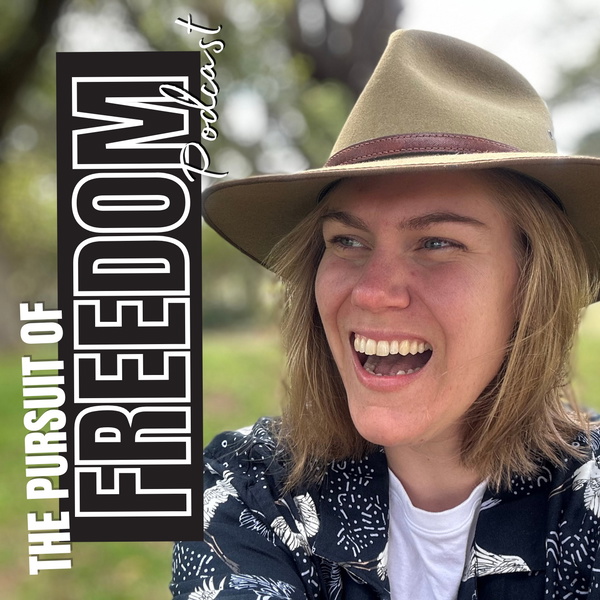
In this spontaneous episode I am joined by Piret Betten and Roula Abou-Haidar for an impromptu discussion about overcoming setbacks, managing anxiety, and discovering true happiness. This conversation takes an unfiltered look into how we can adjust our mindset to handle life's unpredictable nature. We explore not just the concept of freedom, but also the deeper emotions tied to happiness, safety, and self-awareness.
Key themes of this episode include:
- Handling adjustments when things don’t go as planned
- Overcoming anxiety and negative thoughts
- The importance of self-awareness and reflection
- Different types of safety and their impact on happiness
- Authenticity and making empowered choices
- The role of community and support in personal growth
Resources mentioned in this episode:
- Listen to Roula's episode on the podcast (Episode 34)
- Listen to Roula's podcast - The Life Affairs Podcast
- Listen to Piret's podcast on YouTube - The Piret Show
Chapters
00:00 Introduction to the Pursuit of Freedom Podcast
00:43 Spur of the Moment Episode with Special Guests
01:48 Adjusting to Setbacks and Embracing Change
06:34 Managing Reactions and Emotional Responses
10:53 Coping with Anxiety and Intrusive Thoughts
14:38 The Impact of Hormonal Cycles on Emotions
18:47 The Power of Journaling and Self-Reflection
29:19 Understanding Happiness and Overcoming Negativity
35:07 Understanding the Impact of Upbringing on Happiness
36:32 Overcoming Childhood Conditioning
38:27 The Importance of Surrounding Yourself with Positive Influences
39:06 Navigating Social Obligations and Personal Comfort
40:59 The Power of Community and Shared Experiences
43:39 The Role of Safety in Experiencing Happiness
49:25 Defining Freedom and Its Connection to Happiness
59:13 The Benefits of Live Podcasting and Embracing Technology
01:07:01 Encouraging Subscriptions and Listener Engagement
01:08:51 Final Thoughts and Farewell
'Til next time,

TRANSCRIPT
[00:00:00] Rosie: G'day, and welcome to the Pursuit of Freedom podcast. I'm your host, Rosie Burrows, and I'm on a journey to find my freedom so that I can help you do exactly the same. Join me each week as I share the stories of everyday people who've found their own path to freedom.
[00:00:15] I'm not going to focus on job titles and accolades because I don't care about that stuff. And neither should you. I want to uncover what truly makes you tick. Who are you when you step away from society's expectations and follow your heart? I still haven't figured it out yet. Have you? Either way, buckle up because it's going to be one hell of a ride. and welcome to the Pursuit of Freedom podcast. I'm really excited for this episode because it's a bit spur of the moment. I have in with me an expert speaker who, um, generously agreed to speak in my membership community. Now, only one member of the community has turned up. So it's just a really intimate, it's the three of us.
[00:01:04] And we thought, Hey, what if we do an impromptu podcast episode? So here we are. Peratt is here to talk about, um, you know, pushing through setbacks and all the, all the different things. I'm going to butcher this. She's going to talk to us about it. And also with us, is Rula, and Rula's a podcast host. So is Peratt.
[00:01:27] So am I. And so I think this is going to be great. We'll see how it goes. It could be clunky. We might talk over each other, but I think we're going to have so much fun. So Rula and Peratt. Thank you so much to, or for agreeing to do this experiment. I can't wait to dive in.
[00:01:47] Piret: Yeah. It's really exciting. It's all, and I'm going to jump right into it before I'm going to introduce myself, but like, like you were saying, what happened and what we're going to talk about adjustment.
[00:02:01] Something like what you plan, you plan something, it didn't go that way. You don't get like that setback, you don't fall to that setback. You adjust, you make that adjustment, and okay, now what we gonna do? Because so many people in this situation, they were just like, Oh, let's just, Don't do it or generally in life.
[00:02:24] It's something that it doesn't go the way you plan to go They just like oh, let's just not do anything or let's just try to something Just they let it go and they feel miserable about it. Yeah, instead of taking the way we took it like oh, it's adjustment Let's have fun. Let's do something different.
[00:02:44] Let's invade something. So that's exactly how it was. So That's, that's the way you should do it with everything pretty much in your life when it doesn't go the way you planned it to go.
[00:02:57] Rosie: And I love that you call it an adjustment because it is, it's this shifted mindset or this small adjustment because just a couple of months ago, I had a community event where I think one person showed up or I thought it was going to be no one.
[00:03:11] And I'm freaking out and getting stressed and anxious and it's the end of the world. But. Yeah. I've learned over time that it doesn't help anyone to react that way, least of all me. So I'm so glad that together we've just decided to jump into this and Rula, I'd love to hear your perspective on this word adjustment because I know your life has been a little bit nuts lately.
[00:03:38] Yes.
[00:03:42] Roula: It's, I feel like from the day I'm born, I'm adjusting. Thank you Adjusting to life, which is part of life. And I have two things that I today I like in this conversation to unpack with you, Peret, is that, yes, when things don't go as planned to just get over it, shake it off us and move forward. And the second thing is that sometimes it's hard to move forward because we are worried about others expectations when we have planned something or how others will react that this feeling we're holding back and changing the plan.
[00:04:23] So do you hear an echo or just I'm hearing it?
[00:04:26] Piret: There's an
[00:04:27] Roula: echo. Was
[00:04:29] Piret: that echo
[00:04:31] Rosie: going on the whole time? No, now let me put my headphones on. We're adjusting.
[00:04:44] Oh God. All right. Here we go. I
[00:04:51] Piret: wonder if it's. How's that? Cool. Yeah. All right. Let's try it. Roll up. Try you when you talk. I
[00:05:00] Roula: don't know. Yes. So I was saying, um, that I like also to see, okay, great. So the perspective is that changing my mind or changing the way I'm going to do something ad hoc, because the plans have changed, how is it affecting others and how others can accept it without feeling that I have let them down or I changed my commitment or because sometimes even in our, in our When we plant stuff, there's an ad hoc information.
[00:05:27] We get new information that make us want to act differently or go a different direction. And these are the blocks I find can hold me back from moving forward with, with the change.
[00:05:41] Piret: I actually have an answer for that as well. When you have, when you worry about those other people. They usually go after what you gonna lead them for.
[00:05:54] So they gonna look at you, they gonna look at your reaction, and whatever reaction you gonna give them, you gonna just move smoothly over it, they gonna follow it. They're going to follow your reaction because you, they're like, you're the one, maybe you're the one who planned it. So they're going to think that they might, in some situations, they might even think like, depends what it is, like, Oh, this is the way it was planned because they don't know that it was not your plan.
[00:06:26] So they're going to look at you, see what your reaction and next actions are, and they're just going to follow you. So are we going to talk about managing our
[00:06:37] Roula: reactions?
[00:06:39] Piret: Yeah. Your personal. It's good to talk about it.
[00:06:42] Rosie: Yeah. Yeah. Yeah. This managing reactions. I think it's so relevant for parents. I'm staying with a friend at the moment and she has a one year old and a four year old and she's a single mom, quite stressed.
[00:06:53] Um, and as a teacher, I know this as well, the kids pick up on your reaction and your energy. And it's just so obvious when you're in a household with kids, if the mom's stressed or the dad or whoever, and that's how they're interacting with the kids, they pick up on that energy and it is absolute chaos.
[00:07:12] But I've never actually thought about it, Peratt, in the way you just framed it. It's true. Very, very cool.
[00:07:21] Piret: Yeah, and like I said, if you have like, uh, you're planning some speech or something and it doesn't go, like, right now with the microphone and everything, everybody stay calm, you put the hair, uh, the, Speakers on and everything is fine again.
[00:07:39] Same way like you just have to find I know how it is with your brain as well That you start starting to come in and like but what they're gonna think what they're gonna do Instead of that is uh, I have written here as well with the setbacks and everything You're gonna be like i'm the ones leading I'm taking it over.
[00:07:59] I'm going to push. Instead of worrying about what others are going to do, you're going to push them towards what you want them to do. So how did
[00:08:07] Rosie: you learn how to do this? Yeah,
[00:08:11] Piret: I know how the task, the most important thing is to get control of your own task when your taskers start worrying about like, Oh, what are you going to think?
[00:08:20] What are you going to say? Did I fail them? Like those automatic tasks, you just have to practice and practice until you learn to control them and push them on the side. And then you just think. I got this. I'm going to fix the situation. Nobody's ever going to know that it didn't go by the plan.
[00:08:40] Rosie: Mm. So how do we get better at doing that?
[00:08:44] Piret: You practice. You practice, and you practice, and you practice. Every time it happens, you like, when you notice yourself thinking of something that you're not, you don't want to think about it, you already know it's, it's coming to your head, and you know that's not a real thought. It's not your thought. You don't believe in it.
[00:09:04] It's something automatic. Maybe you heard it from somebody or somewhere. And you just have to acknowledge that it's there. You think about it a little bit. Think like, Is it true? Usually it's not. Do you believe in it? So that's the thing. You can't believe everything that you think.
[00:09:23] Rosie: Mmm.
[00:09:24] Piret: So, and then you have to acknowledge that, Okay, this thought is not what I actually believe.
[00:09:33] And you let it go. And you could have different words. I use cancel. When those thoughts come, I use cancel. Can you
[00:09:41] Roula: give me a practical example? Maybe
[00:09:43] Piret: we can practice something now. One little thing. This is not with the I don't even remember what I was thinking. But I was When I was already practiced for a while and then I woke up in the morning and there was some kind of thought I don't, now I don't even remember what it was But it's some kind of thought right in the morning with some kind of thought in my head And it was just like I knew that if that I'm gonna start thinking about it It's gonna bother me all day and I said cancel and like I was like, I'm still like in awe It's happened like three years ago and I still think about how in that moment I said canceled It was gone and I was like felt all this release and I was just like did it just happen?
[00:10:33] Is it like is it even real that it just happened and now it's so easy for me After that moment everything came so easy for me for like just let go those thoughts So I just cancelled because I know it's not real, but if I would have kept on thinking about that, that would have bothered me all day.
[00:10:53] Rosie: Yeah, and I find that interesting because for me, it's not that easy.
[00:10:57] I don't just go, yeah, cancel. It's, I get feelings of panic and stress and it feels very true. These thoughts feel very, very true. And I found, I still haven't really figured it out, but I've found some strategies that sometimes work is just like taking a beat, like pause, take some deep breaths and go. Am I helping myself right now with these thoughts?
[00:11:26] Usually it's no, this is not productive. So like, okay, how, and then it's about problem solving. I think that's the approach I tend to take, but Rula, I'd like your thoughts on how, how do you manage these intrusive thoughts and the feelings of panic or stress? Like what's that like for you?
[00:11:48] Roula: At the moment I have them in a 3d because I don't know if I'm a middle aged in my fifties and I noticed that all my.
[00:11:56] many of my thoughts and depending on my hormones, what day I'm in, there are magnified, I have more anxiety, I'm worried about stuff that I usually don't worry about. So I'm facing a lot of these things. Though I have learned something from a sleeping book that I'm listening to. And it says that When I have these thoughts that are making me anxious, or they're going to ruin my day, especially in the morning when we wake up, or at night before we sleep, I'm practicing this thing that I learned from the book is that make space in my day.
[00:12:39] to sit and think of these thoughts that are bothering me, worrying me, whatever they are, negative thoughts, to take, put some time in my day to think about them, write them down, see if I can do something about them or not. And make sure I wrap up, and this is, the word cancel is nice, it's like, for me it could be finished.
[00:13:04] Stop. And
[00:13:05] Rosie: then,
[00:13:06] Roula: put them aside, deal with my feelings about them, and move on with my day. Of course, this doesn't work every time because I have to be in state of mind to remember this exercise.
[00:13:20] Rosie: Yeah. Because
[00:13:21] Roula: sometimes the anxiety is so high that I don't even remember the exercise. It feels so real like I'm in danger because of my thoughts and my feelings.
[00:13:33] that I start acting in a way that will ruin my day. But practicing helps me even if I'm forward in ruining my day, I'm like, No, really, I have to go back and do my exercise. And mostly what wakes me up and going back is the reaction of the people around me. The whole vibe can change with the people in the house or my reactions.
[00:14:01] So yeah, this is this is what I'm teaching myself. And coping with my negative thoughts. I'm going to give that a go.
[00:14:10] Piret: And like you said, uh, the practice is the most important part because when you practice long enough, it becomes automatic. Then you don't have to even do the exercise after, like, after practicing for like a year or so, you don't have to do the exercise because it comes automatically.
[00:14:29] You already do it. Your brain just does it by itself. It's going to do the exercise in your head without you have to do it like really and manually. But you said it's like connected to your cycle. Like there's some of the tasks with the cycle. I have my cycle tasks so and feeling so good. But when I. I notice them in the morning, I tell myself right away, right away that they are not really connected to my cycle.
[00:14:57] I have like, I have like, there's two days in my 28 day cycle that I know for sure I'm gonna feel like I'm scared of everything. I wake up and like, like all day, like I feel this feel of fear and there's nothing to be scared of. And I say, it's part of my cycle, that's what it is. And that's how I handle it.
[00:15:19] I don't put it in any other attention besides just saying it's my cycle. Another one of the days, like, I feel absolutely sad about nothing. I just feel sad. Like, all day, like, I just feel sad. I feel down. I usually go and now when I know it's because of the cycle and if I do, first I felt guilt, but I just go in as on a couch, have some comfy food and watch TV.
[00:15:46] It's like if I can't do it in that day, if I don't have any other things that I have to get done, but, and I got used to doing it, but I know it's because of my cycle and the way I found out as well. It was about for, um, I think six months I did my cycle, and I tracked every day how I felt. So then I started seeing how, like, all those days, the feelings, they repeated every 30, 28 days.
[00:16:16] On those days, those feelings repeated, they repeated again, repeated again. I was like, okay, that has nothing to do with the real life, it's just my hormones and that's what makes me feel like that and that's what it was. And I'll give you one fun example, like there's this little bit off of kind of weird side of thought, but there's one day also where I, I look at every guy because of the cycle, you know, it's hormones and every guy is attractive.
[00:16:45] And Next day, they're not that attractive anymore, but like, because of my cycle, and there's one day that I know, like, every guy, and I'm like, I tell myself as well, it's my cycle. They're not really attractive to me.
[00:17:01] Rosie: It's so interesting. And I think it just goes to show this work takes a lot of self awareness.
[00:17:08] It's not just going to come to you. Like you had to journal and it took months to spot these patterns and whether it's your menstrual strike cycle or something else, I think it can be really useful to reflect and try to find these patterns. I think for me, I have to be careful not to obsess over it though.
[00:17:26] There's got to be some sort of. Um, yeah, Rula, do you, do you find you have any sort of behaviors that come up a lot for you? Uh,
[00:17:45] Roula: yeah. Um, my anxiety. I really, I can get very anxious about stupid things and I've been journaling my anxiety because I feel that, I progress, let's say in my work, I'm progressing and I'm on track and excited and motivated.
[00:18:09] And then the days, some days come and I feel like I'm a total loser. I'm not going to make any, any good episodes. Uh, I don't have the, the, I don't have it in me. I don't have the patience for it. I'm fed up and I start getting anxious about, Oh my goodness, what am I going to do now? It's, and I want the decision and I want like a solution.
[00:18:35] for my feelings in that moment. So I do have this kind of anxiety, which I didn't have in the past. It's, I'm noticing that this, this is for me now and worrying. Excessive worrying, as Pered said, worrying about things that are not real or about a future that I can't look into because of journaling and reflecting and talking about it with my husband because he's affected by me when I'm anxious, when I'm worried, he's the first one that notices.
[00:19:13] And also because he's my safe place, I would react on him and he was like, where is this coming from? Um, it's. Weird. So the more I journal and I talk about it with him, I'm reflecting more, paying attention to, to this anxiety and this excessive worry that I have. And I ask him not to tell me not to worry because it's going to piss me off.
[00:19:41] Yeah. Because it feels so real at that moment. Right. Right. You know? It's um, it's, it's process, but I'm also glad I have this process because it helps me reflect on other things too. So it is a moment of worry that I'm in, it's an anxious moment that I'm going through, but it also helps me Uh, appreciate and be grateful for actually what I have and pull me out of it.
[00:20:10] So I don't hang in my negativity for very long. I can pull myself out of it
[00:20:16] Rosie: quickly. And I was going to ask, you sort of touched on this. If the journaling helps you, um, pull yourself out of the anxiety and all the feelings of worry, cause it sounds like it's really helped you become more self aware. So I'm curious.
[00:20:31] Yeah.
[00:20:32] Roula: It gives me clarity.
[00:20:34] Rosie: What is
[00:20:35] Roula: real and what is not real? Because if, if there are days, consistent days that I'm feeling worried and anxious and the rest of the days I'm fine, then I really have to see what's triggering this. It could be an argument with someone. It could be my cycle. It could be thinking about the future, having a bad dream maybe.
[00:21:01] I have to see what's triggering this. And, uh, get clarity, it gives clarity above all, but coming out of it, this is finding what works for me and how I really need needed the help of my husband, for example, to talk me, uh, the positive things to help me come out of it. So, yeah, I've heard
[00:21:33] Piret: some people using this kind of technique as well, and they actually schedule that time of worrying in their schedule.
[00:21:43] Like you have twice a week, you put like 15 minutes of worrying. In this day. Wow. And that's what you do. You see in your schedule, you have this 15 minutes for worrying. So you're doing that, you get used to doing it that time, for that period, and even like for you, Rola, you can have your husband there with you, and for like 15 minutes you just do this, you worry about all, write down all those things you worry about, and all the things you're worrying.
[00:22:15] But then 15 minutes is time to This is done. Now it's, you move on and you do all the other things again. The next week and you can't worry again until the next time it's scheduled in your schedule. This is fascinating.
[00:22:31] Rosie: This is fascinating. I have never thought of scheduling time for something I perceive as negative.
[00:22:38] Like I see worrying about things and anxiety and depression, they're all negative feelings. So why on earth would I schedule time for that? But actually. It makes a lot of sense because we can't just push these feelings aside and ignore them.
[00:22:52] Piret: And this way you get them out of your body. Otherwise they stay in, they still heal.
[00:22:57] You press them down, press them down, they don't go anywhere. But this way you have it at the outset. You get it out. It's done. You worry for 15 minutes and now you let go and until next week, 15 minutes. And if something comes out, you can write it down and like, okay, I'm going to deal with it when my worry time comes.
[00:23:18] Roula: I love this. Yes. He also said something when we push it down, it comes in our body and yeah, I have, I can have headaches and uh, like stomach pain, like cramps and thinking, I don't know what that is, but actually it's my anxiety or whatever I'm worried about. Yeah. What
[00:23:44] Piret: I wanted to say, um, say something else.
[00:23:50] I'm trying to remember what I wanted to say about that.
[00:23:54] Rosie: It's definitely a strategy I want to try. I don't know how I feel about it. I'm squirming in my chair going, Oh, this is uncomfortable scheduling time for that, but I like it. Yeah. I'm going to try this. I, I, um, definitely, you know, one of my values is curiosity and I really believe in trying new things.
[00:24:16] It doesn't mean it's going to work, but I think approaching things with that curiosity removes judgment and it just allows you to experience it. And there's no expectation of, of what it's going to be like. It's like, Hey, I'm going to explore, go on an adventure. It's going to be fun.
[00:24:34] Piret: And I remember this all, what I wanted to say, it was, uh, when somebody starts crying or when you feel that you feel like crying or somebody else, you don't stop them from crying.
[00:24:45] It's the same thing with the emotions. Like, people say, oh, like, your reaction is you try to stop them crying. No, the crying is the same way. It's releasing their emotion. So they need to cry to get their emotion out. And when they're done crying, that emotion is done with. And it's out. But if you tell them, stop crying, they hold it back.
[00:25:06] And you try to, like, feel better. It's like, okay, well, they just don't cry. mush that emotion back in the body, but crying with the tears, it all comes out, it's gone. And like, probably like, we all probably cried for something in our life, right? So do you remember that feeling that you had when you're done crying?
[00:25:30] It feels like it
[00:25:32] Roula: even feels bad to stop crying and feel like nothing's wrong. It's like, but I was just crying. So why now? I'm suddenly okay. Because
[00:25:44] Piret: you released it!
[00:25:48] Rosie: This is really cool. Sorry. I muted my mic for a couple of seconds. I put some, shoved some watermelon in my mouth. This episode is so unprofessional and I'm loving it. You know what it, you know, when it comes to releasing it, I don't think I'm going to edit out these bits because I think it's important for people to see the behind the scenes and for us to share.
[00:26:12] The shitty parts or the parts that aren't glamorous, just like Perrette, you're talking about adjustments and when things don't go your way and scheduling time to worry or whatever the feelings are. We're not perfect, whatever the hell that means, right? We are human. And I think talking about these things helps, or at least for me, it helps me feel less alone.
[00:26:43] I'm like, Oh, I'm not the only one struggling with that or having these negative feelings. Thanks. Oh, there's another person and another person and another person. This is
[00:26:52] Roula: part of living. Yeah. How can we live and not have these feelings that were suppressed for a very long time because of society and culture expectations.
[00:27:04] We are, we have been fed wrong information
[00:27:08] Rosie: and
[00:27:10] Roula: now we kind of waking up. It's an awakening moment.
[00:27:14] Rosie: Yes. This
[00:27:14] Roula: is part of life. And we should, we should look, acknowledge, but not excessively. Like, you know, this 15 minutes to worry is great. There is also, I heard about the 15 minutes of complaining. Because sometimes from complaining, we get a solution because when we hear, okay, I'm saying this, I'm saying, Huh, there's a pattern repeating.
[00:27:44] Also, being judgmental, five, 15 minutes of being judgmental, it puts things in kind of perspective. Yeah. Because we are human, we cannot stop being judgmental because then we will agree with everything going on around us. I love this. And agreeing with everything is also wrong. Mmm. I love this so much. All this negative stuff, they're actually negative if we are hurting other people and negative if we're sitting in them and making our decisions based on them.
[00:28:17] Rosie: Yeah.
[00:28:18] Roula: And they are therapeutic if we take them and we turn them into something positive.
[00:28:23] Rosie: Yeah. Yeah. And I find one thing that really helps because I, I can have these worries in my head and they go round and round and round. And I don't find that particularly useful just sitting there thinking about it.
[00:28:35] But if I say it out loud, whether it's to myself, my dog or a friend, whoever, or write it down, there's something about that that helps me process and reframe. Is that the same for both of you? Yeah.
[00:28:50] Piret: Yeah. I could like play it out. Because when it, it's really hard for the brain to stop that loop. If it's in your brain, like goes in a loop and loop and loop.
[00:29:01] But when you get it out, it's out of the loop. And then you can keep on going doing other things.
[00:29:11] Roula: I do have a question for Pierrette, Rosie, Amma, if you don't mind. I'm really curious. Is, are there like top three things that people come to you making them really unhappy?
[00:29:29] Piret: What do you, what, what, what kind of questions? Like, let's say. When they come there and like, they feel unhappy? Yeah.
[00:29:35] Roula: Do you have like top three common things that we all struggle and call them unhappiness? Yes. Worrying is one of them. Anxiety is one of them, maybe. So what's the most common thing you're aware of?
[00:29:51] Piret: Well, what I'm aware of is that a lot of people, they say everybody wants happiness. And when I'm teaching, like, no, everybody doesn't want happiness. They don't, there's a lot of people who don't want to be happy. They don't, worst of all, they don't even know what it feels like. And they're so comfortable already in their not happy zone that they're comfortable there.
[00:30:20] So if you take them to that, they don't want to be in a happy zone because they, that's where they feel uncomfortable. Because they're comfortable in that other zone where they are. A lot of times those are even like the people who don't become my clients because they don't want the change. They want to keep on complaining.
[00:30:41] They want to be in that other zone. And they don't want to change. Change is uncomfortable, but where they are is comfortable.
[00:30:52] Rosie: And that's something I struggle with. There's some people in my life, they're in that comfortable space, right? And I can see they're struggling and they complain about things. My default is to want to help and problem solve.
[00:31:08] Piret: I had the same thing with them, but I, I, it took really hard time to let them go and have the people instead of like trying to find those people who want to change. It's them, there's less of them, but it's easier to work with them that the ones who they, they just, they just want to complain. They don't want the real change.
[00:31:31] Rosie: So what do you think? separates those people, the people who want to change, which I think is all three of us here, compared to those who are just in their comfortable little space. Like what is it that separates us? What is the difference there? This is a question that I'm constantly thinking about and I, I don't think I've put my finger on it just yet.
[00:31:56] Piret: I, I, I personally came to conclusion that they just, that's the way they were raised
[00:32:03] Rosie: and
[00:32:03] Piret: that's the way their brain functions. So they don't see another way. Like, with the happiness, they just generally genuinely don't know how it feels like. They haven't had experience a lot, so they don't know how, there's two options, either they don't know how it feels like, so they don't know, like, you ask, well, what makes you feel happy, and they really don't know the answer for that, and they just, like, try to give some generic answer that everybody says, like, oh, like, money, or outside appearances, or the car, or, like, Whatever that they think that society thinks happiness is, but they don't know what makes them happy.
[00:32:48] And, um, another one, what is, is when they were little and when, when kids are little and they feel happy. And their parents or somebody else, adults, surpass it, they push it down. Like, you know when the kids go around and go all crazy and running and driving adults crazy and all this? And then the adults kind of like, Settle down, you don't, you can't do this, you can't do that.
[00:33:19] Like, like all this happy feelings that they have. It's like, you can't do this. And Press it down and then like more press it down when you get older and older and by the time you're being an adult you're just used to pressing all those, giggling and running around and having fun so much down and it's just always just holding yourself down not to uh, like, uh, upset your parents.
[00:33:43] So you're an adult, but you behave like you're trying to not obsess, upset your parents.
[00:33:51] Roula: I want to tell you something. This hits very close to home to me, and, uh, I release it. I don't have a problem with it. But I do remember my late father, now, now I'm saying it as an adult, in my adult words, I remember my late father used to be threatened.
[00:34:11] when my siblings and I were laughing too much. And he wants to suppress our laughter. Now I feel like he feels threatened. I don't know what's the what is threatening him, but I don't have any other explanation for it as and he then asked us to stop laughing or why are we acting so stupid laughing so much, and how this translated to with me at an early age.
[00:34:39] older age is that for a very long time when I hear people laughing out loud, I thought they're exaggerating or they're seeking attention or they're just being outrageous. That's so interesting. liberate myself from from my father's words to embrace it, laugh, love it, and laugh myself out loud, whatever I am.
[00:35:05] And I can laugh now, whatever I am out loud. But just to come back to your point, it is a real thing when people grow up with. without parents or, or someone they look up to telling them that they should not laugh too much or that should not be happy too much. This sounds like a traumatic story I'm telling, but it's not really.
[00:35:28] It's an example of things really happened to me.
[00:35:32] Piret: Because I, and then after I figured that out, I start to think like, well, why is that as well? Because if you go back in the like, Times when they growing up, times were harder, like there were wars and there was like not so much food and all the things. So time, they grew up in a hard times and they don't, they didn't have as much fun maybe with what we now and now our kids have when they growing up.
[00:36:00] So that's much
[00:36:01] Rosie: fun and that's why. It's interesting though, isn't it? We're conditioned, but so were they. And so were the people before them. So it's just layer upon layer upon layer. And I know for me, all the time, I'm going, huh, that's not actually my belief. Where did that come from? All the time I've realized little things and go, huh, isn't that interesting.
[00:36:25] And I kind of love it when that happens. Cause it's, it's learning and becoming more aware. And. It, it's such a valid point that the thing about upbringing and whether we know what happiness feels like and how we were treated, but I know that there are people who were raised that way, or, you know, like Rula, your father would tell you to stop laughing.
[00:36:49] I see you laugh all the time. So you've, you've, um, you've worked through that and I've decided you want to change. So what? What was that process like? And in fact, how did you even become aware of it? Because obviously adult you has realized what was going on, but as a child, I'm sure it felt quite different.
[00:37:14] Roula: I don't really have a memory of it more than I'll just at that moment, let's say when I was a child or a teenager or a young adult, um, I couldn't understand. And I was like, Oh, he's such a jerk. You know, this is my reaction. And, but when I became older and, uh, I think really like separating myself from my family as, as any adult would do, uh, started making my own choices, started slowly feeling comfortable with, because I, I was exposed also to people who are comfortable in their skin with people who are laughing and, and nothing's happening.
[00:38:02] Nothing bad is happening. So being, and this is probably this is why we're all making a podcast, hearing stories from others open up doors. And for me, seeing other laughing and joking and being loud about it, made me feel comfortable that it's okay to do it too, because there's no harm about it.
[00:38:26] Rosie: Yeah. And it really drums home what a difference it makes who we surround ourselves with.
[00:38:36] Definitely. I um, have definitely become more intentional as time has gone by about who I spend time with because sometimes I feel obliged. To spend time with people, you know, I, I want to be a nice person. I don't want to offend them or they were a friend of the family. So I need to spend time with them, whatever.
[00:39:01] But now I'm getting more confident and more comfortable and saying no. And I want to share a recent example, actually with you just recently, a few months ago now. So a friend invited me to her wedding, you know, I'd say we're probably more acquaintances now. And. Maybe a couple of years ago, we were very close, but for whatever reason we drifted apart.
[00:39:26] She invited me to her wedding. I knew no one there. I wouldn't have known anyone. I'm single, so it's just me. Can't bring my dog as my emotional support. And I was really stressing because I felt obliged to go and then it just occurred to me, I don't have to go actually, and I wouldn't enjoy going. And so I messaged this person and I said, look, I embracing the clear is kind sort of concept, which is something Brene Brown talks about.
[00:40:06] I said, look, I, I won't be coming to your wedding because actually I, I'm going to feel really uncomfortable and awkward being around people I don't know. And. You know, I'd just be very anxious. And I said, look, I would love to catch up with you. Um, and your new husband, you know, if you're free at some time.
[00:40:28] And I just, it was like this weight had been lifted. I sent this message and I was like, Oh, I feel so authentic. And me even 12, 18 months ago, I never would have sent that message. no way. And I would have gone and I would have hated it and just hidden in a corner and absolutely hated it. So, and I can't remember what prompted me to tell that story.
[00:40:56] Roula: I do have something about your story. Yeah. Do you think that being in the community and having our regular deep talks, I feel like it's given me also the, the strength and the opportunity to reflect?
[00:41:11] Rosie: And make my
[00:41:11] Roula: decisions and feel confident about them.
[00:41:14] Rosie: Yeah, actually. And I'd never thought about that. So Perrette, we, you know, we've got a small membership community and for people listening, um, and we try to meet weekly and sometimes we do workshops or have expert speakers in like you Perrette and yeah, we're really vulnerable with each other and share.
[00:41:35] our experiences. So Rula, I agree. It has definitely helped me reflect and be braver, in a way. There's something about sharing my experience with others that feels really empowering. And not just me sharing, but others sharing back with me. There's something so magical about it.
[00:42:04] Piret: And we have to have, actually, we should have, the more we have it in society, the better the society will get as well. Instead of getting more isolated from each other, with all the technology and staying at home like this, we should be more like, Together, but not together with trans, like sometimes, I like trans people too, I like trans people, but a lot of people, they like just their, their group of people, and that's the people that they like, and you just have to find your community of like, few friends or something like this that you're comfortable with, but then you do get together, even like online like this, And you talk and you communicate and that's what makes you feel this genuine emotions of belonging and feeling good.
[00:42:53] You have all this good, this is the happiness feelings that you're having when you have those meetings. Mm, mm. Every cobalt lady. Probably everybody in that group, when they, when they get to talk and listen and talk, you feel, you all feel happy in that moment. Yeah. Yeah. Even if you, even if you actually talk about some sad feelings or fear or anxiety, you feel good because you're able to talk it out.
[00:43:23] You have, you're in a safe spot where you can talk about it. So even if your topic is something sad, or you're releasing something anxiety or something else goes on, you still feel good because you feel safe.
[00:43:37] Rosie: Yeah. The safety part. And
[00:43:39] Piret: remember when I said that, that not everybody wants happiness, actually, what people say is everybody wants happiness.
[00:43:48] What people actually want, like what is that everybody wants, is that safety. Yeah. Safety. So people do want to like what everybody does feel, want to feel. Not happiness. It's the safety to feel safe that other people around them are safe. They, they're actually like, they're like real big picture to think that the world is safe, that your income is safe, that you're safe when you go out of the door, that you safe to travel.
[00:44:20] Like, like all that safetyness. The more safetyness that we have, that's what we actually, everybody in the world wants. And all the other emotions, because when you feel safe. You do feel good, but there's not a lot of safetiness right now because there's so many people who don't make the safe space for others.
[00:44:48] Rosie: Yeah, and Rula, I want to pose a question to you, because I know you, you know, you grew up in a war zone, and so I'm sure you didn't always feel safe. So what is your opinion based on your experience? Is it possible to experience happiness when you don't feel safe?
[00:45:18] Roula: There are two kinds of safety. When you are safe with the people around you, it's a different feeling than being safe in the world around you.
[00:45:33] Rosie: Oh, yeah. In
[00:45:34] Roula: the, in the environment. Because as long as I'm safe with my mom and dad and my sisters, and we're, um, being strong together, supporting each other, then we feel safe together, despite that the world outside is not safe. Yeah. So it's. That's why people sometimes don't leave their house because they feel so safe in their house.
[00:46:00] They only go out with their dog because they feel so safe with their dog. So, building our safety. In an unsafe world is very important at the present to bring you more recently to how I feel with safety. I am refusing to go and visit and see my mom who is now probably in her last phase last season of her life.
[00:46:30] Because I'm so scared and feeling unsafe from going to Lebanon, then get stuck there because this having lived a war. I feel that safety for me is now number one, even if I'm going to be with my mom and my sisters and my brother, I will not feel safe. My safety is where I am now. It's, it changes, of course, it's feeling safe changes.
[00:47:01] Maybe you feel safe with a very good friend and then they hurt you and you stop feeling safe. It's changes, it changes safety. But to go back to your initial question, I felt safe with the people around me. Back then, even when we went outside and we knew they're going to be bombing. I remember I went with my neighbor, we were like sisters to go to the supermarket and there were bombing, but we were together, felt safe together.
[00:47:39] Rosie: You've really opened my eyes because you're right, there are different types of safety. And you, you found safety within unsafety, right? The physical safety probably wasn't there a lot of the time, but you found safety with certain people. And I think, like, that's so beautiful. And it, it really Like, just that short explanation you gave has given me a little sneak peek into it and I feel my understanding of what safety is, it's, it's grown.
[00:48:15] And I think that's so true. So, essentially, we can still feel happiness when we're not safe, providing there's some safety somewhere amongst the unsafetiness.
[00:48:32] Roula: Like Pierrette say, the unhappy people want safety because if someone listening to their unhappiness, who knows, maybe this is their happiness. It's enough for them.
[00:48:43] Rosie: Yeah, it's enough. Yeah, it's enough. Yeah. And, and to our listeners, I was looking to the side cause I was looking on my phone, Rula has been on the podcast before.
[00:48:54] So go back to episode 34, if you would like to hear her story. Um, it was amazing. So definitely go back to episode 34. Now, this is a question I like to ask every single guest on the podcast. And I don't know when I started this tradition, so I might have to go back through the archive and see. But that aside, Perrette, I'll ask you first, and then Rula, I'll ask you.
[00:49:25] So Perrette, what does freedom mean to you?
[00:49:33] Piret: Freedom? Mm. For me, I think, if I think of freedom, first thing that comes in my mind right now, just for you asking, so it would be time. Mm. Because the, like, I was thinking, and then the next thing came money, but like, I was thinking like, what's more important, money, and that's always, for me, the time has been more important.
[00:49:59] Mm. Like, even now, I choose to make less money. To have more free time. Time to do the, like, the things that I like to do and everything, like, I could, I can use that time to work more, but I use the time to, uh, do more of the things that aren't things. Spend time with my daughter and just, uh, advance doing my course and studying more and all this.
[00:50:26] And so, the freedom of doing, to have the time to do the things that I want to do, I That's what the freedom for me comes with.
[00:50:38] Rosie: And do you think your definition or how you view freedom has changed over time as you've got older?
[00:50:49] Piret: I, I think when I was little, I didn't even think about freedom. Yeah. Which is probably maybe different from Rula.
[00:50:56] Like you are different, but you're still, like you're saying, you were felt safe with your family and everything. But my country was. It's really, well we were under Russia, but we were never like a war zone, so there was like no war type of things, but um, like when I was little, I didn't have to think about that.
[00:51:22] I was like generally, I'm one of those, also why I start, I tell to Rosie when we first had like a short talk, that I'm one of those naturally born happy people. You know, like, I had, and that's why I started to, like, actually study and investigate, because I was like, well, why can't everybody be like that? I, like, in my child mind, I thought, like, everybody can't just be like that, but no, like, I figured out, no, it's not true.
[00:51:52] Everybody can't just be the way I am, because they were Born that way. But if, if you, I also learned if you want to be happy, yes, there's a ways you can learn. First of all, you have to understand and let's, I'll go back for a second, Rosie, if you don't mind. Like you have this freedom question and in my, with my clients and with my podcast, I always ask everybody, what is happiness for you?
[00:52:22] Like not what everybody thinks happiness is. But what is it for you and what is like a one thing that's very simple thing that makes you happy?
[00:52:34] Rosie: Yeah, because I think it is different for everybody.
[00:52:38] Piret: It is different for everybody, because I, like I said, I ask, I ask everybody and so far I get all the different answers and that's what I like about it, it's like, there's, and that's what people have to understand, okay, maybe.
[00:52:54] And it doesn't, it's not true that like, oh, this new car, or this house, or this, if I do this, this makes me feel happy. Even like, the gratitude journal is like, yeah, it makes you feel better, but it's not what might make you happy. So you have to know, like, what makes you happy. For Rosie, I can tell right away, one thing that's gonna make you happy is your dog.
[00:53:17] Rosie: Right? She definitely brings happiness, yeah. Makes you
[00:53:20] Piret: happy. And Rula, you, I don't know about you yet, but you probably have like one thing that you know for sure. It's just like, it's one thing that always makes you happy.
[00:53:34] Rosie: Yeah.
[00:53:34] Roula: Yes.
[00:53:36] Piret: What is it?
[00:53:38] Roula: Having a spoon of, uh, from the Nutella jar. Mm,
[00:53:43] Piret: yum. , you know, those little, but you have to know those little things. You have to know those, those little things. And you just like when you wanna feel happy and you just go and like, have that or do that. And that's when you have that feeling.
[00:53:59] And if you notice more of those little things that make you happy, and the more you do them or have them in your life. No, like, you can't just Like you can't probably bring the Nutella everywhere you go, but probably com complicated. But other things as well, you know, like other little things like this and your body and your mind gets used to having those spirits of happiness.
[00:54:24] So that little thing that you already know that makes you happy, and the more you have them, the more it just gets used to it. Having them and finding new things of what generate that feeling. Hmm. Correct.
[00:54:37] Roula: I really agree with you so much on happiness changes. What makes me happy today? Maybe it's going to be different from what makes me happy in the next month because it's a state of mind and where I'm at and how I feel.
[00:54:54] Um, now I'm in my cycle. So jar of Nutella makes me pretty good. Yeah. Very accurate.
[00:55:06] Rosie: I love, I'm glad this came up because it's prompted me to. Be more present and pay attention to those little things that bring me happiness because it's often nothing is not a big deal. Like it could just be looking down at my dog or it could be going for a walk, feeling the sunshine on my skin, or I made myself a coffee frappe today in the blender and I felt amazing, you know?
[00:55:32] So I'm thinking maybe it would be cool if I just. every time during the day that there's something that brings me joy, I might just jot it down and pay attention to those things. Yes,
[00:55:42] Roula: with intention. Even now when you took your bite of watermelon. Yeah. I mean, it's, it's something you want to have now and it's making you happy you're recording, but what the heck?
[00:55:54] Exactly.
[00:55:58] Rosie: Yeah. Okay. Rula. I can't remember if I asked this in your episode. I'll have to go back. You did, but I don't remember my answer. Good. I want to see. And
[00:56:07] Piret: I'm interested to hear as well. So. Yeah.
[00:56:10] Rosie: What does freedom mean to you?
[00:56:13] Roula: Um, I got distracted because what Piretch had shared is so deep and valuable.
[00:56:19] The time, the freedom of time, but I'm, I'm like registering this to appreciate it. I love this freedom of time. Uh, for me, freedom, it has always been speaking up my mind. And I noticed that I'm good at it now. So it's like I achieved it. I know how to say it and I know how to do it. So my next feeling of freedom is in the making.
[00:56:51] It's, uh, I'm working on it and I'm sure I will have something that, You know, at the moment, make me makes me feel free. I just cannot put it in words because I'm in a transition in my life. And I feel like even my feeling of freedom is on hold until I settled in my new house. And my son is settled at his new school and my daughters.
[00:57:15] So I'm on hold with my freedom at the moment.
[00:57:19] Rosie: Yeah,
[00:57:20] Roula: but it's, I'm working on it. It's gonna be there.
[00:57:23] Rosie: Yeah. It's a process. I have a follow up question. We don't know what the freedom is yet, you know, is shifting, but what does freedom feel like to you? Is there a feeling? Empowering. Ooh. Yeah.
[00:57:36] Roula: Very empowering.
[00:57:39] Anything, the small things that people feel free about, even if they are unhealthy, even if they are crazy, the small thing that makes one person feel free, it's an empowerment, empowerment to make their own decisions. and accept their own freedom. So yeah, empowerment. I like that. That leads to
[00:58:03] Rosie: happiness.
[00:58:07] And what does freedom feel like to you? Is there a feeling?
[00:58:13] To me? No, correct. For me. Yeah.
[00:58:16] Piret: It's the same like the happiness.
[00:58:18] Rosie: Yeah.
[00:58:19] Piret: You don't want to feel the same way like the happiness feels like it just feels like you genuinely enjoying the moment and everything like this. You're relaxed. Everything's cool. So you're excited about the future, excited about now.
[00:58:36] Rosie: Mm.
[00:58:38] Yeah. Oh. Thank you both so much. This has just been a beautiful spur of the moment thing. And whilst I never plan my podcast episodes, I have never gone into an episode. literally 60 seconds after saying, Hey, let's record an episode. Never done that before. So this was a cool experience for me. And I hope you both enjoyed it.
[00:59:06] It was imagine if this was live streaming, we should, we should have done that. Yeah. You know, that's funny. You say that I accidentally, uh, Live streamed a podcast recording last week, but some people watched it on LinkedIn and they commented and liked it. And I thought, Oh, this is interesting because wouldn't it be cool if you're live streaming it and people watching put forward, um, questions that you could ask.
[00:59:36] I thought it sort of made me think, Oh, this could be a format that that might work and could be fun to try out.
[00:59:43] Piret: Because I actually do all, Rula, you probably don't know my podcast yet, I do all mine live. Like, mine is live. Even the one that I, you didn't know this one, I told Rosie, there was one that I did five hours live.
[01:00:00] Five hours live with ten guests. I had it organized and everything like this, and that was um, oh it's just rewrapping something and if you see the in the back all this thing and it was saying with the live and I just did that like the day before. And I'm on the live and first thing what happens those things start falling down.
[01:00:29] In the same way you just adjust with it and I like I look at a screen myself on live screen I see things falling in back in it in the back and say well I did it yesterday so we'll just go full flow with it and you just get used to it. The live, Podcast is fun because that's where you learn the adjustment the most.
[01:00:54] So many things can happen.
[01:00:56] Rosie: And it kind of, you don't then deal with editing or it's just there. You do it. And there's, because You know, each of us know editing takes a long time, even if it's just a basic edit. So that's an interesting one. And I've definitely been experimenting with how much I edit. So my editing has never been, uh, very intricate.
[01:01:22] It's just fairly basic, but it still takes me for an hour episode, maybe two and a half hours to edit. And that's a very basic edit. And I do it manually in Premiere Pro with video and audio. But recently. And Rula, I know you've used Descript. I don't know if you still do. I used to do. Yeah. Oh, then not using that.
[01:01:45] Anyway, I thought, right, I'm going to give it another go. And the last maybe five episodes I have edited in there and I have used AI to remove the filler words and reduce down the long gaps and I, I hate to say it, but it does a pretty bloody good job. Mm hmm. And I used to write all the descriptions and titles myself.
[01:02:16] And I thought, okay, I'll give AI a go. And I must say. It's not perfect, but the descriptions and titles it gives me saves me time. So I'll tweak it and maybe rewrite bits. Exactly. It
[01:02:31] Roula: brainstorms for you. And you know, my, like my fields in, in my previous work before I started being an accountant, Is automation and technology and efficiency working, uh, efficient, more efficient way, less hours.
[01:02:48] And when I was managing teams, I used to feel horrified when my team is working over time. So this is why I embrace technology because efficiency doesn't mean you're not doing the work. You are doing the work, but you're using efficiency to be smart about it. Yeah. Yeah. You know, it helps you, as you said, you brainstorm.
[01:03:14] Piret, when is your next live session?
[01:03:18] Piret: Next one is this Sunday, 4 p. m., but it's in Easter time. Where
[01:03:27] Roula: are you located?
[01:03:29] Piret: I'm in Florida. So right now in my, in here, and when we started was 6 AM.
[01:03:35] Rosie: Yeah. Very early start for you. Oh, thank you. Yeah. Yeah. Yeah. Uh, well, that's cool. You'll have to, um, yeah. Send me a link Perrette and I'd love to see your live streams and I'll put it in the description.
[01:03:49] Like. Both of you send me your things. Um, and I know ruler, you're kind of grappling with social media at the moment, but you do have a presence on there and people need to listen to both of your podcasts. It's, it's definitely challenging to get more listeners. So we would appreciate people having a listen, leaving a rating.
[01:04:11] They're very hard to get as well. And just sharing. Episodes or sharing your key takeaways from these conversations, because I learned so much from every single guest I have on. It's just, it's great. My life is better for it.
[01:04:30] Piret: And my other, uh, all my lives are still there. All my lives are on YouTube. So they, they get recorded.
[01:04:37] So your channel.
[01:04:39] Roula: We can follow your channel.
[01:04:40] Piret: Yeah. And in my channel, all the lives they stay there. And if you go in that five hour one, you can see that one there as well and you can see the pictures following through the back. Wow.
[01:04:50] Roula: So what's the name? Do you have it also audio? Just audio. Do you have it also only audio on a podcast app?
[01:04:59] Piret: No, I only do it on YouTube. Right now I'm focused on YouTube and I have like some things that I'm planning on Patreon, like I'm gonna have the course and Pat Patreon. Cool. So what's Learning to pronounce it. Yeah. And then I want to advance, like, I'm going to have, like, uh, and then I'm going to do the Twitter extinct, so I, I use different platforms now that I'm planning what I'm doing for the future.
[01:05:26] Mm. Mm. Right. So I kind of have it planned out what I want to do. What the goals are that I want to achieve, and then what platforms I have to use for that. But I want to go back, I don't know if it goes in recording or not, for like when you do, for YouTube and the other ones as well, if you go look at your subscriptions or the views, and it's a difference as well, because you have to go in your statistics, And see what are the viewers actually are because at some of the numbers they don't relate to who's watching because I have Not as much subscriptions, but then I, when I go to statistics, I can see that 80 percent of the views coming from non subscriber people.
[01:06:19] Rosie: Yeah.
[01:06:19] Piret: So now, okay, like it makes, I'm trying to get more subscribers, but I'm not worried that there's not less subscribers yet. Because 80 percent of people who are watching, they, they don't subscribe yet. I just have to figure out how they would also subscribe.
[01:06:34] Rosie: Right. Isn't that interesting behavior?
[01:06:36] You've got people returning to listen, but they haven't subscribed. Very interesting behavior.
[01:06:42] Piret: And they returned watchers. It tells me they returned watchers. They keep on watching, but they don't subscribe. So I just have to figure out how to like, They push more like, I don't say as well, like all the time, subscribe.
[01:06:57] So I had to pay more attention to saying like, subscribe and things like that.
[01:07:01] Roula: You know, one of the biggest, um, uh, podcast host of these days, his name is Jordan Harbinger. And, well, you probably haven't heard of him, but he's very big. He is, he's weird. Like I don't like listening to him all the time. He annoys me, but he's very big in the business.
[01:07:22] And he repeats on every episode, his starter podcast, uh, packs episode, uh, that people have to subscribe. He repeats it. Also another very famous, uh, uh, they really have like millions of downloads. They repeat on each episode. For people to subscribe and they repeat the same message every time. Mm mm-Hmm,
[01:07:48] Piret: And I start doing that as well because, uh, I told Rosie, and you don't know I had mine. And, uh, when I start I was just thinking like, I'm just gonna do them. And the hundred one, like, because I heard like people pop. Podcasters always saying the hundredth one is actually your first one. So I just like did, did the good episodes and everything like this, but I was just like, Oh, I'm just going to go to the hundredth one.
[01:08:16] And when I make the hundredth one, then it's just going to like, okay, from there on, I'm going to have to figure things out. But already like way before that, it started to like, Accumulate and like things started happening, I get like so many guests and so many things were going on. So, um, yeah,
[01:08:35] Rosie: I'm, I'm not even at 50 episodes yet.
[01:08:38] So,
[01:08:41] Roula: but I repeat on every episode I put it in, you know, in Buzzsprout, you can have a dynamic. Yeah, yeah. So I have it in there. Yeah. Ladies, I have to go.
[01:08:53] Rosie: Yes. Yes. Thank you both so much. This has been an awesome conversation and yeah, let's talk again soon.
[01:09:00] If this episode resonated with you at all, could I please ask that you share it with a friend who you think could get value from it?
[01:09:08] And whilst you're doing that, make sure you follow and subscribe to the podcast so that you never miss another episode. And whilst you're following or subscribing, please leave us a rating. Preferably five stars and also a written review doing each of these things is going to help this podcast, reach more people and impact more lives, which is at the end of the day is what we're here to do.
[01:09:33] Thank you so much. I appreciate you. Remember you matter. You're worth it. And you are so, so capable. Take care of yourself and I'll see you next week