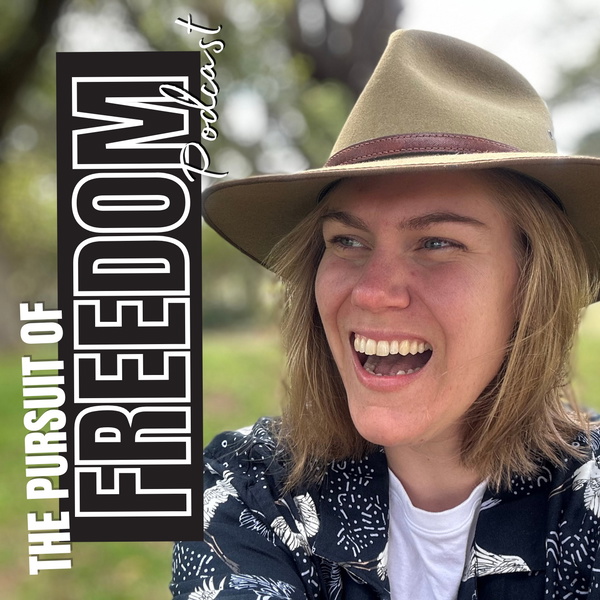
My conversation with Debbie focuses on the importance of community, values, and the courage to question norms. We also dive into the challenges of loneliness, especially during holidays, managing mental health and the journey towards finding an aligned, purpose-driven life.
Topics discussed:
- self-discovery beyond societal expectations
- personal and generational trauma
- the 'shoulds' that dominate our lives
- the importance of tuning into our true desires.
About Debbie
Debbie Harrell is the vibrant force behind the New World Normal podcast—a space where questioning and disrupting societal norms is not just encouraged, it's the main event. As the host, Debbie dives into insightful conversations with guest experts and thought leaders, exploring how we can break free from norms that no longer serve us.
In her coaching practice, Debbie is a guide for values-focused humans ready to disrupt their personal norms. She empowers clients to challenge all of their "shoulds" and "have-tos," helping them align with their core principles rather than societal expectations, and rediscover who they are and what they really-really want from their one wild and precious life.
Beyond her biz, Debbie is a proud mom to two grown children and two rescued fur-babies. Nature, travel, and live music are her happy places, especially when they come together. Debbie's belief in the power of community is the driving force behind her podcast and community—providing comfort and connection in this bat shit crazy world. Because, in Debbie's view, embracing our similarities and collaborating as a collective offers the best chance for us all thriving in this crazy world.
Get in touch with today's guest:
- Website
- Book a free discovery call
'Til next time,
TRANSCRIPT
[00:00:00] Rosie: Welcome back to another episode of the Pursuit of Freedom podcast. It's episode 39. I'm on a roll, guys. Um, this was an episode I recorded, I'm embarrassed to say, in December of last year. Whoo! I've got my shit together, though. It's a good one. Get comfy. Enjoy it. You might hear a bit of background sound. I think I must have been pulled over on a busy road when I recorded this, because remember, I live in a van.
[00:00:29] Rosie: You gotta improvise sometimes. You might even hear some birds in the background. Enjoy. G'day, and welcome to the Pursuit of Freedom podcast. I'm your host, Rosie Burrows, and I'm on a journey to find my freedom so that I can help you do exactly the same. Join me each week as I share the stories of everyday people who've found their own path to freedom.
[00:00:51] Rosie: I'm not going to focus on job titles and accolades because I don't care about that stuff. And neither should you. I want to uncover what truly makes you tick. Who are you when you step away from society's expectations and follow your heart? I still haven't figured it out yet. Have you? Either way, buckle up because it's going to be one hell of a ride.
[00:01:16] Rosie: Joining us today is Debbie Harrell and I'm so excited for this conversation. It's been a while coming. Debbie, welcome on the show. Thank you so much for having me. The question I like to start with on a lot of the episodes is diving into who you are. Like, it's very easy to talk about what we do, but if I was to ask you, who are you?
[00:01:40] Rosie: Where would you start?
[00:01:43] Debbie: Wow. That is such an interesting question, and strangely enough, I was just talking about this with somebody yesterday, somebody had approached another person for guesting on a podcast, and she said something to the effect, have you, uh, had a, uh, I think she referred to it as like a loss of identity.
[00:02:07] Debbie: crisis of some sort. It was like, Ooh, loss of identity. I'm not sure that I would say that mine was a loss of identity because I really don't think I was connected to who I was
[00:02:19] Rosie: at all. And like
[00:02:19] Debbie: thinking back on that, I really think that pondering, you know, who am I and where do I fit in the world? Seemed to me as kind of a luxurious thing to be able to do when the, the world that we live in and the way a lot of us move through it and the way a lot of us were raised in it, we spent a lot of time in survival mode.
[00:02:49] Debbie: Um, I guess I should just speak for myself, but I I'm recognizing as I'm learning more about, uh, the way our nervous system reacts to set, you know, survival mode, um, and connecting with so many other people who have had similar experiences. So when you're spend a lot of time in fight or flight. That doesn't leave a lot of time to think about those things about who am I?
[00:03:14] Debbie: And then culturally and societally, we're, we're kind of on this conveyor belt of. checking off the shoulds and have tos of what we do, right? I am, I am a daughter, I'm a friend, I'm a student, then I move into, I'm a friend, I'm a partner, I'm a parent, and we identify who we are. based on what we're doing.
[00:03:41] Rosie: Hmm.
[00:03:42] Debbie: And it was didn't happen for me until much later that I was like, but, but who am I? ? Yeah. And what do I really want? Like, like this has all been really great. I love being a parent. I love being a partner. I love being an involved member of my community.
[00:04:01] Rosie: I,
[00:04:01] Debbie: you know, and to an extent. enjoy being a productive member of society.
[00:04:07] Debbie: Um, but what does that really mean as to who I am and why I feel I was placed on this earth? Because I feel like I recognize there was a lot of time in my life where I was being busy, busy, busy and checking all the boxes and doing all the things. But I was like, what the heck is this? I worked in, um, business administration.
[00:04:30] Debbie: So it was a lot of paper pushing. So it's really easy to think, Oh my gosh, there's got to be more to life than this. Like, where does this even fit into the bigger picture? What is this even contributing to the greater good? So there was a fair amount of that, but it was really pushed to the back burner because.
[00:04:52] Debbie: I needed to take care of myself, I needed to take care of my family, I needed to keep on that conveyor belt, um, or at least I believed I did at the time and it wasn't until I started having symptoms, I guess you would call them, of living that way that were unavoidable. It was difficult to ignore them the way it was showing up in my life.
[00:05:24] Debbie: And then I gave myself the permission to step off the conveyor belt and think, Okay, what am I doing here? Yeah. What am I meant to be doing here? And how, how are those things different?
[00:05:39] Rosie: I really resonate with that. I think for me that, that realization came in my early twenties. I'm like, what is life all about?
[00:05:48] Rosie: Like I, you know, and your use of the word conveyor belt, it's just perfectly describes that feeling. And I have a friend. Who calls it fierce woman syndrome, because often women in their sort of forties, fifties will realize they'll wake up and go, what the heck am I doing? You know, there's got to be more than life to this.
[00:06:10] Rosie: And then they just make some changes. So I don't know if you can relate to that at all. Um, but I just thought it was such a good description.
[00:06:18] Debbie: Oh, no, I resonate definitely with that, that description. And also I admire, and it, it just fills me with so much joy to hear of younger people having this realization so much sooner.
[00:06:32] Debbie: Like there's a lot of, um, flack given to the millennials and the Gen Zers. Wow. Like I see them breaking molds and wanting to. break cycles and just heal in ways that we didn't even realize were needed. So I, I like give them so much kudos and I'm so happy when I hear younger people being like, even my daughter, she's in her twenties and she's really, I can see her walking that line of not wanting to disappoint feeling like she's disappointing by not being successful and wanting to figure out What is the deeper meaning and what, why am I really here and what am I really meant to be doing?
[00:07:20] Debbie: Um, and just that she's giving herself that space to do it. I'm applauding her and I applaud all young people that do that. And yes, it took me till, to my, um, early fifties. Maybe it was my late forties when it really started purkling up for me. And, you know, I had had a series of life events that were, were trauma, you know, we know now, like.
[00:07:46] Debbie: We have the big T and the little T, and I had experienced both forms. Throughout my life, but it wasn't until that last section of probably starting in 2017 where I had some obvious things happen that You can't really ignore. I say you can't but I did I I kept moving along and on the conveyor belt and I'm fine It's fine.
[00:08:09] Debbie: Everything's fine. You know, it's like just keep moving keep moving Until those symptoms and that's when the symptoms became very obvious, you know, like, um, cognitively, I wasn't functioning. My body started having, you know, the, the, the book body keeps the score. That is, that is a, uh, real phenomena that actually happens.
[00:08:29] Debbie: Yeah. So once that, uh, Happened. I want to say I was forced, but I think it was a, it was a happy forcing. I think it's something that I recognized needed to happen for a long time and, uh, probably a little afraid to step off the conveyor belt of my own accord. So the fact that I kind of got a little shove in that direction, which I thought it was going to be a temporary shove, you know, just take some time and take care of myself.
[00:08:55] Debbie: Um, but then that happened at the end of 2019. So we all know what happened in 2020. Um, and for me, it ended up being a blessing of. My temporary reprieve from the conveyor belt turned into a permanent reprieve and actually now my life's work, you know, trying to get other people, step off the conveyor belt.
[00:09:20] Debbie: Come on, it's going to be fine.
[00:09:25] Rosie: And that begs the question, how do we step off the conveyor belt?
[00:09:34] Debbie: A lot of self reflection, a lot of Of doing things that feel counterintuitive because we are praised for being busy and hustling and getting things done. And I found that it was the slowing down and the turning inward is where. where that permission lies to completely step off. Cause even when I stepped off the conveyor belt, you know, I was, I was still in that mode of like, okay, I'm, I'm, you know, taking time off to take care of myself, you know, and turning that into a checklist.
[00:10:12] Debbie: What does that look like? And how do I do that? And, and there's plenty of gurus out there that will give you a self care checklist that you have to do in order to be, um, On the, you know, self care bandwagon. And so recognizing that, no, that wasn't quite it either. You know, that was a little step in the right direction, but not exactly it.
[00:10:37] Debbie: And it, it takes time to getting to know yourself again, going back to what you asked at the beginning, who are you? I don't know. Like, and I found, I asked most of my friends around my age, well, who are you? You know, what do you want? Who, who are you? And they're like, I, I don't know. So it's not an uncommon phenomenon.
[00:11:00] Debbie: It, it comes with the figuring out who you are. And it's, I'm not going to say it's easy, but I have found when you, when you break it down. To steps that work for you. It can be simple, you know, like it doesn't have to look like I have to have meditation, a morning meditation routine that I do every day, or I'm, I don't, I don't work well with really rigid routines.
[00:11:27] Debbie: And so I found what works with me, like checking in with myself. What do I need today looking at my week? What, what way am I going to need to take care of myself so that I can show up for the week that I have planned as myself and in a regulated state, not a, you know, super spiraling high, uh, anxious state, which I find is where I go when I overschedule and not take care of myself.
[00:11:58] Debbie: Right.
[00:11:59] Rosie: Yeah, same here. And I think your point about finding what works for you is really important because I fell into the trap of, you know, the whole checklist thing and gurus saying, okay, follow these steps and, you know, you'll be sorted. Um, and that just took me down. It was stressful. I felt all this pressure, you know, I should be doing this, should be doing this, but actually, what do I want and what works for me?
[00:12:30] Rosie: But I know there'll be people listening go, going, well, that's great, but how do I even figure out what works for me?
[00:12:39] Debbie: Well, I would say just stop the get the slowing down and the getting and asking yourself what what is working for me? What do I want out of life? What am I doing right now? That was that was the big point for me, like, what kind of life do I want?
[00:12:57] Debbie: Um, and I talk a lot in my work about also what kind of world I want to live in, because I feel like a lot of times we focus on what it is we want from our life, but we forget how that intersects with the world around us. Um, and then what am I doing right now? And how do I get from what I'm doing right now to right there?
[00:13:17] Debbie: Well, I wanted to have time in the mornings and not to get self reflective. Um, so I had to schedule it in and I know that because I had taken time off work, it was easier for me. So what I encourage my clients now to do now is especially the clients that are still very immersed in the cult of busyness, you know, they feel like they have to be going, going, going and doing, doing, doing is take 30 seconds in the morning.
[00:13:46] Debbie: In the middle of the day and in the evening to breathe, you know, and, and take an inventory of what's happening inside of you, in your, in your brain, in your heart. Because a lot of times, you know, we spend a lot of time thinking, you know, about things intellectually, even our emotions, right? We identify them with on an intellectual basis, but where are they showing up in our body?
[00:14:11] Debbie: That that's been a huge key for me, as I've kind of said already, like, because my, my Body started showing physical symptoms. I really had to connect the two quick to figure out what was going on because. Because it was more emotionally based and likely from traumatic events, the doctors had no idea, you know, they, they think you're imagining it, especially because I'm, I, I'm a thin bodied person.
[00:14:39] Debbie: So I present as healthy, right? Because usually when you have mystery. Um, issues, they will attribute it to, you know, you're overweight. Oh, you just need to lose some weight. Especially since I was having pain, that wasn't my case. So they couldn't say it. So they're just like, well, we don't know. And, or attributing it to my age.
[00:15:02] Debbie: Thank you very much. Since I was now entering the decade of 50. Oh, it's just because you're getting older. No, no, no, no, this, you don't go from being active and healthy and doing yoga and running to not being able to use your arms anyway. Like that's just,
[00:15:16] Rosie: yeah,
[00:15:17] Debbie: I disagree and, and, um, and that was a little bit of listening to what was going on inside of me because they were telling me one thing.
[00:15:30] Debbie: And, and it could be just my nature have I've always been kind of a disruptor and a questioner, um, maybe a little bit rebellious. You know, like if someone tells me I can't do something, I'm going to be like, okay, let me see if I can figure out how to do this.
[00:15:48] Rosie: So when the
[00:15:48] Debbie: doctors are like, we have no idea, you know, you're just gonna, literally, they told me I had to go home and get sicker so that they can give me drugs to treat what I had.
[00:15:58] Debbie: And I was like, no, I'm not going to do that. And I had to sit with like, okay, what is my body trying to tell me? And, and how, how am I going to write this ship? Because I am not living like this. I, I am choosing to live a vibrant life into the next couple of decades, as long as I can, um, So that goes back to the self reflection and getting to know yourself and listening to what is coming up for you and in whatever way you can.
[00:16:34] Debbie: If you are in a super busy season of your life, take the pockets where you can get them. And as you see, And as you tune in and as you start getting the feedback from yourself, um, and seeing the benefits, you're going to want to build on it. It's gonna, I think it, it happens kind of organically, uh, it's for myself.
[00:17:03] Debbie: And I've seen it for my clients as well as I said, Oh, wow, this is kind of a thing. I see how it's showing up. Not just when we're talking about it, but when I am at work or, you know, like questioning, we've said shoulds a few times, I'm really big on, on having people question their shoulds. Anytime you're telling myself, Oh, I really should be doing this.
[00:17:25] Debbie: Well, what does that mean? Like, what, what about that? Is it really something you should be doing, you know, um, and recognizing that we always have choice, even though shoulds, okay, it's a should, and if you decide to do it, then recognize that you are choosing to do it. Like you have agency, no one's, no one's forcing you to do most
[00:17:47] Rosie: of the things that you're doing.
[00:17:49] Rosie: I totally agree with that. You know, the concept of us having a choice, you know, it, it really depends on our circumstances. Sometimes. We might not necessarily like our choices, but there is always a choice. And acknowledging that, yeah, when we, when we do the things we feel we should, that is an active choice.
[00:18:11] Rosie: Whether we acknowledge that or not is a whole other story. Um, but diving into this concept, concept of should, I always say, Well, where did that belief come from? Is that actually your belief or is it something you've been conditioned to believe? Because to me, when I say I should, I'm thinking about other people.
[00:18:37] Rosie: I'm not really thinking about myself. Would you agree with that?
[00:18:41] Debbie: 100%. I think most of the shoulds that we have are conditioning. As we're breaking out of the cycles, sometimes we could, should on ourselves, right? You know, like, um, when we start going down the checklist of the guru, like, Oh, well, I should be doing this.
[00:18:58] Debbie: They say, this is what's going to help me. And sometimes you'll meet resistance of things that would really be helpful for you. And you're resisting it because there's some sort of block. And sometimes it's just because it's not for you. It's not, so that's where tuning in and getting clear on what you need and what is supporting the life you want to live and what's filling up your, I talked to clients a bit about resilience and one of the exercises I like to do is called what floats your boat.
[00:19:33] Debbie: And it's thinking of your, your life as a boat in a river and. There's obstacles, which are like life obstacles and circumstances in the form of like rocks or reefs or whatever, whatever in the water. And then also the water level is an obstacle itself, right? The water level you have some control over, that's your, your self care.
[00:19:55] Debbie: And that's what I talk about when I look at my week and I see what kind of week I have, what things I have planned for myself. Also taking into account, I'm really big on. Taking into account what's happening in the world, um, um, because I'm a proponent of taking care of ourselves so that we can be engaged with the world around us, as opposed to a lot of gurus will tell you just don't watch the news.
[00:20:19] Debbie: It's too stressful. Um, I don't necessarily think that's responsible, but I do believe you need to take care of yourself so that you can engage with a lot of the information about what's happening in the world. So if there's big things happening in the world, like what we're experiencing now and have been for the past couple months, um, What ways do you need to take care of yourself?
[00:20:41] Debbie: What media sources do you need to limit so that you aren't, you know, moving yourself into the direction of, of, of fight or flight, or, you know, dereg, dereg, or dysregulation, unregulated? Whatever your nervous system's going won wonky, . Yeah. What ways do you need to take care of yourself? What ways do you need to fill your river up so that you're able to navigate those things?
[00:21:08] Debbie: And that's what I talk about floating your boat. Make sure you're taking care of yourself in the ways that you can. And, and I do wanna acknowledge that it's not always easy if you're in a super busy season of your life and you, you know, a lot of us, a lot of us, most of us. Have to work to pay our bills and to put food on the table.
[00:21:30] Debbie: And so that's also why I believe there's not one prescription. There's not a checklist. It has to be personalized and what works for you, because, um, I know when I was a mom of younger children and so many women were just like, Oh, just get up an hour earlier and have that hour to yourself and take care of yourself.
[00:21:54] Debbie: I was like, Oh my gosh, no, I need that hour sleep. Right. So that wasn't working for me. And I know that's the case for other people. And, and that just leads us back to asking yourself, what do you want? Where can I find the day time in the day to carve out 30 seconds, five minutes for myself so I can begin to reconnect to what it is I want and need.
[00:22:24] Debbie: Cause I, and for me, I was so disconnected from what I wanted and what I needed. I really had to start with what don't I want. What am I sure I don't want in my life? What am I sure of is not serving me? And peeling those layers away kind of helped illuminate more of, okay, what I do want.
[00:22:49] Rosie: What role do you think values play in this?
[00:22:54] Debbie: For me, I think they're everything. I feel, and I, I, I'm not the best person at promoting my coaching business, but I do use the term values focused or purpose driven, you know, people that feel that values are important, especially in this time in history that we're living in when the powers that be want us to feel like we're so divided and so different.
[00:23:22] Debbie: But when you get back to the values, I believe that most of us have similar values and we want. And so if we can get back to those and focus on those and live aligned with those, I, I believe that they're not going to take us to a place of more chaos and more violence. If, if we can speak openly and honestly about what the, what the things we value with the people that we perceive might be completely different, I think we'll find that there's more common ground than we realized, and I really think we need to spend more time looking for common ground.
[00:24:05] Debbie: With the other humans on the planet, because we are not going to get there alone. We need each other. We are social beings. Um, we, we've been conditioned, raised to be hyper independent, um, take care of ourself, you know, and I know I am in the United States and the big. Big adage is pull yourself up by your bootstraps, which I'm not even sure what that means.
[00:24:33] Debbie: Cause how do you pull yourself up by your boots? Like, I don't know. Um, but it's like, do it yourself, take care of your own stuff. And. It's not always as effective and it's not as sustainable
[00:24:46] Rosie: because you're by
[00:24:47] Debbie: yourself. But if you find a community of people working together to raise themselves up, to float their boats, and it goes back to the, uh, rising tide lifts all ships.
[00:24:56] Debbie: So if you're lifting your boat, you're, you're gonna lift others or encourage others to lift their own boats. And. recognize that they have community in the desire to want to lift their boats, float their boats, if you will.
[00:25:12] Rosie: Yeah. That's such a powerful visual. And it reminds me of something you said when we first met.
[00:25:22] Rosie: You were talking about how you were very much taught to be independent, but you had to learn how to be interdependent because we don't exist in isolation, do we? And I think to, to hold ourselves up and try to do it all ourselves doesn't work very well. I know for me, it doesn't work very well. I'm, you know, I've always thought I'm a very independent person and I can do it myself.
[00:25:50] Rosie: But when I have a community around me, I can achieve so much more. And the positive impact or the ripple effect that has just blows my mind.
[00:26:03] Debbie: And um, being able to do it on your own and choosing to do it on your own are two different things, right? Like I know I can do this and I know I could do this on my own.
[00:26:16] Debbie: Experience a certain level of success. But I also know if I do it in community with a group of friends, it might take me a little bit longer, but it's going to be so much more enjoyable. I'm going to want to, I'm going to want more of that. It's going to ripple out into that little group and they're going to want, they're going to experience that.
[00:26:37] Debbie: And then it's going to ripple out into their communities. And that, that's where I see a lot of hope is that rippling out. I've, I've met so many people since I've started this entrepreneurial journey and decided to be a coach. And at first, I It's like you become a life coach and like, Oh my gosh, I'm kind of embarrassed to say that because there's so many life coaches and it just sounds so cheesy.
[00:27:02] Debbie: But when you work with a bunch of coaches and I'll admit there are some that are kind of cheesy and maybe a little not disingenuous maybe. Um, but when you work with some good ones, some heart centered, you recognize how important that work is in the world. And it's like, I, after I went to, um, Became certified as a life coach.
[00:27:30] Debbie: Everybody should go through this training. Like, even if you have no desire to be a life coach, just to help us learn how to interact with each other and create that community and understand how to repair when we. Make mistakes because that's a huge thing. We all make mistakes and we're not really shown how to repair or make those right.
[00:27:55] Debbie: I still struggle with that. I mean, and as far as the independence thing, I, that is definitely difficult for me. I was, I'm an only child, so I was definitely. Hyper independent and rewarded for being so, so it's kind of baked in. So that's why I try and get community wherever I can, whether it's an accountability group or, uh, um, I, when I started my business, um, my, one of my teachers was build what you need and okay, I started a community was the first thing I need connection with other humans.
[00:28:34] Debbie: Transcribed And I need to know that there's hope. That's why I started the podcast because we were being told that was in early 2020 when we were being told of this new normal and how terrible it was and how it was here to stay. And I was kind of thinking, well, it was the old normal, really that great.
[00:28:55] Debbie: And don't we have some say, so. I was like, that's it. I want to start a podcast where I'm talking to people who are doing work of creating a better world, of disrupting some of these shoulds and have tos and norms that we live by, but aren't necessarily serving any of us.
[00:29:17] Rosie: So, where did this, I'm not sure if desire is the right word, but it's the best word I can think of right now.
[00:29:23] Rosie: Where did this desire for questioning things and doing things a little bit different, where did that come from for you? And that's where I don't know, because
[00:29:33] Debbie: when You know, it took, it's a lot of work starting your own business and becoming an entrepreneur. You have to do a lot of inner work and, and also the outer work of figuring out, you know, the marketing and what, what's my niche and who do I want to serve?
[00:29:49] Debbie: And what, you know, and I wanted to do it with integrity. Like I want to show up in a way where I know I'm contributing and providing value. And so that's what I did. Yeah, sure. Where does that, where does that lead me? Where, and then when I finally recognized like, oh, I ended up like as somebody who's questioning and disrupting, I was like, think about my personality all along, as far back as I can remember, I was always playing devil's advocate.
[00:30:17] Debbie: Like I said, someone told me I couldn't do that at best. Are you sure? Let me see if I can figure out. And that's where I'm like, was it just my nature? Was it because I was an only child? And so I felt more freedom to You know, speak my mind, because I was speaking to adults usually, I wasn't, um, and, or I'm, I just came out that way, contrary, I, I am, and I recognize, um, that must have been really annoying to a lot of people.
[00:30:53] Debbie: But now that I get to do it, because people want me to, it feels a little better. I feel like, okay, well, if I'm annoying them, they're, they're, they're asking for it. Like, they want to hear these questions. So.
[00:31:06] Rosie: And do you think this is a skill that people can learn?
[00:31:11] Debbie: To question and disrupt? Yeah.
[00:31:13] Rosie: Yeah.
[00:31:14] Debbie: I believe so.
[00:31:15] Debbie: It's especially during a time where, in a lot of ways, we're being told what to think, or a lot of people believe we're being told what to think, you know, the, and so. If you're not sure, that's the first thing. Start questioning. Well, what am I? Why do I believe this? And, and once you start questioning things, or give yourself permission to question, and the easiest thing to start questioning is the shoulds, because those come up so easily.
[00:31:43] Debbie: Like, we, it's kind of like women apologize. More than we actually should, like we say sorry almost impulsively, reactively, when that's not necessarily what we mean. Right. And it's the same with I should, well I should be doing that, and tuning into that, how often are you saying, well I should, I should, and questioning that, I'm not sure that I answered your question.
[00:32:11] Rosie: No, you did. And it's not really an easy question to answer, but I would agree that you can learn to question things. For me, it's kind of something that's been there similar to you since I was a kid. I'm always questioning things and people find that annoying because it makes them think they're like, no, this is just the way things are done.
[00:32:33] Rosie: And whenever someone says that to me, I just roll my eyes and go, well, I think there's a better way. Well, at
[00:32:39] Debbie: least I want to, I want the opportunity to see if I can. If I can recognize there's a better way, whether I'm going to, you know, offer that to the person or not, I don't know, but for me, maybe it's a little bit of puzzle.
[00:32:53] Debbie: I love problem solving and doing puzzles. Um, but also just a curiosity to know, know the hows and the whys and the, you know, what makes it work. I've started working for a friend of mine, um, to help her out a little bit and to help, um, my, my financial goals out a little bit. And, uh, she was explaining a little bit about the process.
[00:33:17] Debbie: In her shop, and I was asking more information.
[00:33:22] Rosie: Yeah,
[00:33:23] Debbie: she got annoyed and, and asked me like, why are you, why are you, um, I can't remember the word she used. And I don't remember the response I gave right away. I think I immediately felt kind of bad, like, okay, I'm giving her a hard time. And this, this job is not, it's not worth anybody getting a headache over.
[00:33:47] Debbie: But I realized afterwards, like, why was I asking so many questions? I wanted to know why, like, why are we doing it this way? Number one, it's going to help me remember to do it. I'll, I'll feel like there's a value. I think that goes back to wanting to add value. I don't want to, from years of paper pushing that I could not figure out what is the value of this for anybody.
[00:34:08] Debbie: I want to make sure it's a value added task. Yeah. I don't know. Yeah. That just, I, I am a questioner. Me too. And I can't be annoying. Yeah. Where do you think it, where do you think it comes from for you? Yeah.
[00:34:22] Rosie: Hmm. Hmm. I think a few things. I was an only child for 10 years, so similar to you, I interacted a lot with adults.
[00:34:34] Rosie: And you know, adults generally have more power, right? They, they, um, it's almost like they have permission to ask these questions, but I was just like, well, so do I. Um, the other thing is, I think it was really modeled to me by my parents. They always did things a little bit differently. And so it encouraged me.
[00:34:55] Rosie: to ask questions and try new things out. I was lucky in that way that it was being modeled to me. But I want to go back to something you were saying, you know, your friend was almost offended by, or felt attacked by you asking all these questions. And I'm curious to hear your thoughts on this. For me, when I'm asking these questions, it's not a personal attack.
[00:35:19] Rosie: It's just, I like to understand things. I just want to understand, help me understand. That's where it comes from for me.
[00:35:30] Debbie: Yes. I resonate a lot with that. And I recognize now, especially once you become a coach and you are more mindful of the questions you're asking and, and. and how you're interacting and how the ways you interacted in the past might have been, I don't want to say harmful, but not the best way to interact in a given situation.
[00:35:52] Debbie: And so you find yourself asking questions more rather than giving your opinion. And that shift in the way you communicate I think is, I don't know what the word I want to use, but people get defensive.
[00:36:06] Rosie: Yeah.
[00:36:06] Debbie: I feel like there's a defense, like, why are you asking me so many questions? I'm like, well, I'm just trying to, you know, like understand more about where you're like, I can tell you, like, I can come right out and tell you, like, I disagree, or I can come right out and say, you're the greatest person ever.
[00:36:21] Debbie: Like, but really neither, neither one of those opinions matter. I just want to understand more about like what it is. And so when you ask questions, I think a lot of times people get defensive or unsure, like your motivation or, um, and for me, it's not, it's not personal. I'm just curious. And like zero judgment.
[00:36:44] Debbie: I, I don't, I, I've, you know, lived a life, lots of things that, you know, the good, the bad and the ugly. And. I'm not here to judge anybody and I'm, if I'm interacting and asking questions with you, it's because I care about, enough about you to be curious. Like, if I didn't care, I would probably not ask you any questions.
[00:37:06] Rosie: Yeah.
[00:37:06] Debbie: So true.
[00:37:08] Rosie: But I think it takes some unlearning for the other person to understand that themselves, because probably their experience in the past has been when someone is asking them questions, they're like, It's an interrogation. It's questioning their integrity and their ability. But people like you and I, we're leading with that curiosity.
[00:37:32] Rosie: And like you said, there's no judgment. More people should do it.
[00:37:39] Debbie: Right. Because the curiosity is what leads to understanding. And that's, I think that's Stephen Covey, right? Seek first to understand before you're understood.
[00:37:53] Rosie: And I think it helps build connection with people, which in turn helps build a community.
[00:38:01] Rosie: And I'm all about community. You know, I have an online community for women, so we feel less alone. I'm all about questioning the status quo and building the life you want. But it can be lonely, especially in a society that's caught up with the shoulds, and people are just another cog in the machine, and it's what we're used to, so we just We're just kind of going through the motions and not truly living.
[00:38:28] Debbie: Mm hmm. Or we're not living, you know, who, who is we really are or who we're not living out the ideals or the values that we feel are important. We're checking out those boxes and. Continuing on the conveyor belt. I know we talked about loneliness and, um, being lonely when you're questioning the status quo and stepping outside of the norms.
[00:38:57] Debbie: And one thing that I've had to really come to terms with, I think, most consciously this year, probably because I've done so much work, um, but the, the holidays are especially challenging when you're doing this type of work. And for myself, on top of questioning the normal, the norms of life. I also consciously, uh, stepped outside of my dysfunctional family and decided to break some cycles of generational trauma.
[00:39:34] Debbie: And I had always struggled with how much I was kind of depressed over the holidays and always giving myself a little bit of grief because I do have a really good life and I have a lot of friends and I, you know, have two amazing children and, and still this overbearing, like sadness during this time of year and, and recognizing that it's because I, I, I lost my family in that process.
[00:40:03] Debbie: I mean, it was a choice and it was. I believe 100 percent the right thing to do, but that doesn't make it less lonely or sad. Um, and that's, that's a realization I've had. That's what, because I went on vacation right before Thanksgiving and I was telling myself a little pep talk, probably at 3am when I was supposed to be sleeping.
[00:40:29] Debbie: I'm like, okay, when you get back, you know, you have, Some things that you need to get done to move, you know, your, your coaching offers forward. Um, it's going to be Thanksgiving, which is a big family oriented holiday in the United States. But you're not going to get depressed this year. This is what I was telling myself.
[00:40:52] Debbie: And then I got back from vacation and I start trying to work and I'm not able to focus. And then next thing you know, I'm like in a funk.
[00:41:00] Rosie: Mm hmm.
[00:41:02] Debbie: And I was like, Oh, look, I'm depressed. Even though I told myself I wasn't going to be, wait, you just can't tell yourself you're not going to do that. Um, so I had a good laugh at my own expense and let myself wallow for a few days and, and acknowledge that.
[00:41:21] Debbie: Yes, it's lonely and I'm sad and it's okay. That's a pretty normal reactions to this circumstance.
[00:41:32] Rosie: Yeah. It is normal and it's okay. It's not a sign of weakness. And just acknowledging those feelings is a huge part of it. You can't say, Oh, I'm not going to get depressed. That's not within our control really.
[00:41:51] Rosie: But I think looking at the things we can control is a good idea. And also accepting there's a lot out of our control as well.
[00:42:03] Debbie: And, and having recognized or identified for myself, what are those tools and things that help me? And that's where the, the pre work, the work I've done comes in handy. When you do hit those patches of like, Oh, I'm sad, I'm feeling melancholy, I am depressed.
[00:42:21] Debbie: What, however you want to describe it for yourself. Like I've had during the time when I initially took time off work, it was because of clinical. Anxiety, depression disorder, like I think is what the diagnosis was. So I've, I'm familiar with it. I know how it feels. I know how it feels. bad it can get for me.
[00:42:44] Debbie: And so recognizing it quickly is one of the first, is one of the best things I can do for myself and naming it, not even trying to understand why, like, I feel like that's why maybe it's taken me this long to, to acknowledge that maybe that's why, you know, the generational, the, the familial breaking away is part of what's feeding that.
[00:43:08] Debbie: And that helps me understand it better, but it doesn't make it go away. Like it's there and acknowledging it for what it is helps me get through it. I don't want to say quicker, but easier, less, less traumatic. Cause it, for me, it showed up as I would get depressed and then I would get anxious about the fact that I was depressed.
[00:43:29] Debbie: Like, oh my gosh, I'm depressed. I'm never going to be happy again. Oh my, like, and it just fed itself. And it was. So, if I can do the depression without the anxiety, it's very helpful. And not saying that that's really in everybody's control, but for me, naming it has helped me right the ship or float my boat a little sooner.
[00:43:51] Rosie: Yeah. Same for me. And it's almost like you can't fight it, almost like you're saying, okay, I'm not going to get depressed at this time of year. That in a way is trying to push back against it, but just acknowledging it and recognizing those red flags earlier. For me, that's been a bit of a game changer because in the past, I won't recognize it until I, you know, until it's almost too late, like I'm, I'm down, I've fallen on the floor kind of thing.
[00:44:24] Rosie: But if I can start recognizing those signs earlier on, I can start implementing some of those tools that I've figured out help me. It's not going to make the depression or whatever it is you're struggling with go away, but it makes it slightly easier because you're acknowledging it. You're not pushing back against it.
[00:44:47] Rosie: It's like, okay, I feel like shit. That's okay.
[00:44:53] Debbie: It is what it is. And I think that's a little bit of the, um, the words are really hard for me today. It's a great, great time to do a podcast episode. Um, the gurus have the checklists and I feel like a lot of people think if they do the checklist, they're going to avoid the suffering.
[00:45:16] Debbie: They're going to avoid those patches of distress. depression, and that's not necessarily how it works. I find you do whatever from that checklist works for you so that when you hit the rough patch, you can acknowledge it and take care of yourself to move through that rough patch in whatever way that happens to be for you.
[00:45:40] Debbie: And in that given time,
[00:45:42] Rosie: Hmm.
[00:45:42] Debbie: Because it's never the same.
[00:45:44] Rosie: No, it's not a one size fits all. It clearly doesn't work. And yet we're still looking for that magic pill. Like, okay, I want a quick solution and I don't want to suffer. I don't want it to be difficult. It's such a cliche, but things tend to get worse before they get better.
[00:46:06] Rosie: But it does get better.
[00:46:08] Debbie: It does. And it feels good doing that kind of work. Like a lot of times when I'm, I'm talking, whether it's on a podcast or, or sharing, like about doing the work and I'm like, gosh, that sounds so awful. Like, it sounds so exhausting. I'm like, It might sound that way, but it's really not when you're doing it.
[00:46:29] Debbie: And maybe that goes back to me enjoying puzzles. But when it's the puzzle of your own heart or the puzzle of your own purpose, like what better puzzle to want to figure out and and learn how to Put together efficiently when it falls apart.
[00:46:47] Rosie: Right. Yeah. How did you find yourself on this entrepreneurial path?
[00:46:53] Rosie: Is this something that showed up earlier in life? What was the tipping point for you when you made that leap? I just, I want to understand why it happened.
[00:47:03] Debbie: Well, part of it was the, the tipping point of the series of crazy life events that made me recognize like, Oh yeah, like you've got some stuff you've got to deal with.
[00:47:15] Debbie: That happened in 2017, 2018. There was, I lost my mom unexpectedly. I had a series of serious medical issues for myself that I had three surgeries that, that That summer, um, I was in attendance at the largest mass shooting in the United States history, you know, in the United States, we love a good mass shooting.
[00:47:38] Debbie: Um, anyways, and then to cap off that 12 month period, I lost my closest relative, my younger cousin, um, to alcoholism. And so that was just. a shitty year. Like, that's putting it mildly. But still, I'm fine. It's fine. Everything's fine, even though it's clearly not. I was schooled in PTSD, clearly recognized that I had it, and I'd probably had it prior to 2017.
[00:48:10] Debbie: So I kept chugging along until the, you know, 2019, the fall of that year, it started to become apparent, like, I am not functioning. You know, I don't, I don't, didn't recognize myself, like, the level of, of dysfunction that was happening in me, in me, my brain, in my body. And I was walking with a friend and, We were talking about everything and she's like, Debbie, um, I've taken time off work for far less than what you've got going on.
[00:48:41] Debbie: And it was like that. It clicked for me. Oh, wait, that's an option. I can stop and take time for me. And luckily I live in a state in the United States where they do provide that safety net. If you need to take some time off work for a medical issue, you can do that. And trauma does, you know, mental health is.
[00:49:05] Debbie: a medical issue. So took time off work and you were asking like how I ended up on the entrepreneurial journey. So that was the first step of giving myself permission to step off the conveyor belt and look at things. But even still, I thought I would be doing some self care, taking care of myself and going back to work because I read a study or heard a study somewhere along the line in my life where they talked about if your parents were employees.
[00:49:37] Debbie: You're like 90, whatever percent chance you're going to live your life as an employee, you know, work for somebody else. And if you were raised by people that were self employed or entrepreneurial, your chances of being going that route are much larger. And so I just thought, okay, my mom was an employee.
[00:49:57] Debbie: I'm going to be employee for whatever reason that stuck in my brain. And I never even thought about. Doing something for myself. And it wasn't like I didn't have any experience. Like I'd been working in business. Forever. I mean, even when I was in high school, the little t shirt shop I worked in, they pretty much had me as an assistant manager because, you know, I was just good at it.
[00:50:23] Debbie: I don't know. Um, cause it was very much checking boxes and following rules and I was good at that. Um, so it came with meeting a coach, life coach and taking her program that was very much. Focused on creatives, finding their thing and living with more purpose. And because it happened in 2020, it was all online.
[00:50:51] Debbie: So you can do it and have, uh, location freedom. And I was like, Ooh, that sounds interesting. I want to do something like that. So the permission to do things differently and then finding a community, it was a group program, a community of people that were trying to do things differently. And live with more purpose and more aligned to the things that they wanted to do, not just working a job and understanding there's so many people in the world.
[00:51:25] Debbie: And when you start a business or when I thought of starting a business, I would think like, I need so many people. to be successful. So many people that want to pay me. And then when you break it down, you're like, Oh, I really don't need that many people to be successful. I mean, it's not like I want to be a billionaire.
[00:51:44] Debbie: No, I don't. I mean, not even I'm not okay. If I'm not even a millionaire, you know, thousandaire. I'm fine with, I just want to take care of myself and live life, you know, um, and be able to contribute to my community and society and, um, help people and causes that are important to me, but I don't need to be sitting on stacks of cash.
[00:52:08] Debbie: So yeah, so that recognized realization of like, okay, it's not big and scary. It's not getting thousands of people to pay me or pay attention to me. It's. Waving my flag of this is what I have to offer. And there was a little bit of work of recognizing like, Oh, I do have something to offer. There's a little bit of work that happens there.
[00:52:33] Debbie: But once you work through that, like, okay, yeah, I've worked through some shit and I've seen some things and I can share my experience and help people. I can use the training that I received as a life coach to Ask people questions and help them figure out their own thing. Um, and that's a value because in a world where we're all living our thing, living our purpose, I feel like how different could the world really be?
[00:53:02] Debbie: And I feel like we're getting a glimpse of, you know, they're talking about the great resignation and I can't find anybody to work. It's like, no, you can't find anybody to work. You can't find anybody that wants to work for what you want to pay them because people are tired of being exploited. And there's too many ways to make money now with the, the internet and us all being so connected, right?
[00:53:24] Debbie: Here we are connecting across the globe to have a conversation. And In 2020, how did we all learn? Like we can connect with people all over the world and build community that is literally global and talk about things and not rely on, well, the news is telling me this. Well, like I actually have people that live in that area now that I'm connected with because, because of the work I've been doing and the path that I decided to take.
[00:53:53] Debbie: And. It's just a completely different world than the model that they're telling us we have to live in.
[00:54:01] Rosie: Yeah, just because it's generally done that way doesn't mean it's right for you.
[00:54:06] Debbie: Mm hmm. That's the way we should do it. That's the way it's always been done.
[00:54:10] Rosie: Bleh.
[00:54:14] Rosie: There's a bit of a tradition on the podcast. I like to end with the question, what does freedom mean to you?
[00:54:22] Debbie: Oh, I've, I've contemplated this several times. Um, because I live in the United States, freedom, Merica, you know, everyone's always talking about freedom. And I was like, Hmm, I really don't think we're that free.
[00:54:38] Debbie: Like I'm not free to go to the doctor and get, you know, treatment. Taking, you know, like getting health care. I'm not in some areas. I'm not free to walk down the street and in safety like freedom means to live my life and to do it with relative safety and
[00:55:03] Debbie: Community what does freedom mean? That's a zinger. It means a lot Right. Yeah, and I don't think that there are very many Me Good examples of it in the human realm that I can think of. I'm sure there are, I'm sure there are many people that are living free. Um, but I am still bound by a lot of capitalist shackles, like as far as the paying for things, cause I feel like true freedom that wouldn't, that wouldn't exist.
[00:55:47] Debbie: Like, I feel like a little bit of. The ideals of a commune popping up. Maybe it's because I've watched a couple of documentaries recently about communes. I was like, that's really intriguing. That sounds really nice to just pull your money and, and, you know, create something off the land and not have to, you know, Clock in nine to five or, um, figure out what your niche is or promote yourself on Instagram.
[00:56:21] Debbie: Like, just live and be. and care for yourself and your community and the world the best you can. The earth, I guess, is more what I'm meaning. I don't think that was a very eloquent answer, but
[00:56:36] Rosie: I don't think it can be. It's such a, a big question really. Um, so it's a bit cruel for me to put you on the spot, but I think I get a really authentic answer when I just, I put it out there, um, without telling you in advance.
[00:56:52] Rosie: And what I love about your interpretation of it. It's bigger than yourself. You're thinking about the bigger picture, I think. It's not just freedom for you as a, as an individual person. It's as a society because we, we're a social species. There's, we're not in this alone. And if we try to be in this alone, it doesn't really work well because that's not the reality.
[00:57:22] Debbie: Well, and there, it is kind of a tagline and, and, of, of freedom. And I believe it, so I don't use it as a tagline, but, um, there is no liberation without collective liberation. Like none of us are free unless we're all free. And there's so many people that are oppressed and living the opposite of freedom in a way that I couldn't even imagine.
[00:57:42] Debbie: So, you know. Like, I don't want to seem like complaining about the fact that I can't walk down the street in some cities or that I can't go to the doctor. I mean, I am fortunate that I have a doctor to go to. That's, you know, just a couple of blocks away from my house and that I have a grocery store that I can go to and buy food.
[00:58:00] Debbie: Um, so there is a lot, there is a lot more than us. And when I talk about community, I know I just have a basic understanding. Of it from the little bit of work I've been doing in it, but I know it's much deeper. And bigger and it needs to be paid attention to more by more people so that we can get to a place where the idea of collective liberation isn't just some pipe dream or like, oh, sure, that sounds nice, but that's That's not realistic.
[00:58:37] Debbie: Like, I, that brings up the contrarian in me, right? Oh, it's not realistic, is it? Well, let's see. How can we make it realistic?
[00:58:45] Rosie: Right. Yeah. Just because it's never been done before doesn't mean you can't do it. Mm hmm.
[00:58:54] Rosie: Debbie, what a conversation. I know. I can't believe we've been talking for a whole hour already. It's just been so stimulating and I'm, I'm trying to think of some of the standout points for me. There's so many, but some that sort of are coming to mind is leading with curiosity, asking those questions, coming from, A place of wanting to understand, it's not attacking or interrogating someone.
[00:59:24] Rosie: The importance of community that has come up so much in this conversation. And also unpacking who you are, which is a huge question. It's an ongoing journey. And I loved how you said that a question you started with, because it's a bit overwhelming, was, well, what don't I want? And I'd agree that that's a really good place.
[00:59:53] Rosie: for people to start. You know, if they're looking to use your words on your podcast to live a more aligned life with passion and purpose, maybe just start with what you don't want. That's going to help you get clearer and slowly you'll be able to articulate the things you do want. And if you're having trouble articulating it, that's okay.
[01:00:15] Rosie: I have trouble with that too.
[01:00:17] Debbie: Well, and I appreciate you saying it's not the same. It's dynamic. Like we're humans, we're growing and changing. And we should be like, well, to use a should in that positive way, we, we, that's a, not a bad thing if we're growing and evolving and changing. So getting comfortable checking in and getting quiet and is this still working for me?
[01:00:41] Debbie: Yes. This did at one time. So that's an important part to remember
[01:00:45] Rosie: also. I love that. Is it still working for me? Because we change and grow as human beings. And I think that it's an amazing sign that we are changing and growing. I think if I wasn't a different person to who I was last year or five years ago, that to me is a bit of a red flag, like, Oh, why haven't I been giving myself time to explore who I am, what I want?
[01:01:13] Rosie: And I think instead of using the word should, I think we all deserve. Yeah, we deserve that. We deserve to be able to build or move towards a life that we want and build the society and community that brings us joy and moves us closer to where we want to be. I just, yeah, we do deserve it. Let's, let's give ourselves the time.
[01:01:41] Rosie: I love what you were saying, you know, towards the beginning of our conversation. Even if it's just 30 seconds, it's going to make a difference. And actually I'd, I'd love to know. Your thoughts, because I have a feeling there's going to be some contrarians or doubters or stubborn people listening who go, yeah, right, 30 seconds, whatever.
[01:02:06] Rosie: That's not going to do anything. What do you say to them?
[01:02:11] Debbie: Well, try it. Right. 30 seconds, deep breathing, you know, extended exhale. It's science. Like, you can say that it's not going to work, but it's, you know, there's scientific evidence that an extended exhale is going to, um, relax you, calm your nervous system.
[01:02:33] Debbie: So try it and see how it feels. If you combine it with unclenching your jaw and rolling your shoulders, like now you're getting into magical territory. I've been experimenting with non linear movement because of my physical issues. And so I look kind of crazy when I take my 30 seconds sometimes. I always wonder if any of my neighbors have ever seen me, but it's like, I'm trying to tune in and listen to what my body needs.
[01:03:03] Debbie: And right now my body's saying to move this way and I don't really care what it looks like because. It feels good.
[01:03:11] Rosie: Right. Yeah. And this might be confronting for some people, but stop making excuses. I think all of us have time to dedicate 30 seconds to ourselves. If you've got an hour to listen to this podcast, you sure as hell have 30 seconds in the day to just bring some quiet and it gives an opportunity for reflection and just grounding yourself.
[01:03:41] Rosie: So I agree with you. Give it a go. Thank you. See what happens. Hmm. As soon as you're done with this podcast, you can take 30 seconds. Yes, exactly. Exactly. Oh, Debbie, thank you so much. This has been an amazing conversation. It's given me a lot to think about, and I know that our listeners have got a lot out of this too.
[01:04:06] Rosie: I think they've got some really actionable advice for what they can do to start figuring out what it is that they want. And you're not alone in being unsure what it is that you want. It's, it's a journey of discovery. 100%. Yeah. Oh, thank you so much and we'll talk soon. Thank you. If this episode resonated with you at all, could I please ask that you share it with a friend who you think could get value from it?
[01:04:35] Rosie: And whilst you're doing that, make sure you follow and subscribe to the podcast so that you never miss another episode. And whilst you're following or subscribing, please leave us a rating. Preferably five stars and also a written review doing each of these things is going to help this podcast, reach more people and impact more lives, which is at the end of the day is what we're here to do.
[01:05:01] Rosie: Thank you so much. I appreciate you. Remember you matter. You're worth it. And you are so, so capable. Take care of yourself and I'll see you next week.