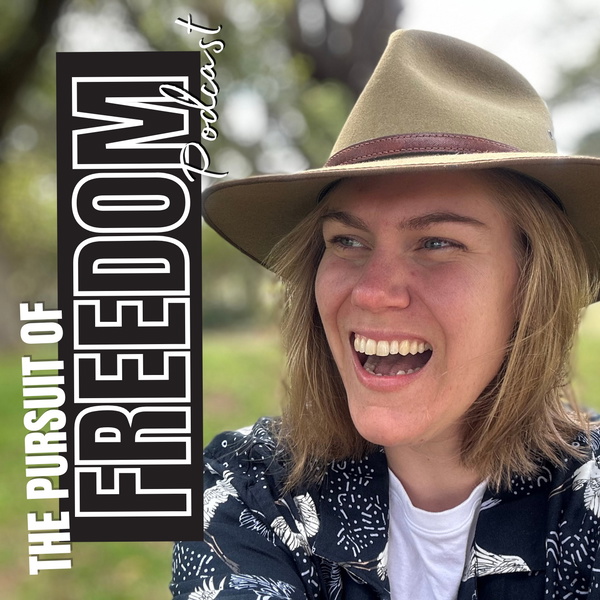
This episode has been a long time coming but boy is it worth the wait.
Tune in as I chat to Tricia Rose Burt. We discuss:
- The Declaration of Conformity
- How an art class for burned out executives changed Tricia's life forever
- How distance brings clarity
- Wanting to do your own thing
- Realising their is no right or wrong way
- Often 'no' is a 'not yet'
- The importance of community
Resources mentioned:
The Practice by Seth Godin
The War of Art by Steven Pressfield
'Til next time,
TRANSCRIPT
[00:00:00] Welcome, welcome. Before I roll today's episode, I just wanted to say g'day and let you know
[00:00:07] that this episode has been sitting on my to-do list since June last year. That's eight months
[00:00:16] ago. Holy guacamole. But it's worth the so much for being here today. Oh, I'm just delighted to be here, Rosie. Thanks so much for asking me. I can't wait. I've been looking forward to this for a while. Before we get into some of the other topics I want to discuss with you, I would love to hear who you were as a little girl and growing up. Who was Tricia Burt and what was interesting I sort of stop for in second I thought well I took like a 40 year detour Before I actually did that so I think as a child. I mean I was you know if there was a School play I was in it. You know wrote half of them and then somewhere along the way
[00:03:03] got And I was in one and it was fabulous, but I would look at this group called the original cast and they all got together and sang Broadway musicals and I was like I want to be in that I Want to be in that but I just couldn't I Couldn't get out of this just
[00:05:23] the world I lived in really didn't know what to do with me. And, you know, that's okay.
[00:05:24] It's okay.
[00:05:25] It makes for good material now with stories, you know.
[00:05:28] I really relate to, you know, you talk,
[00:05:32] you referred to it as the declaration of conformity
[00:05:35] and you're trying to fit in
[00:05:37] and that's something I can relate to.
[00:05:40] And I think so many other people can.
[00:05:44] What are your thoughts on where this expectation
[00:06:45] how I'm wired. It's not how what I was called and how I was supposed to navigate through life.
[00:06:51] There are times I wish, darn, why aren't I still working at Fidelity Investments making a fire hose of cash? It was a lot easier in some ways. And other ways it was like, oh, it was, you know,
[00:07:00] soul kill. I mean, not some people thrive in that environment. But there's a lot of writing and there's a lot of media work. And there's a lot of just billing your time in 15-minute increments. I was good at it for a really long time and then I was basically telling other people's stories. I wasn't telling my stories, I was telling other people's stories.
[00:08:21] And I was in New York while I was doing School and I worked for Fidelity Investments and at the same time I was taking classes to figure out what else I could do for the living and I was French needlepoint and I go over this. I would say my origin story of sorts is How to Draw a Naked Man which I told for the Moth which is an organization here in the states
[00:09:44] which I know has been in Sydney and done some. But yay! But I really, it was like, it was such a fundamental like, wow, I have just not been me ever.
[00:11:05] I haven't been me ever. unlearn that. Oh, golly, I still unlearn it. You know, I still work with that. You know, I mean, it's deep, man. But you know, I think it was because I mean, what I ended up doing with art school, it's some when I realized, so I went to the School of Museum of Fine Arts in Boston, where I went. They had like the museum school in Japan and the musical in Paris. And I went to the
[00:12:22] museum school in Ireland, and they had a watercolor class. I hate to watercolor, you know, cash on my retirement savings and moved over to Ireland. And it sounds insane. And I look back and go, who was that person who did that? But it was the right thing to do at the time. Like everything just shut down. In one week, it just shut down. And so for me to unlearn that, I really had to remove myself from the place that had taught me that. And I went over to's not. I had to shift the criteria I used to judge myself. I had to shift what was success to me. And I still struggle with that. It's like, wait, aren't I supposed to have three homes now? I look at people that I went to college with the How to Draw a Necked Man, One Woman Show, that Bob, one of your instructors, encouraged you to apply to art school. Yeah. Yeah. And I don't want to tell your story, but could you share angst around this. He's like, Tricia, you know you're an artist, you're one of us. And I was like, what did you make? How much did you make when you sold it? You know what I mean? Yeah. How clinical and cold to say that is very much the same here. It's just so uninteresting. So to embrace that creative process and, in a way,
[00:19:03] go against what society expects of us, very much focused
[00:19:07] on outcomes.
[00:19:08] What did you produce?
[00:19:09] What have you done? And when I ended up going to art school, I mean, it was bumpy, you know, for a while my family was like, what the hell? And is there, you know, it just feels like, and I mean, I have to say, I had to work really hard at not being like self-righteous. I have seen the light in the ways the background and this artistic experience. And so it makes me more valuable in both settings. It's not like I've said, be done, corporate world.
[00:21:40] If I had my druthers, I would I have this amazing creative coach who I worked with. His name is Mark McGinnis. He's in Bristol in England. I had for years been working on a memoir that did not get picked up, which at the time was just so traumatic. And now I'm like, okay, I just repurpose it and use it other places. While I was writing it, I was like,
[00:24:03] And then I think, you know, you really ought to write a manifesto. And I'm like, okay, this is just bizarre.
[00:24:07] It was just bizarre.
[00:24:09] And so I'm like, okay, I just needed one person to give me permission.
[00:24:13] So you know, I wrote this manifesto.
[00:24:15] And I think the movement is starting with the podcast.
[00:24:20] I'm starting to do some workshops as well.
[00:24:23] I've had a retreat.
[00:24:24] I'm doing, I'm actually leading a I'm just looking for the right platforms and just kind of getting, you know, getting the word out. Yeah. And you've, you've written this manifesto now, haven't you? You've got 10 principles. I have written the manifesto. I have. It's amazing. And I'd love to dive in a bit more to it. I'll quickly list off the 10 principles and then maybe we can
[00:25:42] dive into a couple of them because I think we'd be here for weeks if we did all of them. Yes.
[00:26:44] curious, is there thought behind the order in which those principles are listed and how did you even come up with them?
[00:26:48] There were so many versions.
[00:26:49] I can imagine.
[00:26:50] I mean, I could really have been a manifesto that was like, I finally had to go like, reign
[00:26:55] it in, you know, Jess.
[00:26:57] Yeah.
[00:26:58] And then I think for me, like my mantra, not to say leave your jobs, you know, and, you know, run wild, run free. But, but it's more to finding that balance, you know, finding that balance. It's scary to walk into that first art class. And it's scary to say, you know, I really always
[00:28:22] wanted to write a screenplay and I'm actually going to many artists. But for me, I think my creativity shows up in different ways. But when I left high school, I actually was accepted into an arts degree. And my very first lesson was, you know, there was a naked. There actually was a naked man actually in there.
[00:29:42] And I just went, oh, my God, you didn't warn me
[00:29:44] that I was going to be a naked person in here.
[00:29:45] I was so uncomfortable looking around at the other people in the room. Ireland and I just had no cash at all. And there was an ad for, and I didn't have a work permit so I needed like cash under the table, jobs. And they were looking for an artist model. I'm like, well, I know how to do that. I mean, I've never done it before, but I've
[00:31:02] certainly watched it and drawn for the model a million times. I thought, I don't think you're a nude model anymore. I am not. Yeah. And there was an incident, if you're comfortable talking about. Oh, yeah. Yeah, yeah, yeah. Where you ended up, I guess, in a potentially quite dangerous and vulnerable situation. And I think it modeling was very worried and uncomfortable. It's like are you safe? You're okay? I'm like honey I'm just a series of lines and shapes. They really this is not a big deal and he was still a little concerned and then we got married and there wasn't a lot of cash. He's like looking through the paper
[00:33:40] going okay you got any jobs that we can see? out of what my insides were telling me to do. And I'm on this podium and he's got me, you know,
[00:35:01] in this pose, like a jumping jack pose.
[00:35:05] So you're incredible, I mean I couldn't set that boundary. I could now. I mean, I'd modeled now in a heartbeat if somebody felt like drawing me because I have way better boundaries and would get out of somewhere if I didn't feel safe. And I mean, I was lucky as he was just a creep and not something else. But it shocked me that I had thought I'd gotten so,
[00:36:20] evolved in my womanhood.
[00:36:22] I could just be in touch with my body
[00:36:24] and all these sorts of things.
[00:36:25] And I'm like, we to make some ends meets or things, you know, this doesn't happen, that doesn't happen, and you have financial insecurity, pretty quickly you can start going, why did I start, why did I do this? And for me, that, I have to have a lot of projects going. I can't put all my eggs in one basket. Or I'll do something where the revenue gun
[00:37:42] is away from my head while I'm working on a creative project.
[00:37:45] So while I was just like, I
[00:39:04] don't want to work for anybody anymore. You know, I've been at at a particularly challenging time and just want to give up? What advice can you give to help them see the course? You know, I would say you ways to to do it and there's different seasons I mean sometimes you know I've had seasons where all I got to do was be in the studio and make stuff. Then I've had seasons where all I could do was work and hope I could get to my studio and I'd go inside and touch stuff and say
[00:41:40] oh wait okay this is I'm an artist because I touch stuff and I go
[00:41:43] you know whether you're caring for an aging parent or husband who's been in an What can be won and what can be lost and it might be you just feel better You're just your head just may be on better. You know, I I I talked there's an artist named Amy Grant I don't she's a Grammy Award-winning singer-songwriter over here in the United States. I had her on the podcast and she said she she know she's
[00:43:02] she's unbelievably successful and
[00:43:05] She was like I
[00:44:21] Figured out one day when I was really low right now and it's really tricky. And I am more present for her if I've made some stuff in the morning, even if it's super simple. Right now I'm just hole punching drawings that I don't think are very good. So I'm just hole punching them and turning them into something different, you know? But it's enough, it's enough. Yeah, it's enough, that's powerful. And I actually listened to that episode last night actually.
[00:44:26] Oh my goodness, you really did your homework.
[00:45:26] What you know what keeps her going and you know, she's been doing this for four years her whole focus was connection You know the connection with herself connection with her community of artists
[00:45:31] my second guess was the man named Shannon case and who's just frickin brilliant and
[00:45:36] You know his about the perspective you have I asked him how you get through the rough patches and he said
[00:45:42] For me the rough patches or the fuel they are
[00:46:46] to people I just want to talk to. Yeah, I can relate. Yeah. Like I want to talk to her, you know, and I've picked the phone up. I'm talking to a woman. She's coming out the next couple of weeks.
[00:46:51] Her name is Jerry Lynn Johnson, and she's a woman conductor. And there are not many women conductors,
[00:47:00] and she is a black woman conductor, so there are even less of artist. There's a lot of solitude required to be an artist, but it's solitude in context. Like I'm making work alone, but I can pick up the phone or I can meet somebody for a cup of coffee or I can, you know, to have that community around me, really to make sure I'm just not crazy.
[00:48:20] Right.
[00:48:21] I mean, so much of it is, am I crazy?
[00:48:24] There's a friend of mine who I hear, Tim Donovan,
[00:48:27] he was one of the first people on my podcast, not the right person to be in collaboration with. There's a great line, man's rejection is God's protection. You know, sometimes we can think... Sometimes the no is the best thing and often the no is a not yet. You know, I think failure, as Amy says as well, she
[00:49:41] taught me this because when the memoir didn't get picked up, I'm like, oh, are you kidding
[00:49:45] me? You know, I'd just been working, this is really snappy, you know. But the memoir, I just, oh, I somehow I just couldn't, it wasn't me. So it's like maybe I'm not using my best gift. My best gift I think is my voice, you know, and the connection I can feel with people. I mean,
[00:51:02] I'm not saying I'm never going to write a book if somebody asked me to write one, sure, if I was really good at this, then I would have this whole team of people and all these things would be in place and blah, blah, blah. And I was really beating myself up. He was like, well, in today's world, we have to be impresarios, which is mean, which means we do everything. And I'm like, I've been doing it right all along. Who yourself. Absolutely. Be nice to yourself. Gotta be nice to yourself, be gentle. Yeah, you know, the beating yourself up gets you nowhere. The saying, I showed up today for 15 minutes, yay me.
[00:53:44] That's, you build on that, you build on that. are resisting whether we're aware of it or not out in a creativity. I would say the resistance is the biggest thing that we fight because my studio's in my backyard it is about 50 feet from my house so long as 50 feet I walk every day because I'm like well I could go you know there's grout in the
[00:55:03] in the bathroom I could grout first you know and I should probably should check This matters equally to analysis and the logic. I mean there's different parts of the brain. There's hard skills and soft skills You need intuition you need creativity you need all that stuff in One phases through project and then all the other stuff The analysis and the logic and all that stuff takes over to you need both you need both. I think that that
[00:56:23] It's not so much
[00:56:25] resistance well resistance plays a part but also its mindset of I'm exploring this idea. We're all works in progress. Artists are just in it all the time. And it's far more interesting to say I'm working on something as opposed to say I did this thing five years ago. You know it's way more interesting working on something. So but it is it's just believing you know and also the only way to get through it is to make sure you have community.
[00:57:44] Because if you're on your own trying to do and tell you how much your video had a draw on Ecademy and meant to me. When my Nana sent it to me, I thought we even have a grandmother involved now. Okay, when my Nana sent it to me, I thought she was crazy.
[00:59:00] But now I watch the video like every six months
[00:59:04] and I cry every time.
[00:59:05] And she shifted what her going from her job You are right. Right. Yeah. You're stepping out. You know, you're doing this thing. It's fantastic what you're doing. Oh, thank you. It's fucking terrifying. Can I just say excuse the language? Not to put you find a point on it. Yeah, right. But I'm I'm embracing the process and it does take a lot of unlearning.
[01:00:21] It really does. It's a continuous journey.
[01:00:23] But I'm glad that I've taken the plunge to go on this path.
[01:01:24] best place for people to find out more about what you do and perhaps they want to listen to some of the things we've referred to today is the best place for them to go your website?
[01:01:28] Yes, TrishaRoseburt.com. So everything's on the website and you can access the podcast
[01:01:34] from the website as well. I mean, of course, on Apple and Spotify and all those places
[01:01:38] that we're supposed to be. But if you want to, you know, I'm on Instagram and all those
[01:01:42] places I'm in all those places. So it's just if you put Trisha Roseburt, I will come up.