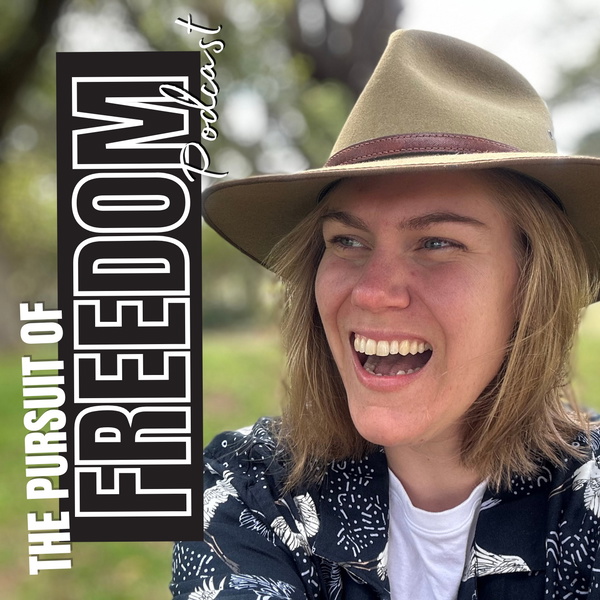
Amanda Rolph is an ex-teacher and very much led an 'ordinary' life until she had a scare after the birth of her son and realised that something had to change.
Topics covered:
- Living life on the treadmill
- Betraying your body
- 'Hang on a minute' and 'How did I get here?' moments
- Downplaying our achievements
- Leaving teaching and deciding to homeschool
- The importance of being more than just a mother
'Til next time,

TRANSCRIPT
[00:00:00] Get a and welcome to the Pursuit of Freedom podcast. I'm your host Rosie Burrows and I'm on a journey to find my freedom so that I can help you do exactly the same.
[00:00:12] Join me each week as I share the stories of everyday people have found their own past to freedom. I'm not going to focus on job titles and accolades because I don't care about that stuff, and neither should you.
[00:00:24] I want to uncover what truly makes you tick. Who are you when you step away from society's expectations and follow your heart? I still haven't figured it out yet. Have you? Either way, buckle up because it's going to be one hell of a ride.
[00:00:40] Joining us today on the pod is Amanda Rolph and just like me, Amanda is an ex-teacher and also like me, she very much used to lead a sensible life.
[00:00:52] And so one day she stepped away from it all and decided to homeschool her son and start her own business. Amanda, thank you so much for joining me today. Hi Rosie. Thanks for having me. Of course. Yeah. I'm really excited for this conversation.
[00:01:11] I guess the little bit I said just before is talking about the what you did and what you do now. But I know that neither of us are really keen on that question, what do you do?
[00:01:24] So I want to start with the question and it's a pretty big question, so we'll see how we go. Who are you if you have to describe who you are? Where would you start?
[00:01:35] I like that question. That is a good one. Who am I? I'm Amanda. I love gardening. I have an allotment. I also love growing my own flowers, I love dailyers. I am very sensitive, very compassionate.
[00:01:53] I'm a busy mom to two highly sensitive children that I home educate and I work as like a shamanic healer and intuitive coach for women. Very cool. Thank you. Yeah.
[00:02:08] Can you share with us how how did you become a teacher? Like I feel like all of us teachers, whether we're still teaching now or not. There's a story as to how we became a teacher and for what reasons.
[00:02:22] Yeah, and it's interesting actually because it kind of ran in my family. So my mom, which she was like a nursery nurse and her mom, was a teacher. And so I kind of fell into it in a sense.
[00:02:38] And I remember when I was 16 and we did work experience is quite common here in the UK at that age. And I got placed in a primary school. And I remember I was there for the whole week by thought gosh, this is really hard work.
[00:02:53] I don't want to do this. And I remember when we went back into school, I had to give a tip like a talk to my English class to talk about my week. I remember saying, I don't want to be a teacher. Wow.
[00:03:06] And so I went on to do my exams and I went into sick form and I didn't really know what I wanted to do. And we had these careers, consultations and for a while I thought about nursing. I knew I wanted to do a job that helped people.
[00:03:19] Right. And I think even that is actually something that we could unpick. Yeah. For me is a bit of a kind of chronic people, please are putting everyone else's needs first. But anyway, so I was like, well maybe I'll do nursing.
[00:03:32] So I left school and went to college to start this basic nursing course. And I remember that I got there and they said, oh we don't actually do that course. It's called something else and it's part of that.
[00:03:44] I got put on a placement looking after young children in an nursery. And whilst I was there several of the staff said to me, you're so good with the children. You should be a teacher.
[00:03:54] And I just came home one day and I thought, I'm just going to apply to uni. And that was that. That's how it became a teacher. So yeah, I kind of guess it could not be for quite a while, but ultimately that's what I fell into. Mmm. Yeah.
[00:04:10] I mean it's similar for me, you know people say, oh yeah, I think you'd be good at that. And you're just kind of go along with it. But I want to go back to what you said about people pleasing because when we first met, you mentioned that.
[00:04:24] You know, the fact that you wanted to do a job that helped people really played into some of those people pleasing wounds. Okay. Can you unpack for us? What exactly do you mean by that?
[00:04:35] Yeah, sure. I think I was reflecting on it recently about all those years in teaching. And obviously I don't know about your school system, but like over here in the UK, it's very pressured. You know, there's often lessen observations and you're getting mad with grade.
[00:04:50] You always want to be at the best grade and we're looking at the people's progress and how can we, you know, get them to do better. And I realized for someone like me who is like a recovering perfectionist, always striving to get something outside of myself.
[00:05:08] In that sense, the job was never done. I could never say it was truly finished. There was always something else to be done. And I think, I'm just curious how I ended up in that job.
[00:05:22] And because I think for example now, like me as my mature self, if I was in that position of choosing a new job, I don't think I'd choose teaching now. Interesting. What would you choose now? Oh, that's a good question.
[00:05:40] I think something where I had lots of time on my own, perhaps where I could sit in an office and stare out of the window. And daydream and dream tea, and maybe have my own time to write in my journal or just be with my thoughts.
[00:05:56] Of course there's not much time for that in teaching is there. No, definitely not. Can you share with us? You told me a story. I'm not going to give it away. When you were teaching and you were lying on the bathroom floor.
[00:06:17] Talk us through what that time was like, and why on earth were you lying on the bathroom floor? Sure. Before I came on today, I was just sitting and reflecting on a few points I wanted to share to get across to my story.
[00:06:29] And I realised that there was an event in my life where everything just flipped on its head. And this was leading up to that. So I always worked in early years with young children, which actually I loved because of the young children are just fantastic.
[00:06:43] They're so full of life, they're so full of energy in so many ways I loved it and yet it was exhausting. You know, I don't be as not a natural social model. I don't think to have one to two adults with maybe 30 for and five year olds.
[00:06:59] It's just not a natural thing. And when I became pregnant with my eldest child, obviously I was still teaching five days a week. And I remember being so tired that when it was break time in the morning, so I had a 10 minute or 15 minute tea break.
[00:07:18] I would take my coat and I would go and lie on the floor of the staff toilet and shut the door and I would lie down for 15 minutes because I was just just just be yordant exhausted, physically and emotionally.
[00:07:35] And I look back now and I think wow, I used to really betray myself, my body. I feel sad actually when I talk about it that I used to lie on the floor of the toilet because I need you to rest.
[00:07:50] Yeah, yeah, I mean like that's not how life should be right? I think that's the fact that you ended up in that position is it's heartbreaking and I think a lot of teachers are struggling because like you say, the job's never done.
[00:08:07] And it's very much a job where you're overgiving and there's just a total lack of boundaries. Yeah, but I'm curious to know. Did you think that was normal at the time? Did you know something was off? That's a good question.
[00:08:23] I think I've always known that I'm a more tired person and I say that anyverted comments like I was diagnosed with celiac disease at 19. So I think actually my whole life, my body's been trying to tell me enough enough. So I think for me I just normalised it.
[00:08:42] I'd normalised being exhausted and you know always feeling tired and having to push beyond what my body could do. So I think yeah, and I just was far less conscious of myself at that time in my life.
[00:08:56] I was very much on that treadmill of you go you know you go to school you get your qualifications.
[00:09:02] You go to uni you get a job by a house all those things a bit like your story but then you wake up one day and think, hang on a minute. Actually, I'm not very happy here. It takes us a while to get there sometimes. Yes.
[00:09:19] Was there a tipping point for you where the light switch went on and you went, well what am I doing? So I kind of had two in my life. So the key point where everything almost fell apart,
[00:09:32] but I didn't have the realisations in that moment of what needed to change was when I had my son when he was born. His birth was a difficult experience and I was very poorly afterwards, like very, very poorly, you know touch and go poorly.
[00:09:47] And that it was just like my whole life and everything I knew and thought and believe just kind of crumbled in front of my eyes and I was left feeling really lost. I think I didn't know how to navigate that.
[00:10:04] I was very much a wake up call as to, you know what you've been doing isn't working anymore. And also what I found because I've run it clean before I had children.
[00:10:13] I thought that my job was to like live my life, have my children and then just devote myself to being a mother. And it wasn't long into the journey and I thought, yeah, that's not going to work. Oh no no no.
[00:10:27] So my kind of raised myself here, which is I thought this probably what I thought I would do. So that was very much one time but I also remember then several years later, this was a far more like gentle experience.
[00:10:44] But I was just sat on my sofa in the lounge one day and I thought I'm 33 years old. And I thought, how have fucked did I get here? Like I just sat there looking around my house at my life and thought, how is all this happened?
[00:11:01] And I've been like so unaware and unconscious of so much of it. And I just really realized that if you don't choose to become more conscious and present with everything that's happening,
[00:11:14] you're going to get to 67 years old and look back and go, oh, like, you know, that's a lot of my life as part literally past me by.
[00:11:24] So I remember that being quite significant as well. Like a one of those quiet moments, it was quite unremarkable but it was really profound, like the realization that I had. Yeah, I, for me I don't think I had one moment. But over time, similar thoughts, right? Like, wow.
[00:11:41] What is this what it's going to be like for the rest of my life? Is this the kind of life I want to lead?
[00:11:47] And you know, in the past it's been a resounding no and it's kind of like, well, and I want to hear your thoughts and if you agree but for me, it felt like, okay, I need to put myself first to be able to make these changes.
[00:12:00] Yeah, yeah, because I think you, for me, and it's like a cliche, but for so many years, it just feels like you're on a treadmill or you're just doing it because the teachers told you or your parents told you or society told you
[00:12:16] or perhaps actually no one even told us that we have to do these things is just the expectation is so deeply ingrained that it's just what you do and then you start thinking, hang on a minute. What if I don't want to do that?
[00:12:32] I'd be curious if you're happy to share like one of your experiences of that like realisation of what I feel like.
[00:12:41] I've had so many it's a lesson that I'm constantly relearning, you know, I get caught up in the day today and I really resonate with this people pleasing thing.
[00:12:54] One example I can think of is, you know, so I only did my teaching career for two years, right? I didn't last long.
[00:13:02] But I did it like I started the teaching degree because people said, you'd be a good teacher, you work well with children, you get holidays, you know, all these wonderful things about teaching.
[00:13:17] So I just kind of went along with it, I did enjoy working with kids and I do like helping people, so thought, yeah okay, I'll go along. Absolutely hated the degree.
[00:13:28] I was angry all the time, I just it was infuriating. And then you know, I got into this excellence program and got full time, you know, employment, guaranteed employment.
[00:13:43] And everybody was really proud of me, so I was you know feeling really good. But within the first couple of months I knew I didn't want to do it.
[00:13:54] I just thought what the heck is this like, you know, I felt part of the problem because I have a lot of opinions on the school system. I'm sure you do too.
[00:14:04] I'm getting tired of doing that. But even though I knew a couple of months in, I didn't leave for two years. Took me two years and only left because my mental and physical health got so bad I just couldn't continue. So I left it that long.
[00:14:24] And I it's because I didn't listen to myself and trust that and just leave all the voices around me was saying, just see it through, you know, you've only just started don't throw it all away.
[00:14:36] Persever, you know, hustle hustle. So that was definitely a significant moment for me, you know, I got caught up in it and pleasing others. But when I left, it just felt so liberating. Amazing feeling. What were the emotions you were going through when you left teaching for good?
[00:15:05] Well, it's funny actually. So I was, I think I talked for about eight years before I went on maternity leave with my eldest and I knew once I'd gone back to work that I did not want to go back full time.
[00:15:18] So I after he was born, I went back like a day and a half a week. So in that sense, I'd massively stepped out of it. I'm terribly sorry for that awful, awful sound but I really wasn't sure how to make this interruption.
[00:15:36] Unfortunately, when we were recording this episode, we had an issue on Riverside and Part of the Conversation got cut off.
[00:15:48] Amanda spoke about how for the very first time she realized she was actually good at teaching and this realization didn't come until she was driving away from school for the last time. Let's pick up the conversation.
[00:16:04] Why do you think it took you all that time to actually acknowledge that you were really good at teaching? I think perhaps because when you're in the job and again, it's just the constant barrage of how could you improve this?
[00:16:20] How could you improve this lesson? How can these children make better progress? You know, yada yada yada, you're just on that treadmill of constant self improvement. And I think perhaps I did know, like a part of me may have known, you're good at this.
[00:16:35] But a bit like you said when you're then in that system there's almost not room to really flourish in your own unique way. And so it literally wasn't until I was hugging my colleagues to say goodbye and I knew I'd be walking out and not coming back.
[00:16:54] And I thought, wow, you've been really good at this job.
[00:17:00] And I've kind of vowed in that moment that going forward in whatever I did, I would never allow myself to be like that again that I would acknowledge my goodness and what I was doing in the moment all the time.
[00:17:11] I thought this is never going to happen again that you know that we realize right at the very end. But I think a lot of us can probably relate to that and it's kind of heartbreaking that that happens.
[00:17:25] So I'd love to know how if you got better at acknowledging how great you are. Well, it's still something I kind of find difficult but I think because now I'm much more led by how I feel my body like my body's capabilities, my intuition.
[00:17:47] So I'm naturally a lot more in tune with myself and so I'm a lot more compassionate with myself.
[00:17:53] So I'm much better at being like, oh you have to really good job of that and then also being compassionate if perhaps things haven't gone how I wish them to go. We've got this thing in Australia called Tall Poppy Syndrome.
[00:18:08] I don't know if that's a term you use over there but it's sort of. I'm trying to think of a simple definition of it. It's essentially we don't want to talk ourselves up or say that we're good at something. Yes, what is that about?
[00:18:27] Or I think I'm pick that really deeply. Yeah, let's go do especially as women. I think there's a massive stigma actually about say like waving your hand saying actually hi yeah I'm really good at that. Yeah, you know I can help or I'm really good at this.
[00:18:48] I think for me especially growing up it's I don't be a show off you know don't most don't be arrogant don't brag and so for me naturally of always downplayed everything that I've done.
[00:19:02] You know I remember when I went to university and then I got like first class degree and I got like a university prize because I think I just got the highest graded degree in my cohort of like a hundred people.
[00:19:12] But again as I call don't talk about that. Mmm, you know don't talk about that. That's a very interesting point isn't it I think we naturally are quite maybe hard on ourselves but quite dismissive as well of the things that we're good at.
[00:19:29] And we're not just about our achievements. It's amazing some of the similarities we have because I studied an MBA and same thing I you know we called it valid Victorian at our university but there was almost this shame around it.
[00:19:48] And even now when I share it with people I sort of just quickly say it and bumble over my words and move on rather than owning that achievement.
[00:19:58] And it's just it's baffling to me but I really think you have a good point about it being more of an issue for women because when I think about it a lot of men have no issues with just talking about all their accolades and I'm good at this and I can do that.
[00:20:14] And often they're not questioned on that. Maybe think there's a quote and I'm sure it's Nicki Minaj said, A when a man is assertive he's a boss but when a woman is assertive she's a bitch.
[00:20:28] And so we do think there's a lot of like societal conditioning and I think for a lot of us as well it's probably like a little in a child part of us that's thinking oh don't show off because nobody will like you. Right.
[00:20:42] Yeah it feels like a huge risk. Yes. Terrifying. I know it's something I'm continuously working on like just owner you know. I'm even uncomfortable now but I'm going to say it anyway.
[00:20:59] I'm a wonderful person right and I should I should just own that and just like you were a wonderful person we need to put that out in the world maybe we wouldn't use those words but. Exactly we could and there's nothing wrong with it.
[00:21:14] Yeah I think in time as like for me having got an older and with all the things I've been through I am a lot better now being like yeah you know what you've really got your ducks in a row most of the time you know you are a good person like you've got to shit together on the whole.
[00:21:30] Yeah like give yourself a pat on the back because really you're doing okay. Right. Yeah. And something that I think ties into that is our inner voice. I know my inner voice is so freaking cruel.
[00:21:46] It's just I would never talk to someone else the way I can talk to myself sometimes. Why do you think that happens because I don't think I'm alone with that? No.
[00:22:00] That is a good question and actually that's one thing I would say that I've managed to shift that perspective. And actually it was what makes me think of that as when I gave that to my son. And after it's about two and a half, three hours later.
[00:22:15] And I remember lying there in the hospital bed thinking or like it was like I knew my intuition something's wrong. And it was like I had a conversation with two different parts of myself like an argument because there was this part of me saying something's really wrong.
[00:22:32] And in my head I was saying oh no no no come on you've just had a baby he was a big baby you know you had intervention. Did I do that?
[00:22:40] What did you expect basically pull yourself together and there was still this little voice going no something's really wrong. And eventually when they got me up and try to put me on a chair or whatever they were going to do.
[00:22:53] And I collapsed and that's when everyone realized oh she's really ill. So I knew and that day I ignored my inner voice you know almost with catastrophic consequences. And so I think since then, I'm much better at listening now because I know the potential risk of not.
[00:23:19] But I think going back to that like the inner critic people talk about that don't know that the archetype of the inner critic.
[00:23:27] Sometimes I think it's maybe all the voices of sadly parent teachers just in for a few figures in society you know how much have we heard. I'm really conscious even with my own children at the moment. So like it's the middle of winter here it's cold.
[00:23:45] I'm tired naturally in the winter. I just want to curl up in an armchair, stare at the fire with a cup of tea. I can't even always do that because you know the kids are about they want to play and make things.
[00:23:58] And one thing I've noticed is sometimes my inner voice kind of coming up and starting to be a bit like. Berating me a little bit for not being a good enough mum.
[00:24:10] You know the children want to play they want to do this and yeah I haven't got the energy. But I'm much better now at trying to hold both of those things. Like I talk a lot about like holding two things that two things can be true.
[00:24:25] And you know on the one hand yes they probably would like to play with me more and I could be more like Mary Poppins. But on the other hand it is winter and I have limited resources energetically you know and that's also going to play a part.
[00:24:42] So I think sometimes with the inner critic it's almost I don't know I would listen to them and be like, I hear what you're saying but you know this is how we're going to do things today.
[00:24:56] Yeah we you know we're not going to be able to get rid of that in a critic I don't think but we just acknowledge it and go, not you're wrong. I'm going to do this anyway.
[00:25:06] Yeah yeah and I think because I think so much with that kind of work often people are very keen to push it away and almost make it wrong like make them the enemy.
[00:25:15] And I find when you do that they just if anything just gets louder like sometimes you most need to be like okay well yeah I'm listening and I see why you might think that but actually. That's not the case. Yeah this is what we're going to do today.
[00:25:30] And that voice I think you mentioned this before is very much based on how we've been conditioned by the people in our lives by society and we think they're our thoughts but often it's the beliefs and thoughts.
[00:25:48] Expectations of other people that we've just kind of accepted as our own because it becomes so ingrained and I think.
[00:25:57] A big journey for me and something I encourage everybody to do is just question ask the question like is that true is that actually my belief or is that just something that I've been told that's the way it is you got to do it this way.
[00:26:12] You can't do it any other way because often those thoughts you know they're not all my own it's just it's external and then when you listen to your gut or your intuition there's different names for it.
[00:26:27] I really think wonderful things happen when you listen to that and like you said it's often a quiet voice so you need to give yourself space to be able to let it in I think.
[00:26:40] Yeah definitely and I think like for me as well when I was very much living in like automatic mode so like before I had my son and I was just doing all the socially acceptable things but I was very unconscious.
[00:26:53] You know as to what as to who I was what I wanted what did I feel all those things I think when you're living in that very automatic way.
[00:27:02] I think often the thoughts feelings the voices like you say I don't think then necessarily hours it could just be just the general chatter of everything and everyone around you. Is there a magic pill to get better at this tell me the solution? No, I think it's not.
[00:27:23] How am I gonna phrases? I think it's it's almost like it's an ongoing process is it because I think the temptation is an often we're sold it as do this healing like the shiny thing but shiny object and then your life will be magically better but for me it's more like.
[00:27:44] Having a really tangled ball of threads and you start to unravel one and then that leads to another one which leads to another one and it's just ongoing. Yeah I totally agree. I think that's off putting to some people because.
[00:28:04] I know I'm guilty of it just want a quick solution sometimes I just go oh it's too hard it's too hard I'm not going to do that but actually when you do do the hard work.
[00:28:16] It does get a little bit worse before it gets better but when you do that work. I just think life gets better and you really tap into your true self so anybody listening who's a bit stubborn. Give it a go.
[00:28:31] Yeah definitely because I was talking about is it's like a speaking event I went to recently like. I would say that I am living my best life but that doesn't look like a shiny Instagram.
[00:28:43] Oh look at my best life it actually looks like very quiet lots of quiet days lots of drinking hot chocolate in pajamas you know it looks like not having to be bound by an alarm clock waking me up everyday.
[00:29:00] Very much centers piece and joy but not in there. Woo we're all having such great time but just a quieter sense of joy and peace yeah definitely. Let's jump back to education because I want to hear more.
[00:29:24] What was it like when you sent your eldest to school for the first time?
[00:29:30] I remember and again it was one of those things wasn't it you just do it everyone goes to school and we were fortunate that we found obviously I worked in the area and we went round several of the schools.
[00:29:44] And I found one that thought we have this is really lovely and I think he'll do well here it's quite small the teachers are really kind.
[00:29:51] So he went to nursery and I remember on the second day when I had to do the school run thinking oh I thought I'd do this like twice a day every day for the next however many years.
[00:30:06] And I really didn't like that the idea that our day and our time was bound by the like somebody else's timetable.
[00:30:15] But anyway he went to nursery part time like three mornings a week kind of a few could manage towards the M maybe being creased it to for and he didn't love it but it was it was fine. I think he had a reasonable time when he was there.
[00:30:33] But then when it came when nursery finished that year and it came to moving into reception which is like the first year of more like four times school over here.
[00:30:43] They combine the nursery in reception his class together because the numbers were low so it meant that he'd gone from being 20 children in that classroom to 40. Well his teachers were the lovely teachers you could ever ask for obviously with me being very much in that job.
[00:31:02] I thought I couldn't ask for a nice teacher but it was clear that he was not coping at all and she you know even she said to me he is like a me a cat he is so anxious.
[00:31:13] He would come home from school and like I'm in the one Friday night he was like, my baby is it school tomorrow no no Saturday what about the next day no not the next day what about the next day and I thought wow you are far too young to be this anxious and worried.
[00:31:31] And so he only went part time for like a term so about 12 weeks and we didn't go every day because he just couldn't. And I remember it being so I remember it being really difficult because I knew in my heart that like.
[00:31:47] That home edge was an option and it would be a good option because I thought if you keep pushing him to go.
[00:31:54] What on earth is going to be left of his spirit like you are just going to destroy him and my youngest sister actually she hated school they didn't do her any favors mean to go.
[00:32:05] And as it got towards the very end like we'd be walking to school one day and I was walking to work.
[00:32:11] And by dad was with us because he was taking the kids on and my little boy just got off the buggy board and sat down on the grass in the rain and cried.
[00:32:21] And I just said to my dad just taking home just taking home and that was it pretty much. Thankfully his teachers they were really supportive because they saw that he was not thriving at all.
[00:32:34] Yeah and that's again I was reflecting before we came on here today and I was thinking about all those big decisions I've made in my life.
[00:32:45] It's never been a oh yes I'm a 100% yes you know it's always been there's been doubts there's been tears but you know like there's just something inside of you that you know it's the right thing to do but it's also a hard thing to do.
[00:33:03] And so I guess for anyone that's listening as well that perhaps they're on the cusp of maybe making that big decision or they just know in their bones.
[00:33:12] That there's a big decision to be made and potentially something really exciting beyond that then yeah that no it's normal to feel. I think often when we make these big decisions you know I remember the day we took my little boy out of school.
[00:33:32] And always little friends were waving they were like bye Oliver and he'd always struggled socially with making friends and of course you'll think it might do in the right thing.
[00:33:42] It seems really popular you know at all the voices in your head and I was sad for all the school plays that I wouldn't get to see.
[00:33:51] And the things I enjoyed about teaching like all the school fate and the community and I thought you're not going to have that little did I know that now we're home.
[00:34:00] Like you know so much more so yeah that that sense of community and things but it wasn't an easy decision but it also was completely the right decision as we drove away from school that day and it was just a gray quite unremarkable day.
[00:34:18] My husband said to me like you won't prove you've done the right thing and there was just this huge rainbow in the sky in front of us. So did it feel natural to make that decision to take your son out of reception?
[00:34:35] I'm going to say no actually and when you were talking what kind of came up was for me having it was almost like this is a huge responsibility that I can make this decision.
[00:34:49] And I think perhaps and I know on my personal journey I've realized that using my power has been often an issue like and I've often felt powerless.
[00:35:00] So I think in terms of natural maybe it didn't feel natural I think it felt uncomfortable because I realized this was a really powerful position to be in because you're making a big decision that will impact his life and all of ours.
[00:35:16] So yeah so it wasn't I wouldn't I knew it was right I just knew but also it felt very uncomfortable. I think that's such an important point. It's often not comfortable.
[00:35:32] That's quite normal to feel that way and I would go so far as to say that when you're having those feelings of doubt and discomfort and really questioning the decision. It's often a sign that it's the right thing to do.
[00:35:48] Yeah, and a sign that you're really that you're considering all the aspects because I don't think there's anyone that jumps into fear the life changing decisions in a both feet.
[00:36:00] I've closed yes I'm 100% in and I think perhaps the people that do do that maybe then in time they come to realize that oh it's not what I thought. Yeah.
[00:36:14] So tell me more about home schooling so when we first began so this was actually about five years ago now and we'd five years four years four years ago that we started.
[00:36:31] And in the beginning I remember thinking oh well I'm a teacher I'm going to do all these plans and amazingly I thought I'd recreate my job at home.
[00:36:43] I quickly realized that actually I wasn't going to do that because it just was going to work for us and again it was one of these examples where it just didn't feel aligned.
[00:36:53] It felt like I was pushing almost against the tide and so actually we kind of just relaxed more into life.
[00:37:03] This was just pre-all the lockdowns and things so we only had a couple of months of being home edge and we'd found like a learning cup up to go to and we were just beginning to find our feet obviously then everything closed.
[00:37:16] And so then for several months there wasn't really anything to do so the beginning of our journey was perhaps not usual.
[00:37:24] But I think it was also good because I guess it gave us time to settle more into and we went back to you know just finding what is it that we all love to do.
[00:37:32] Finding time for hobbies and being together and it's interesting when we took goal of route of school because I hadn't perhaps fully realized I guess you wouldn't until you do it.
[00:37:48] The impact that it would have on all of us and you just started thinking actually yeah what why do kids have to learn to do this by this age and who actually are you.
[00:37:57] And who actually set all those requirements and who decided the curriculum but why you know and again it's all those questions like you said when you start asking why and the more you ask why the more things are rattle themselves.
[00:38:16] And so yeah in time we started to like settle in and find a bit of a rhythm but it wasn't until we made a bit quite a big move well I say big obviously this is the UK so it's only like two hours.
[00:38:28] But it feels like a long way I'm sure for you you're thinking that's not that far.
[00:38:34] But we moved to Norfolk and they're here we found like our community lots of friends and lots of groups and activities so it's great but yeah so it took us some time we definitely had to.
[00:38:48] Like readjust and heal actually is what comes to mind I think we all have to like my son from you know the anxiety of being at school.
[00:38:58] And me perhaps being in such a because I don't know what it's like you know straight if I'm guessing similar like very set term times holiday routine such a structure and I realized obviously I'd been to school then I've been to you and I went straight into teaching so my entire life.
[00:39:16] Had been to find why those chunks of time you know like counting down to the next holiday and how long was this term so it just gave us time to settle and like some days then stopped becoming a day that would provoke anxiety because you're like oh well it's just Sunday.
[00:39:35] There's nothing to dread about Monday be a definitely to time.
[00:39:40] Yeah and you mentioned community I think there's so much power in community and I really think it's an essential piece an essential piece of the puzzle for us to be able to fully embrace what it is we truly want to do.
[00:39:58] So how did finding your community because you mentioned once you you moved to Norfolk that you found a community and you started making friends so what difference did that make.
[00:40:10] That was yeah I mean that it was everything but I remember when we moved you have I had to be quite disciplined because I was like right when you hear we don't know anybody so we need to make an effort like we need to put ourselves out there and I remember just finding online like there was a meetup at a park.
[00:40:27] Not too far away and at this point I didn't have a car so I took like both the kids the buggy all the stuff the scooter on the bus down the road to Norwich and I didn't know where we were going so I was looking on Google maps on my phone to look to know what bus stop to get off at.
[00:40:44] And then it was like a mile walk to the park but we did it and we went that day and actually we met several people who've gone on to become really good friends and not just at the children our friends but that I'm also friends with their parents like genuine friends so that was a really key part of it but yeah did involve really happen to put myself out there.
[00:41:04] But now I think I took the pressure off because I look you can go to these things and if you meet people and then not your company then not your cup of tea that's fine.
[00:41:12] You know also put in the pressure on like you don't have to find a group of like amazing best friends you can just find someone that for now you enjoy chatting to you can share a cup of tea with you know that kind of thing.
[00:41:24] But yeah and I think perhaps for us with home and to be fair our experience isn't everybody's experience like some I think depending on where you live everyone has a different experience but what we found is so lovely for us as adults is that we've made genuine friendships with a lot of the other adults that we meet in the home their community.
[00:41:43] So when we go to like groups or activities days out for us it's really nourishing as well because we're chatting seeing our friends the children are seeing their friends and your right is it is almost building that community that I like that everyone so desperately needs.
[00:42:00] And I think more than ever like just I've been talking to a few of my friends recently and reaching out and I've come to the conclusion that actually not many people are okay.
[00:42:10] People are struggling and I put myself in that category as well just with everything that's happening in the world and you know financial pressures and I just feel like we're everyone's feeling that aren't they or I don't make perhaps I'm you know speaking for myself but being just to know what you think.
[00:42:28] Totally agree. For some reason we've been conditioned to believe that we we kind of admit that we're not okay that's a sign of weakness how dare you just suck it up on you go you know push through have some grit and I think that is so unhealthy.
[00:42:49] It doesn't usually end well and you mentioned you know at the beginning of the episode that your body was kind of giving you signs that well something's not right here you're doing the wrong thing hold up and we often don't listen to that.
[00:43:08] Yeah and it bites us in the bum.
[00:43:10] Yeah big time also as well perhaps we feel like that we don't really have a choice to listen you know I just internalized or believed all I'm just a really tire person you know I need more rest almost like making up all these excuses.
[00:43:26] Yeah as to why I couldn't function like most normal in inverted commons people function and actually now I look back on like my poor body was just holding so much that she was like no enough.
[00:43:43] How do we get better at not making these bullshit excuses because I really think they are bullshit right we don't I think in the moment we don't acknowledge that they're excuses we we see it as the truth and that's this is the only option.
[00:44:03] So how do we begin to challenge that when you were talking the word that came to be actually was fun or ability and it's almost like an invitation for everyone to get really comfortable or to practice.
[00:44:16] Being vulnerable in front of other people and then I know actually you know for a lot of us and you know myself included that that potentially is not going to be easy and it might not even feel safe depending on all the experiences that we've had like at home without parents growing up with friends at school.
[00:44:35] You know it's a risk to be vulnerable because you know people could be really hurt for you but it's like I know it's spoken the beginning my beloved cat died a couple of weeks ago bless that actually got a holistic kidney disease.
[00:44:49] So we knew it that we knew that was coming but when it happened I was shocked how like upset and raw the grief was.
[00:44:59] But in that moment I was like well you know if I need to basically hibernate for the whole of December and cancel all my plans and stay at home and just cry then that's what I'm going to do and I really like.
[00:45:14] I'm allowed myself you know to cry when you need it to cry put music on that helped me like tap into the grief and cry.
[00:45:23] And actually after about four days I thought oh I'm doing I feel a lot better not the right word you know what I mean like the grief doesn't feel so heavy and painful but you know we turned up to a group of my friends I all how are you are okay and I just cried and said no I'm not like I really.
[00:45:42] Was almost having to practice that being honest and being vulnerable saying no I'm not okay. I'm really sad but then I noticed by doing that it's just made the whole process just so much easier because I allowed myself to just be.
[00:45:58] And I didn't try and hide behind anything because when I was little always trying to hold my emotions in and then actually what would happen is if I got upset about something an hour later I'd still be like.
[00:46:13] You know trying that because I'm trying to hold it in so much whereas now I'm like no that's coming out and I think because I can do that then it passes through much more quickly.
[00:46:25] Yeah I agree. I think one of the so-called excuses that a lot of us tell ourselves is that saying out loud is going to make it a bigger problem.
[00:46:36] Yes, so we're going to keep it in and like you said from my experience when I do share it when I am honest and vulnerable.
[00:46:45] I don't quite know the right word but it's almost liberating your sharing how you truly feel with somebody and by saying it out loud you're like oh yeah I do feel that way.
[00:46:59] I feel shit actually. Yes, I'm not all right and it's out there because something I'm awful at this I'm still working on it but someone else say oh how are you doing you okay. I'll say yep I'm good and move on even sometimes with close friends.
[00:47:19] And it's like actually now I'm not okay. I'm really having a freaking hard time and saying it out loud doesn't mean I want the person to solve it. That's not going to happen. I just want somebody listen I want to feel heard.
[00:47:38] Yeah, I think that's such an important part of living just to feel like you have a voice and to be heard.
[00:47:46] Yes definitely and I wonder I think sometimes and I know for myself any way my experience is that perhaps it was almost like it's deepest level I didn't feel worthy of taking up people's time and attention and love so it's just easier to be fine.
[00:48:07] I've had a really good acronym for that at this speaking event I was at a few weeks ago and I can't remember what it was but it was like I have to see if I can share it with you afterwards.
[00:48:17] Yeah, yeah because it was super appropriate but yeah I think I wonder if it taps into I don't know a sense of a lack of self worth perhaps and a deep mist.
[00:48:28] But when you know I've noticed perhaps you've noticed when we are vulnerable and we're able to say I'm not okay. It's almost like it gives people around us permission to say oh well neither am I actually we're not okay.
[00:48:44] Do you find that like it yeah absolutely kind of opens the floodgates and makes it okay to talk about it makes us feel less alone I think because as you said earlier a lot of us aren't
[00:48:57] okay we have an really hard time yeah but that is okay and that is in inverted commas normal this is part of being human. Yeah definitely let's switch topics now because a big part of your journey was you starting a business. Yeah you're a healer and a coach.
[00:49:27] But how did that happen? You're a mother, you were teaching in the school system you then you know took your older south of school and obviously your other child is an in school either now.
[00:49:39] So you're home schooling all these things so how did you make this jump what happened. Well I think so much of it stemmed from after I had my little boy and I was so poorly.
[00:49:56] And that almost I guess you could describe it as like a mental health crisis I was very poorly after as I think the shock of what happened physically like combined with becoming a new mom and but then having to deal with all that on top.
[00:50:11] Yeah I was very very unwelph physically and then mentally but there was just something in me. I could have gone to my doctor and they could have given me antidepressants but I knew that that was like sticking a plaster over a really bleeding wound.
[00:50:29] I was really motivated to be better for my son because like I wanted to be a wanted to be a good mom team and I wanted to be present and enjoy him.
[00:50:38] And so I found like it's set off this real I don't know determination in me that I would go about healing this rather than just trying to like I don't know.
[00:50:50] I'm not saying like for a lot of people if that's what you need and that's what works then that's good. And I celebrate that but there was just something in me that thought no I needed like find out what's at the roof here.
[00:51:06] I turned to all sorts of like holistic modalities. I have rakey, like lament meditation, sound healing. I went to women circle.
[00:51:17] I started going to like a shamanic healing group and over time then I did all this work like shadow work in a child work all this parts work and I started to become much more like conscious and aware of myself and how all these experiences in my life.
[00:51:34] Actually I always like it. It's like you go through life and someone's like oh this you should wear this coat it really suits you.
[00:51:44] Oh look here's a coat you should put this one on like suits you and you get to a point where you think I want to win it.
[00:51:50] I don't like any of these why you know because like people tell you oh you're so mature you're so dead or you're such a good listener.
[00:51:59] And then you get to the point of thinking yeah but hang on who am I in all this and what do I want. And so this was like a process going on over years and then I have my daughter and that added another layer into the healing aspect.
[00:52:13] And then I worked with like a shamanic healer and a teacher and a mentor quite extensively over the course of several years.
[00:52:21] And I just learnt so much about myself and I realised that also back naturally I was quite predisposed to this and had a very strong sense of intuition.
[00:52:29] And I realised that I could take all my experiences and what happened to me and use that to support other other women and to support people. People perhaps were like me once upon a time and support them now.
[00:52:44] So when we moved to Northwick and I left my job in schools because obviously physically you know I couldn't come into hours together.
[00:52:52] And I thought I could go back into teaching or go back into supply teaching and I knew my heart wasn't in it, especially then have been home educating my own children.
[00:53:02] I thought you're not really in your integrity and going into a classroom because by this point I don't think it's great that the children spend so much time inside.
[00:53:12] And they spend so much time sitting down and they spend so much time being expected to write when they're too young and it's not developmentally appropriate. So I thought well that's not really an option that's beyond us.
[00:53:26] It would pay the bills but it's not really what I want to do. Or the invitation is like well now that you're in a place where I've done a lot of deep healing work and I'm coming out the other side.
[00:53:40] And the invitation is okay so how can you use all this now to go forward and help other people? So, had you ever had a business prior to this?
[00:53:54] I did it as a batch ago. Oh no but I realized like there was a couple of things I used to do. I used it when I was teaching I also did some extra tutoring again when I look back at that now and I'm like why?
[00:54:04] Why did you do that? You were so tired, you were working so hard and yet you just didn't work. So I'd done that before and a friend I'd worked with a friend for a while doing some mindfulness for children.
[00:54:16] So I had but they were always more like additions to a main job. If that makes sense rather than with this I was like well it's time to go all in as it were. So how do you juggle being a mother?
[00:54:32] What's the right word? I don't know if you'd say you're a teacher to your kids or what word you would use. And being an entrepreneur, how do you manage being those three different things? Often not very well. I want to be super transparent about this.
[00:54:50] I don't have there's not some magic formula. It's really important for me. I always knew that like with my business I don't want to work more than a few hours a week because I want to be around for my family and the children.
[00:55:04] I want it to be like a part time job that nourishes us and is a good balance. My husband works as a nurse so basically on some of his off days, like I might say to him
[00:55:16] You know I'm going to take a few out a couple of hours. You can take the children swimming. So yeah so we haven't definitely don't have it down but I'm quite lucky with my work that it feels like almost quality time for myself as well.
[00:55:32] So when I sit down to work, I'll put nice music on, I'll light candles. It's a really nice space. So it's quite restful and nourishing anyway. So I'm grateful in that sense because working can also feel like me time as well.
[00:55:48] Yeah it's possible right? I think a lot of us think that's not even a thing. You know you just have to do the nine to five, the daily grind that's the way life is. You can't love your job. Don't you dare love your job.
[00:56:02] It's possible. I think we all need to dream a little bit more and take a chance. You know you just said that your work brings you joy. It's time for yourself. And that's beautiful and I think more people need to explore that.
[00:56:18] We can do, we can have a better life. Yeah definitely. And it's often tapping into the skills and the gifts that you possess and knowing how they can be used to support other people.
[00:56:32] But I do feel really fortunate but also I feel like I've reached a point in my life and with my body I couldn't do it any differently anymore. There is no way now I could be setting an alarm every day
[00:56:44] and waking myself up before I'm ready. I mean I've got five or older usually up before I'm ready. But there's none of this rush morning routines getting and rushing out the door.
[00:56:58] And if it was really nourishing I often work at the evenings because I just quite like that time and that works well in terms of family rhythm and routine.
[00:57:08] So it's one of those things isn't it that you can look and think, oh I could never do that and how do you do it? But then when you stop on reflection you think well actually, yeah I can do that if I want to
[00:57:22] because I don't have to do all these things. You know I don't have to work full time in this job, you know obviously financially issues come into play but I do wonder from many people actually you can stop and ask yourself, do I need to do this?
[00:57:41] Or can I have a bit more freedom and flexibility in doing something that suits me? Yeah and it goes back to what we were saying earlier, ask why more? And kind of unpack these excuses that you're coming up with.
[00:57:57] I mean sometimes you know there's valid things to consider you just mentioned financial obligations before and that is a very real thing and all of us are at a different stage
[00:58:10] but a lot of us are also making excuses about that I think we all should audit how much we're spending and are we spending it on things that bring us joy obviously there's basic like you know food and shelter but what else are you spending money on?
[00:58:30] And do you need to? Do you need all these possessions? You know for me I recently moved into my van full time. It was really hard at the time to choose what to bring in the van
[00:58:44] but I got rid of 99% of my possessions and guess what I don't miss any of it. Yeah. So you're not... Definitely. Sometimes I like to play that game in my house and I look around I think if I was moving into a caravan
[00:58:58] what would I take and what would I like? And I think well you'd have to leave a lot of stuff but then you realise actually we don't need a lot of stuff. Yeah. I think we come here to get... I think we come here to get...
[00:59:09] What's truly important to us? Yeah definitely and it's probably quite simple things but again is that we've all been conditioned to buy a house and then you buy a house and then you decorate, said house and perhaps you get a new kitchen
[00:59:24] and again it's that stopping to ask why? Like, why do I feel that I should do these things? Is that great phrase isn't there about stop shooting on yourself? And I always know if I find myself thinking or saying I should
[00:59:40] I know that means I don't want to do it. That's a good one. Yeah. If you're saying I should, that means you don't want to do it. And it's really important to figure out what you want. Right? I don't think... I'm the same.
[00:59:57] When I start saying I should, I really am mindful to pull myself up on that. There's nothing... You know, nothing forcing me to do it. I just for some reason feel all these expectations that I should be doing something.
[01:00:14] I've been conditioned to think that's the way you need to do things. But do I want to do it? If not, okay, let's figure out how we can find a way to do what I want to do.
[01:00:25] It might not have an overnight, but at least if you're moving towards a you're acknowledging what it is you want from life. I have a bit of a tradition on the podcast. I like to end with the question, what does freedom mean to you? Ooh.
[01:00:46] That's a good one. Freedom to me is that my whole body is exhaled, freedom to me means having the time to choose what I do. To choose peace, joy, connection with friends and family. It means kind of living my life on my terms. Actually, yeah.
[01:01:18] I really resonate with that. And I so love listening to the different responses I get when I ask that question because freedom means something different to all of us. And that's, I think, a beautiful thing. Yeah.
[01:01:33] And it's funny at the end you find yourself thinking, oh, to say like, I want to live my life on my terms. The little voice came in my head of like, wow, you sound really selfish. Yeah. Because again, it's that conditioning isn't it of?
[01:01:46] Well, it's that realization of actually you do get to choose. And also when you're like like you, when you know you're a good person, kind person of integrity and like, yeah, actually a life I choose to live is a really good one
[01:02:01] because I'm conscious of other people and my family and the environment. Perhaps we just need to celebrate ourselves more. Oh, yes. I find that hard to do but I agree. We do need to celebrate ourselves more. We deserve it. Yeah, definitely.
[01:02:19] No one else is going to do it for you. No, so true. Yep. Yep. You've got to fight for yourself, I think. Amanda, thank you so much for this conversation. It's early morning here and I feel so ready for my day.
[01:02:36] You've given me so much to think about and a few of the things key things that I will go away with. Ask why more. That's really important. Ask why. And more than one thing can be true.
[01:02:57] And I think particularly for mothers, it's important that you can be more than just a mother. Yeah. I think it's easy to get caught up in that. I'm probably making an assumption because I'm not a mother, but I imagine it's so easy to just
[01:03:13] your world centers around being a mother but don't forget who you are. Yeah. Definitely. No, I don't think that's an assumption as all. I was just thinking actually at doing dinner time tonight because my husband's been at work because he's been on some night shift.
[01:03:28] So we've not seen him for several days and I thought tomorrow I'm going to go and take myself. There's his lovely cafe in these gardens, not too far up the road. And I'm going to go there for a mocker on my own. Yes.
[01:03:41] And I'm sitting in the cafe with my note that I'm going to watch people and I'm going to go and enjoy my drink just for all by myself. Yeah. For the listeners, go do something for yourself and try not to feel guilty about it.
[01:03:56] I think when we do make time for ourselves, we can show up as a better mother, a better partner. A better friend, whatever it is I think when we, you know, the term self care is thrown around a lot. But it's important.
[01:04:11] We do need to be a little bit selfish. Yes, definitely. Recharge. Yeah. Because I can tell at the moment like I need a break and my kids can sense that. So actually the kindest thing I can do for all of us is to take the break.
[01:04:27] And then I will come back with my cup a bit more full to be more joyful for everybody. So yeah, that's why I'm doing it. Yeah. Good. I celebrate that. That's so good. Thank you so much for having me, Rosie. It's been really nice to chat to you.
[01:04:44] Especially as we have so much in common as well. It's been really easy and good for now to the conversation. Yeah. I've loved it. And I just know that the listeners will come away with so much value from this.
[01:04:58] So thank you for being so open, so vulnerable and for sharing so much of your wisdom. You're very welcome. Thank you, Fabi. If this episode resonated with you at all, could I please ask these share it with a friend who you think could get value from it?
[01:05:17] And whilst you're doing that, make sure you follow and subscribe to the podcast so that you never miss another episode. And whilst you're following or subscribing, please leave us a rating, preferably five stars.
[01:05:29] And also a written review doing each of these things is going to help this podcast reach more people and impact more lives, which is at the end of the day. Is what we're here to do? Thank you so much. I appreciate you. Remember, you matter. You're worth it.
[01:05:47] And you are so, so capable. Take care of yourself. And I'll see you next week.